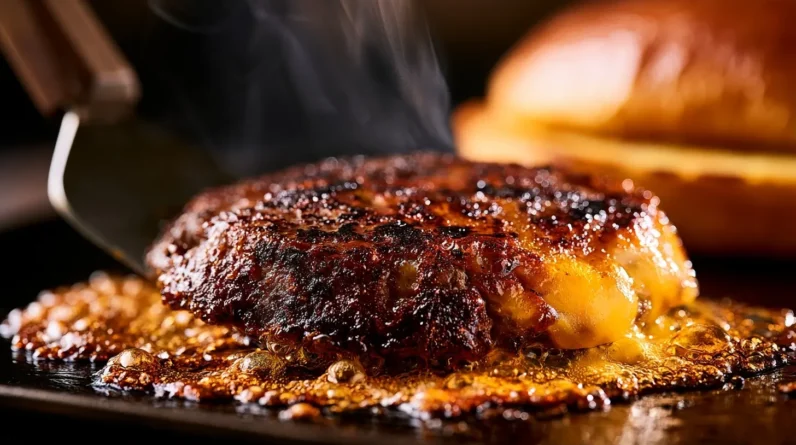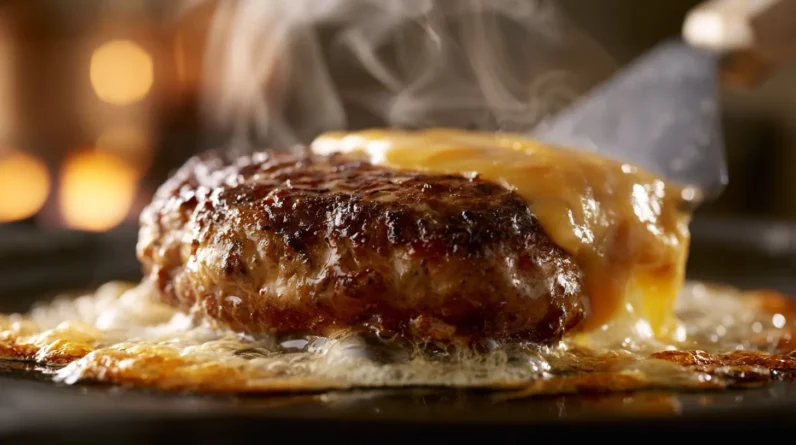



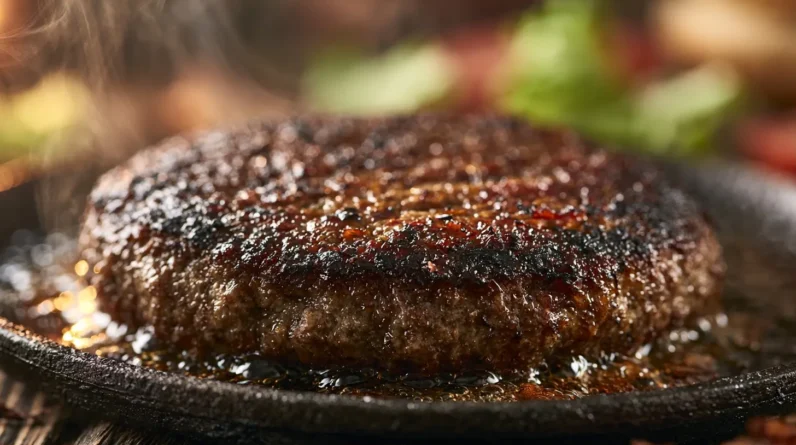
We think technique beats toppings because a burger’s flavor and texture are built long before any cheese or sauce comes into play. We choose the right fat ratio, handle the meat gently, and sear it properly to lock in juices and build a real crust. Toppings can’t rescue a dry, overworked patty. Get the fundamentals right, and you’ll see why every step from grind to flip matters.
Choose the Right Beef Grind and Fat Ratio
Two numbers matter more than any label on the package: 80/20. That ratio—80% lean, 20% fat—gives us the flavor balance we need without drowning the meat in grease or drying it into cardboard. We won’t rely on pre-ground chuck alone; we ask our butcher to grind a blend, often chuck with brisket or short rib mixed in. This beef selection matters because different cuts carry different fat structures, and those structures melt at different rates on the grill.
We avoid grinds leaner than 85/15—they punish us with tough, chalky bites. We also skip anything fattier than 70/30, since excess fat floods the pan and mutes the beef’s natural taste. Precision here isn’t optional; it’s foundational.
Shape Your Patty Without Overworking the Meat
The moment we dump ground beef into a bowl, the clock starts ticking against us. Every second of extra meat handling melts fat and toughens protein strands, so we work fast and light. We divide portions by weight, not eyeballing, then form each one with a gentle press—never a squeeze—using our fingertips instead of our palms.
Patty thickness matters as much as shape. We aim for three-quarters of an inch, uniform edge to edge, so the burger cooks evenly without a raw center or scorched rim. We punch a shallow dimple in the middle with our thumb, countering the dome that forms as the patty contracts on the grill. That small dent keeps our burger flat, our sear even, and our texture loose instead of dense.
Get the Sear That Locks In Every Juicy Bite
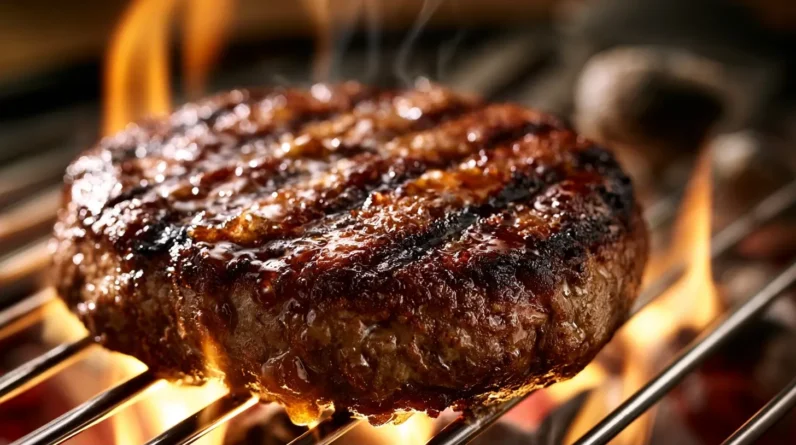
Heat separates good burgers from great ones, so we don’t skimp on it. Get your grill temperature to 450-500°F before the patty ever touches the grate. This isn’t optional—it’s the foundation of proper searing techniques. We’re after that immediate crust formation, the Maillard reaction that seals in juices while building deep, caramelized flavor.
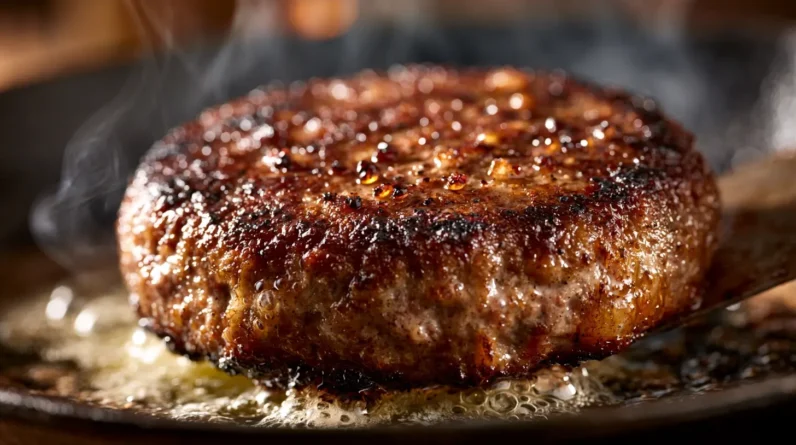
Press the patty down once, firmly, when you place it. Then leave it alone. Resist flipping every thirty seconds; let the sear develop for three to four minutes untouched. You’ll know it’s ready when the edges char slightly and the patty releases cleanly from the grate.
Flip once, sear the second side with equal patience, and you’ve locked in the juices that toppings alone can’t deliver.
Timing Your Flip for a Perfectly Cooked Burger
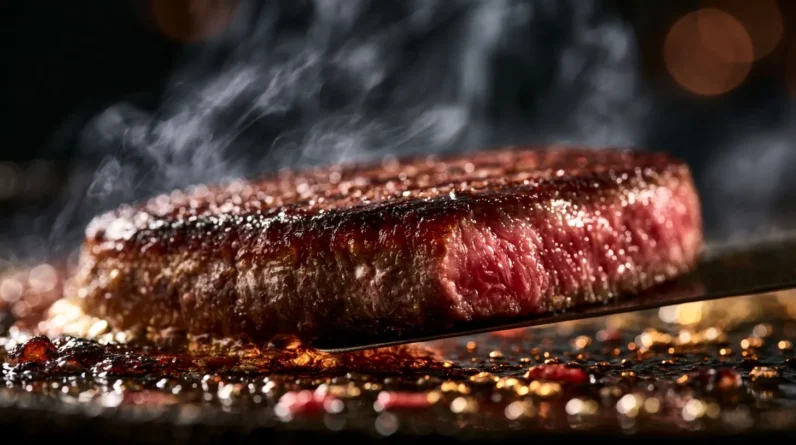
Once that first side releases clean and shows a deep mahogany crust, we’re only halfway there. Flip timing now becomes the deciding factor between a patty that’s merely good and one that’s precise. We’re watching the edges, not the clock—when juices bead visibly on the raw surface, that’s our signal.
Cooking temperature dictates every decision from here. We resist the urge to press or flip again; one turn is all this burger needs.
| Doneness | Internal Temp |
|---|---|
| Medium-rare | 130–135°F |
| Medium | 140–145°F |
| Well-done | 160°F+ |
We pull the patty a few degrees early, letting residual heat finish the work. That restraint is what separates control from guesswork.
How Toppings Should Enhance, Not Mask, Great Technique
A well-executed patty doesn’t need rescuing, so we choose toppings that complement rather than compete. Cheese melts to reinforce richness, not smother it. Lettuce and tomato add crunch and acidity, cutting through fat without overwhelming the beef’s character. We’re building flavor balance, not layering distractions.
Ingredient harmony means every component earns its place. A single high-quality cheese outperforms three mediocre ones. Fresh, thinly sliced onion beats a heavy raw wedge that dominates each bite. Sauces should season, not saturate—apply them with restraint so the patty’s crust and juiciness remain the focal point.
When technique is right, toppings amplify what’s already there. We’re not covering flaws; we’re accentuating a burger that’s already succeeded on its own merits.
Frequently Asked Questions
Should Burger Patties Rest After Cooking Before Serving Them?
Yes, we let patties rest two to three minutes before serving. This brief resting period redistributes internal juices, maximizing moisture retention and ensuring you bite into a tender, evenly succulent burger every time.
Is a Cast-Iron Skillet Better Than a Grill for Burgers?
We’d say it depends on your goal. Skillet benefits include superior crust formation and fat retention for flavor; grill advantages lie in smoky char and rendering excess grease. Master both, and you’ll control texture precisely.
When Is the Best Time to Add Cheese While Cooking?
We add cheese in the final ninety seconds, once, not twice—we don’t hesitate. This timing technique traps heat under a lid, forcing cheese melting into that glossy, draped finish real mastery demands.
How Does Bun Toasting Affect the Overall Burger Experience?
We toast buns to lock in bun texture, creating a sturdy barrier against moisture while adding subtle caramelization. This step sharpens flavor balance, letting you taste beef, cheese, and toppings without sogginess undermining every carefully built layer.
Can Frozen Patties Achieve the Same Technique-Driven Results as Fresh?
Funny enough, we once grabbed frozen patties by accident and still nailed dinner—proof that frozen quality doesn’t sabotage results. We apply the same cooking techniques: high heat, minimal flipping, proper resting. Mastery lies in method, not the patty’s origin.
Conclusion
We’ve walked through the grind, the shape, the sear, the flip. Here’s what we haven’t told you: none of it matters if you skip even one step. The perfect burger isn’t built on a single trick—it’s built on the sequence. Master the fat ratio, but rush the sear, and you’ve lost it. Nail the timing, but overwork the meat, and you’ve lost it. Technique isn’t one move. It’s all of them, together.