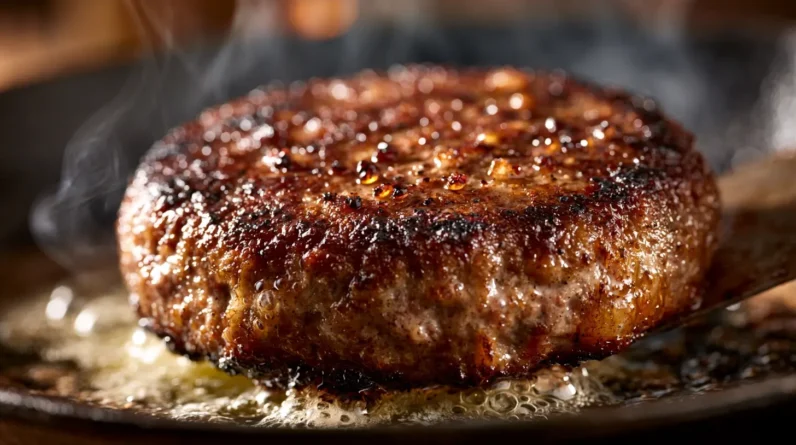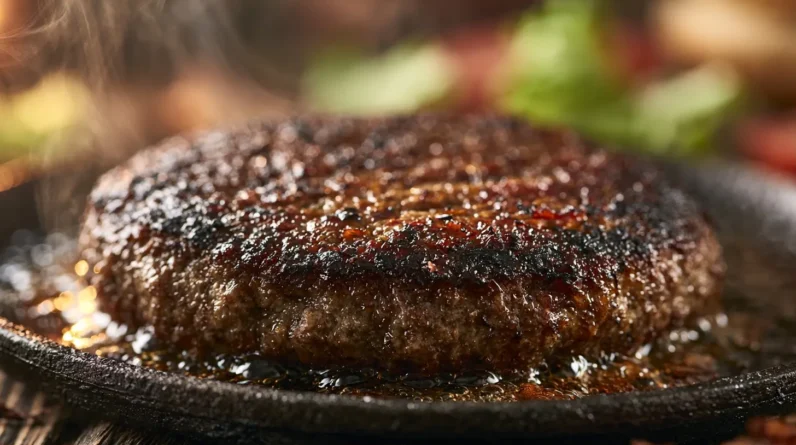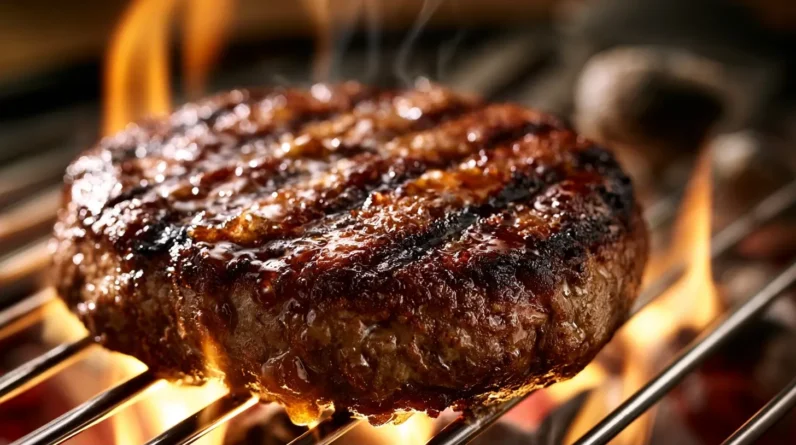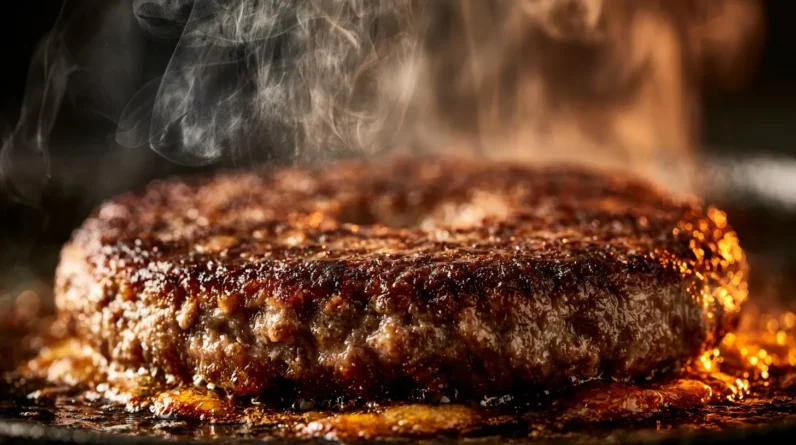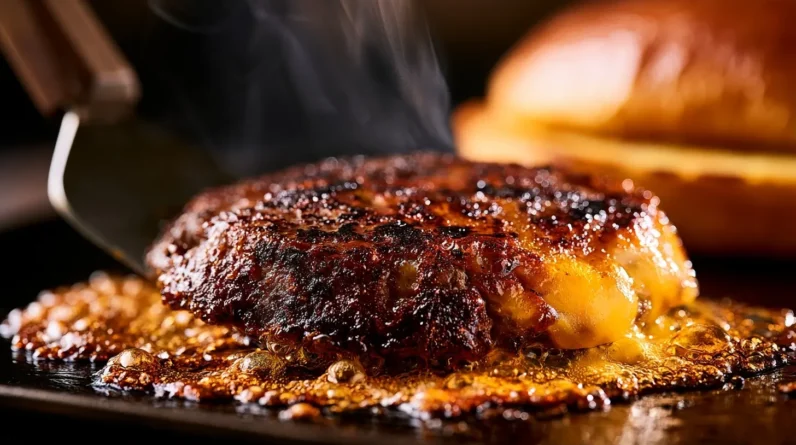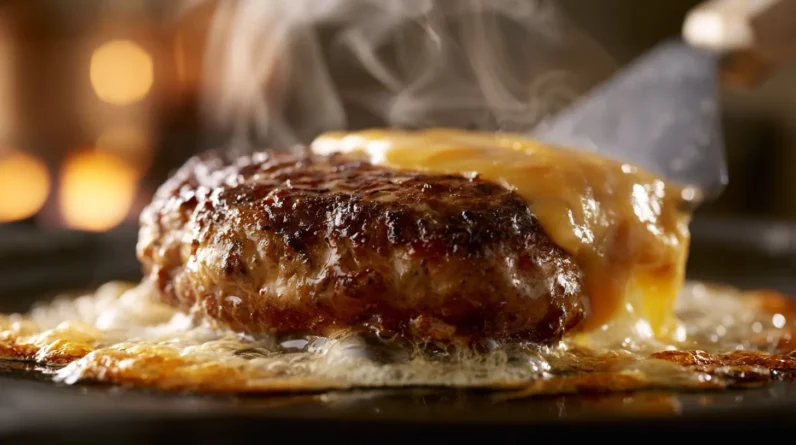



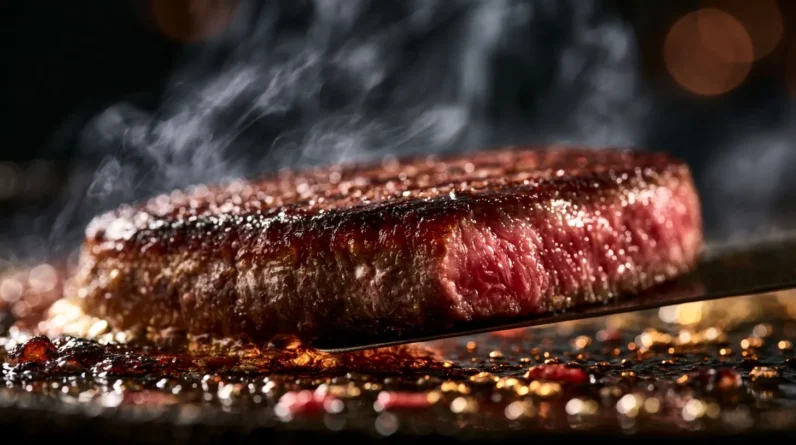
For the juiciest beef burger, we recommend an 80/20 lean-to-fat ratio using chuck, which naturally hits that target while delivering rich flavor. Only flip once you see gray edges, surface moisture pooling, and the patty releasing cleanly from the grill. Season the exterior with kosher salt right before cooking, never mix it in. These three variables work together, and there’s much more precision behind each one that separates a good burger from a great one.
The Right Fat Ratio for a Juicy Beef Burger
When it comes to grinding beef for burgers, fat content is everything. We recommend an 80/20 lean-to-fat ratio as the ideal fat benchmark for achieving maximum moisture retention during cooking. Fat renders as heat penetrates the patty, basting the meat internally and producing that signature juicy bite. Drop below 80/20, and you’re sacrificing succulence for leanness. Push past 70/30, and structural integrity suffers — your patty crumbles under pressure.
Chuck is our preferred cut because it naturally hits that 80/20 mark while delivering robust beefy flavor. If you’re blending cuts, pair leaner sirloin with fattier brisket to calibrate your ratio precisely. Always grind cold — fat smears when warm, disrupting texture and compromising the moisture retention you’ve worked to achieve.
Which Ground Beef Blend Actually Tastes Best?
Fat ratio sets the foundation, but the actual blend of cuts determines the flavor profile of your burger. Among ground beef types, chuck delivers the most balanced combination of fat distribution and beefy depth. Brisket adds richness and a slightly sweet undertone, while short rib contributes intramuscular fat that renders beautifully under heat. We recommend an 80/20 chuck-to-brisket or chuck-to-short-rib blend for maximum complexity.
Seasoning methods matter just as much as the blend itself. Salt only the exterior immediately before cooking — never mix seasoning into the grind, which tightens proteins and compromises texture. Coarse kosher salt applied seconds before the patty hits the cooking surface draws out surface moisture, accelerates the Maillard reaction, and amplifies the natural flavor your blend already delivers.
How to Season and Shape Patties Without Ruining Them
Shaping a patty correctly begins before your hands ever touch the meat — cold temperature is the single most important variable. Warm hands melt fat, destroying the emulsion structure that gives your burger its texture. Keep meat refrigerated until the moment you shape it.
For seasoning techniques, apply kosher salt and pepper to the exterior only, never mixed in. Internal seasoning tightens proteins, producing a dense, rubbery texture.
For patty techniques, divide portions by weight — 6 ounces is our benchmark. Press once firmly, then use your thumb to indent the center slightly. This prevents the dome effect during cooking. Handle minimally; three to four deliberate compressions maximum. Overworking the meat is irreversible — you cannot undo protein damage once it’s done.
Flip Timing: When to Turn Your Burger and Why It Matters
Everything about flip timing comes down to moisture and crust formation — get it wrong, and you’ve undone the careful work of shaping a proper patty. Timing myths persist — flipping once is gospel to some, but evidence supports controlled multiple flips for even cooking and faster internal temperature rise.
Watch for these crust-formation signals before executing any flip strategies:
- Edges show gray color creeping approximately one-third up the patty’s side
- Surface moisture has migrated upward, forming visible pooling
- The patty releases cleanly without resistance from the cooking surface
Forcing an early flip tears the crust, sacrificing the Maillard reaction you’ve been building. We flip decisively, once we see those indicators, never before. Precision here separates competent cooks from those who truly understand burger technique.
Build Flavor From the Inside Out, Not Just the Grill
Most cooks treat seasoning as a surface event — salt hits the exterior, smoke and char do the rest — but we build flavor at every structural layer of the patty. Internal flavor begins with fat distribution inside the grind itself. Different meat types carry distinct flavor compounds — chuck delivers beefy depth, brisket adds richness, short rib introduces a faintly sweet, mineral note. Blending these intentionally means we’re engineering taste before the patty ever touches heat. We also incorporate seasoning directly into certain blend ratios, allowing salt to begin protein extraction, which improves bind and intensifies the savory core. The grill contributes Maillard crust and smoke, but that exterior complexity only amplifies what’s already structurally present. Build it right internally, and the grill finishes the work.
Frequently Asked Questions
Can Frozen Ground Beef Produce the Same Results as Fresh Beef?
Frozen beef won’t deliver identical results—we’ve found that ice crystal formation damages muscle fibers, creating noticeable texture differences. Thaw it properly, and you’ll minimize moisture loss, but fresh beef consistently produces superior burger quality.
Does the Type of Grill Surface Affect Burger Flavor Significantly?
Yes, grill materials greatly impact flavor. Cast iron retains surface temperature more uniformly, intensifying the Maillard reaction, while stainless steel conducts heat faster. We recommend matching your grill material to your desired crust development and smoke profile.
Should Burgers Rest After Cooking, and for How Long?
Yes, we recommend resting burgers for 3–5 minutes post-cook. This ideal timing maximizes resting benefits by allowing redistributed juices to stabilize within the patty, ensuring every bite delivers consistent moisture and concentrated beefy flavor throughout.
Can Beef Burgers Be Safely Cooked to Medium-Rare Temperature?
We can safely cook burgers to medium-rare, but only when we’re confident in our meat quality. Whole-muscle cuts ground fresh minimize pathogen risk; otherwise, we recommend reaching 160°F to guarantee safe cooking throughout.
What Causes a Burger Patty to Shrink During Cooking?
Patties shrink because heat forces moisture loss and causes proteins to contract. We’re seeing fat render out simultaneously, tightening patty texture. Higher fat ratios minimize this effect, keeping our burgers juicier and maintaining better structural integrity throughout cooking.
Conclusion
We’ve covered the fundamentals that separate a forgettable patty from one that crackles with rendered fat, holds its juices under pressure, and builds flavor from every layer. Choose the right fat ratio, shape with restraint, flip once with purpose, and season deliberately. When we respect the science behind the grind, the sear, and the timing, every burger we make stops being an accident and starts being a repeatable, satisfying result.