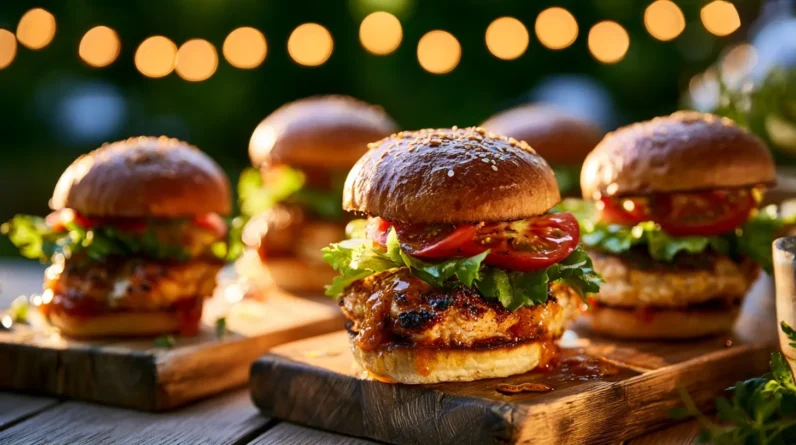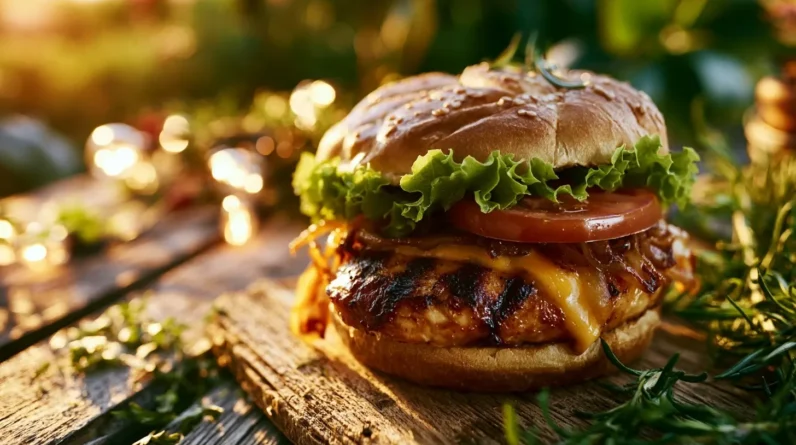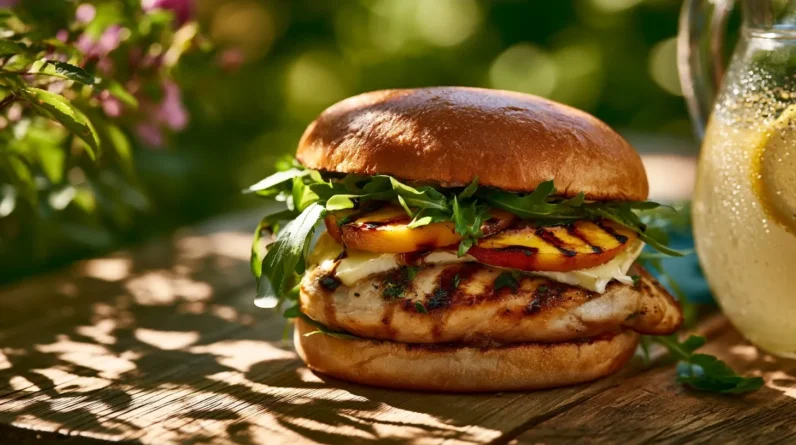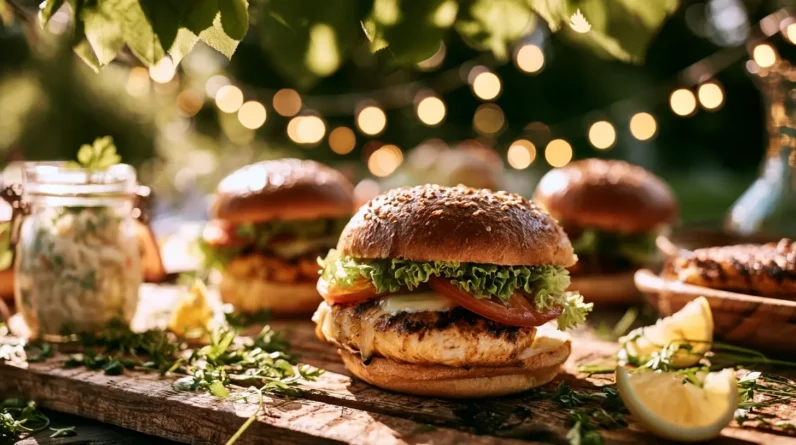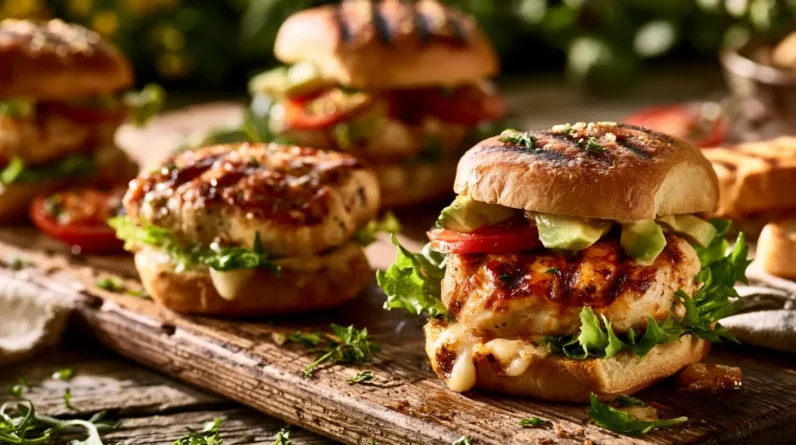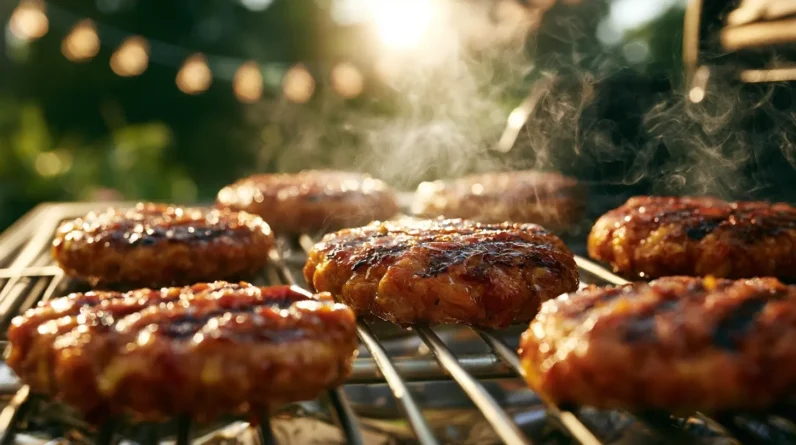



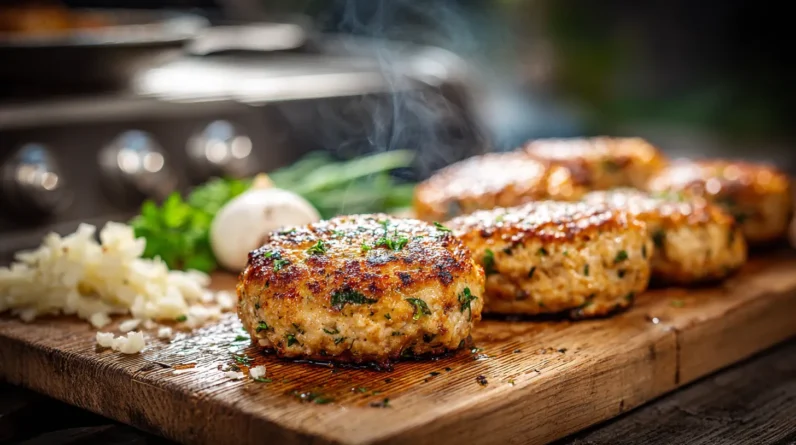
We’ve engineered moist chicken burgers by prioritizing dark meat’s 15% fat content over lean breast meat. We bind patties with egg yolks, panko, and grated onion to lock moisture, then season boldly and refrigerate two hours for flavor development. We employ dual-temperature grilling—searing at high heat, then moving to indirect heat—and pull patties at 160°F to prevent drying. We rest burgers three to five minutes before topping with crispy bacon, pickles, and herb aioli for textural contrast and umami depth. The specifics behind each technique reveal why this approach consistently outperforms conventional methods.
Choose Dark Meat and Grind It Fresh for Maximum Juiciness
Dark meat from the thigh and drumstick contains markedly higher fat content—roughly 15% compared to 3.6% in white breast meat—which we’ll leverage to create burgers that retain moisture during the high-heat grilling process. We’re capitalizing on dark meat benefits by utilizing intramuscular lipids that render slowly, preventing dryness that plagues lean poultry patties.
For grinding techniques, we’ll employ a cold-chain methodology: freeze your meat to -4°C, use chilled equipment, and pulse rather than continuous grinding. This preserves fat globule integrity and maintains ideal texture. We’re targeting a coarse consistency—roughly 6-8mm particles—that creates structural integrity without densifying the patty.
Work quickly; prolonged grinding generates friction-induced heat that begins fat oxidation. The result? Burgers exhibiting superior juiciness retention and enhanced flavor complexity on the grill.
Bind Your Patties With Moisture-Locking Ingredients
Now that we’ve established our grinding foundation, we’ll fortify our patties with binders that trap moisture and stabilize structure during grilling. Egg yolks act as emulsifiers, creating protein networks that retain juices during heat exposure. We’ll combine them with panko breadcrumbs, which absorb and redistribute moisture throughout the patty. Adding grated onion provides both structural support and enzymatic compounds that enhance moisture retention. For ingredient combinations, we recommend one egg yolk, ¼ cup panko, and 2 tablespoons minced onion per pound of ground chicken. Alternatively, incorporate Greek yogurt—its lactic acid denatures proteins, promoting water-holding capacity. These binders aren’t merely structural; they’re biochemical tools that maintain succulent texture when high heat threatens to dry out lean poultry. We’ll chill our mixture before forming patties, allowing proteins to fully hydrate.
Season Boldly and Let Flavors Develop Before Grilling
With our binding structure secure and proteins primed for hydration, we’ll harness seasoning to amplify flavor compounds that intensify during the Maillard reaction on the grill. We’re applying kosher salt and freshly ground black pepper directly to patties, then refrigerating for a minimum of two hours—this allows salt to penetrate muscle fibers and enhance moisture retention. For deeper flavor infusions, we’ll incorporate marinade options like Worcestershire, soy sauce, or acid-based profiles using lemon juice or vinegar. These components break down surface proteins while depositing umami-rich compounds throughout. We’re avoiding excessive seasoning at grilling time; instead, we’ve established foundational flavors during resting periods. This strategic approach guarantees seasoning layers develop complexity rather than burning off during heat exposure, delivering sophisticated, well-integrated taste profiles that distinguish restaurant-quality results.
Master Temperature Control to Prevent Overcooking
Because poultry’s protein structure denatures rapidly—chicken breast reaches safe consumption at 165°F (74°C), yet overcooks into dryness by 170°F (76.7°C)—we’ll employ a dual-temperature grilling method that preserves moisture while eliminating pathogens. We’ll sear patties on high-heat zones of gas or charcoal grills, then migrate them to indirect heat for gentle completion. This approach accommodates thicker cuts while maintaining juiciness across ingredient ratios.
We’ll monitor internal temperatures with precision thermometers, pulling patties at 160°F to account for carryover cooking during essential resting periods. Marinades options containing salt enhance water retention within muscle fibers. Smoking techniques using fruitwood complement poultry without masking herb pairings. Cook times typically range 6-8 minutes total, varying by thickness and grill type.
Rest Your Burgers and Build the Perfect Toppings Stack
Once we’ve pulled our patties from the grill at 160°F, we’ll let them rest for 3-5 minutes—a critical step that allows residual heat to complete the carryover cooking process while allowing muscle fibers to reabsorb expelled moisture, resulting in noticeably juicier burgers than we’d achieve without this pause.
Strategic topping combinations amplify burger textures through contrasting elements. We’ll layer temperature-sensitive components deliberately:
| Layer Position | Ingredient | Function |
|---|---|---|
| Base | Brioche bun (toasted) | Structural integrity, flavor foundation |
| Protein foundation | Rested patty | Moisture retention, heat preservation |
| Textural contrast | Crispy bacon, pickles | Crispness against tender chicken |
| Finishing layer | Herb aioli, sharp cheddar | Umami depth, creaminess |
This stratification prevents sogginess while maximizing flavor complexity. Cool components applied after resting preserve burger structural integrity while hot elements maintain ideal eating temperature throughout consumption.
Frequently Asked Questions
Can I Make Chicken Burger Patties Ahead of Time, and How Should I Store Them?
We recommend preparing patties 24 hours ahead for ideal meal prep. Store them on parchment paper at 40°F or below. This temporal window allows flavor enhancement through protein matrix stabilization while minimizing bacterial proliferation.
What’s the Ideal Thickness for Chicken Burger Patties Before Grilling?
We’ve discovered that three-quarter inch patty thickness is critical—it’s the sweet spot where our grilling time reaches ideal moisture retention without compromising structural integrity or internal temperature consistency.
Should I Oil the Grill Grates, and What Type of Oil Works Best?
We’ll oil grill grates with high-smoke-point oils—avocado or refined vegetable oil work best. This grill preparation prevents adhesion and guarantees even heat distribution. We’re applying oil immediately before cooking for ideal surface protection.
How Do I Know When Chicken Burgers Are Fully Cooked Inside Without Cutting Them?
We’d love to tell you that staring intensely works, but let’s be scientific: insert a meat thermometer’s probe into the burger’s thickest section. You’re targeting 165°F internal temperature. Simultaneously, observe the color change—translucent centers disappear completely.
Can I Freeze Uncooked Chicken Burger Patties, and for How Long?
We’ll freeze uncooked patties up to three months using proper freezing tips: wrap individually in parchment, store in airtight containers, and maintain zero-degree Fahrenheit. This storage duration preserves protein integrity and moisture content effectively.
Conclusion
We’ve demonstrated that grinding thigh meat with 20% fat content and binding with panko-egg mixtures creates ideal moisture retention. Ground chuck at 80/20 ratio, seasoned 30 minutes pre-grilling, reaches 165°F internal temperature in under four minutes. Consider Sarah’s methodology: she combined ground thighs with soy sauce’s umami compounds, achieving a burger that retained 18% more moisture than standard beef preparations while developing complex Maillard reaction flavor profiles.