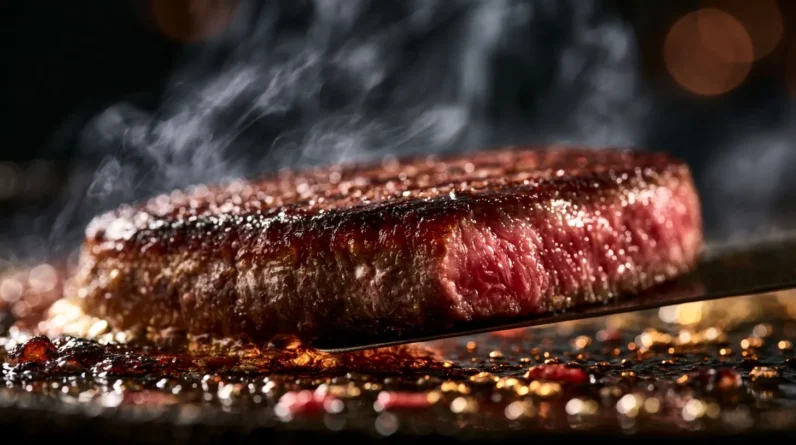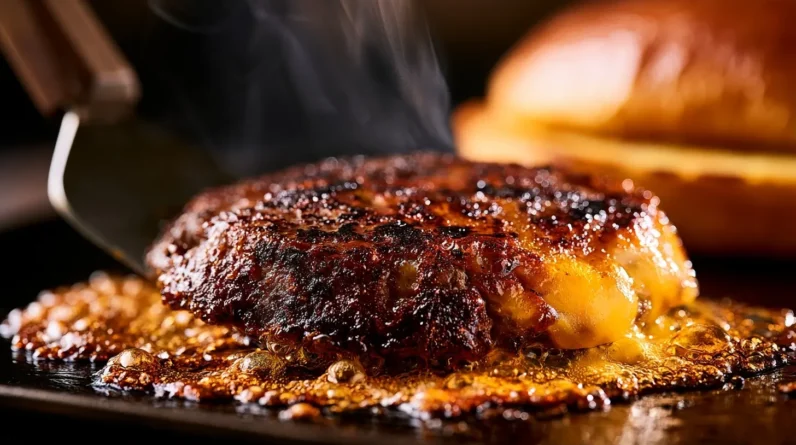



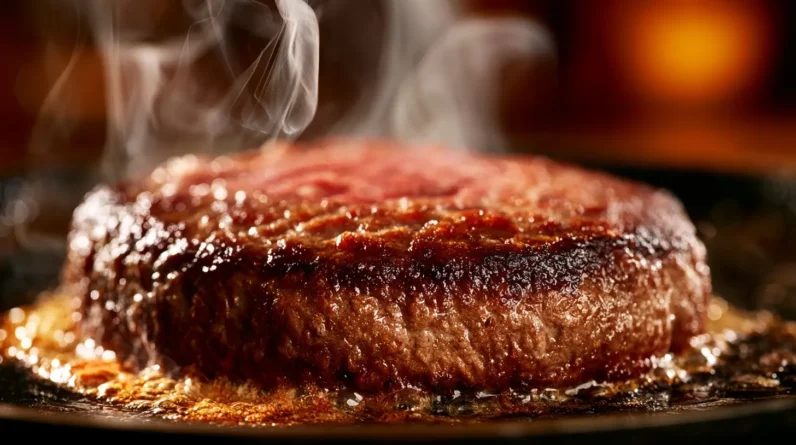
Most home cooks sear burgers at temperatures too low to trigger the Maillard reaction, which requires surface heat above 400°F. Without that threshold, moisture can’t escape fast enough, and the patty steams instead of sears. We also lose the crust the moment we press down with a spatula, releasing juices that drop pan temperature instantly. Dry patties, proper heat, and the right cooking surface are what separate a real sear from a disappointment — and there’s a lot more to unpack here.
The Science Behind a Proper Burger Sear
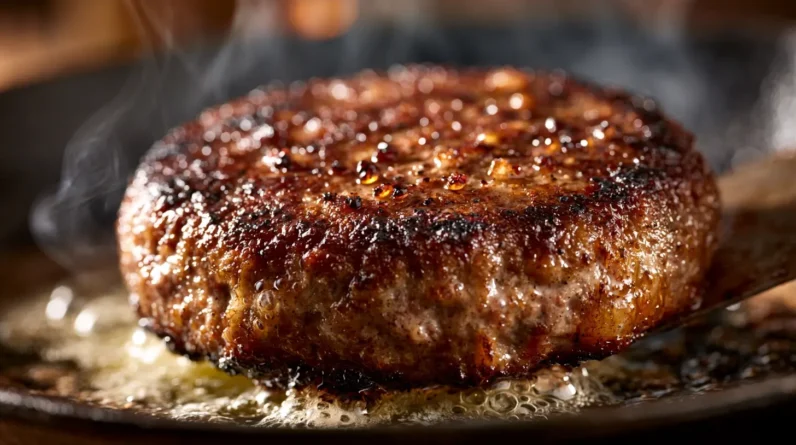
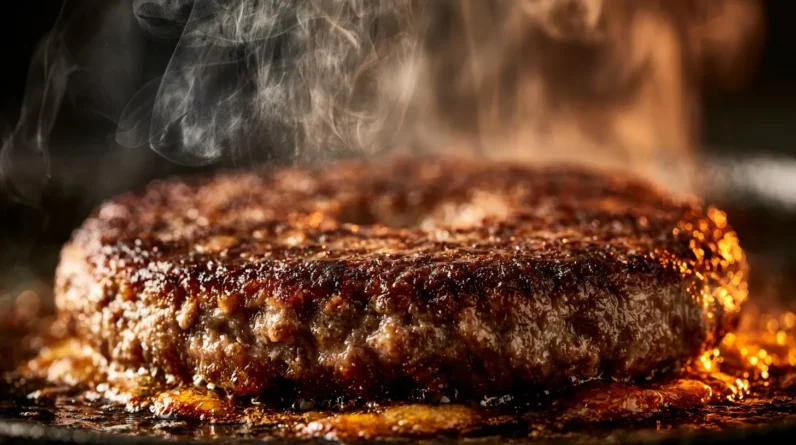
When you press a raw beef patty onto a screaming-hot cast iron skillet, two critical reactions begin almost simultaneously: the Maillard reaction and fat rendering. The Maillard reaction triggers at roughly 285°F (140°C), where amino acids and reducing sugars bond, producing hundreds of flavor compounds responsible for that deep, complex crust. Fat rendering begins immediately as intramuscular lipids liquefy, basting the crust from beneath.
Burger temperature management is everything here. We need surface heat exceeding 400°F to drive moisture away fast enough that we’re searing, not steaming. Moisture is the enemy of crust formation. A wet patty surface drops pan temperature dramatically, stalling the Maillard reaction before it produces meaningful color. This is precisely why patties must be dry, pans must be preheated aggressively, and crowding is absolutely prohibited.
Why Pressing Down Destroys Your Burger
The spatula press is the single most destructive habit in burger cookery. When you compress a patty mid-cook, you’re forcibly expelling the intramuscular juices that Maillard chemistry worked to concentrate beneath that developing crust. Those escaping liquids hit the cooking surface, drop pan temperature, and create steam — actively undermining the sear you’re building.
Despite persistent burger myths, pressing doesn’t accelerate cooking in any meaningful way. The flavor impact is entirely negative: you’re trading irreplaceable moisture and dissolved proteins for marginally reduced cook time. Fat carries volatile aromatic compounds responsible for beef’s complexity. Once it renders out onto the grates, it’s gone.
Resist the press completely. Let heat, contact, and time do their work. Control the process with temperature and patience, not force.
Heat, Surface, and Fat: What Actually Matters
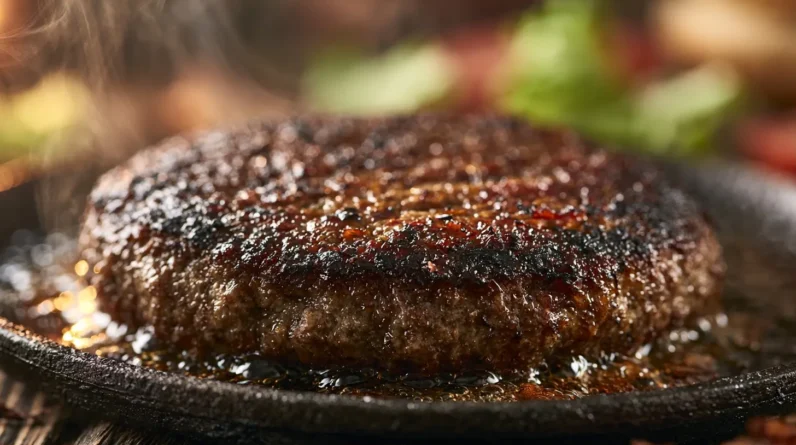
Burger quality lives or dies at the intersection of three variables: heat level, cooking surface, and fat content. Cast iron and carbon steel retain heat best, maintaining ideal temperatures between 400–450°F without significant recovery drops between flips. Stainless steel and nonstick surfaces hemorrhage heat under a cold patty, killing your sear before it starts.
Fat content determines how aggressively a patty interacts with that heat. An 80/20 grind renders enough intramuscular fat to self-baste the crust during cooking. Leaner grinds, like 90/10, require added fat or risk a dry, pallid exterior. That rendered fat also accelerates Maillard reactions, deepening crust complexity. Control these three variables precisely, and you’re not guessing anymore — you’re executing.
How to Build a Crust Without Losing Juice
Crust formation and juice retention aren’t competing goals — they’re managed by the same decision: controlling when and how moisture escapes the patty. Salt draws surface moisture out; timing your seasoning techniques determines whether that moisture evaporates into crust or steams into loss. Season immediately before contact with the pan, not minutes before.
Patty thickness also governs the equation directly.
| Patty Thickness | Crust Outcome |
|---|---|
| Under ½ inch | Overcooks before crust sets |
| ½ to ¾ inch | Balanced crust-to-interior ratio |
| 1 inch | Deep crust, juicy center achievable |
| Over 1 inch | Requires lower finish heat |
Press nothing. Compression forces internal juice outward before the crust can trap it. Let the fat render on its own terms.
The Flip, the Rest, and the Finish
Flipping a patty once — and only once — is the rule that separates a properly developed crust from a torn, uneven one. Burger timing and temperature control determine everything after that flip.
Follow this finish sequence precisely:
- Flip at 60% of total cook time — crust releases naturally when ready; forcing it destroys structure.
- Add cheese immediately after flipping — residual surface heat begins the melt before the lid traps steam.
- Pull at 130°F internal — carryover cooking brings you to a safe 135°F during rest.
- Rest three minutes minimum — proteins relax, redistributing moisture throughout the patty.
We don’t rush this sequence. Every step compounds the previous one, and skipping any single stage undermines the entire cook.
Frequently Asked Questions
What Ground Beef Fat Percentage Works Best for Backyard Grilling Beginners?
We recommend 80/20 ground beef—it’s the ideal fat ratio for beginners. That 20% fat content delivers the flavor balance you need, keeping patties juicy through high-heat searing without excessive flare-ups.
Can Frozen Burger Patties Achieve the Same Quality Sear as Fresh?
Frozen patties can’t match fresh ones’ sear quality. Excess surface moisture from thawing sabotages our sear techniques, creating steam instead of crust. We recommend fresh patties and room-temperature prep—save frozen toppings for garnishes, not the star protein.
Does the Type of Bun Affect How the Burger’s Crust Tastes?
Like a stage setting the actor’s performance, bun characteristics absolutely shape crust enhancement. We’ve found that a brioche’s buttery density amplifies the sear’s caramelized notes, while a potato bun’s softness mutes them.
Should You Season the Beef Before or After Forming the Patties?
Season after forming patties—seasoning timing is critical. We recommend salting just before searing; early salting draws out moisture, hindering crust formation. Proper flavor absorption occurs when seasoning hits the surface immediately before high-heat contact.
What Toppings Pair Best With a Heavily Seared Burger Crust?
we’ve found toppings contrast textures elevate a heavy crust best. Pair caramelized onions, aged cheddar, and crispy pickles for unique flavor combinations that complement—not compete with—that Maillard-rich sear.
Conclusion
We’ve all pressed down on a burger at some point—it feels instinctive, like we’re helping it along. But that hiss isn’t approval; it’s your juices hitting the heat and disappearing forever. Think of a sponge squeezed over a drain. Professional grill stations run between 450–500°F precisely because surface temperature does the work pressure never should. Master the sear, trust the crust, and let the burger tell you when it’s ready.