


The technique that separates a good burger from an unforgettable one starts with an 80/20 fat ratio, gentle handling with cold hands, and exterior-only seasoning applied just before cooking. We then need intense heat from a cast iron pan to trigger the Maillard reaction, building that signature crust. Finally, resting the patty lets moisture redistribute evenly. Master each of these steps, and everything about why they work becomes clear ahead.
The Fat Ratio That Makes or Breaks Your Patty
When it comes to grinding beef for burgers, fat percentage isn’t a preference — it’s a structural and flavor decision. Too lean, and the patty crumbles, dries out, and loses depth. Too fatty, and it shrinks aggressively, flares on the grill, and turns greasy. We’ve found that 80/20 lean-to-fat is the ideal beef ratio for achieving the right flavor balance — enough intramuscular fat to self-baste during cooking while maintaining structural integrity. Chuck delivers this naturally, making it our first-choice cut. If we’re blending, short rib or brisket adds richness without tipping into excess. Fat doesn’t just contribute flavor — it controls moisture retention, crust formation, and mouthfeel. Get the ratio wrong, and no technique will save the result.
Why Your Hands Are Ruining the Beef
Most home cooks make the same mistake: they treat ground beef like bread dough. They knead, press, and pack it until it’s dense and rubbery. Hand temperature is the real enemy here — your palms run hot, and that heat melts the fat before the patty ever hits the grill.
We recommend minimal contact. Use cold hands or wear food-safe gloves, and work quickly. For patty shaping, divide your portions first, then use a light cupping motion — no squeezing, no compressing. Press a shallow dimple into the center to prevent doming during cooking. The goal is cohesion without compression. A loosely formed patty holds fat within its structure, creating the juicy, tender bite that separates a forgettable burger from one worth repeating.
The Right Way to Season a Burger Patty
Once the patty’s shaped, seasoning becomes the next place cooks lose control. We recommend seasoning exclusively on the exterior, never mixing salt into the meat. Internal salting draws out moisture and alters protein structure before the patty hits heat.
Among salt types, coarse kosher salt outperforms fine table salt because larger crystals dissolve gradually, building a controlled crust. Diamond Crystal behaves differently than Morton’s, so we adjust volume accordingly.
For seasoning methods, coat both flat faces and the edge band generously, pressing lightly so salt adheres. Season no more than forty-five seconds before cooking. Extended pre-salting pulls surface moisture, compromising the sear. Black pepper follows salt directly, applied at the same moment, never earlier. Precision here determines the burger’s final crust quality.
Heat, Crust, and the Maillard Reaction Explained
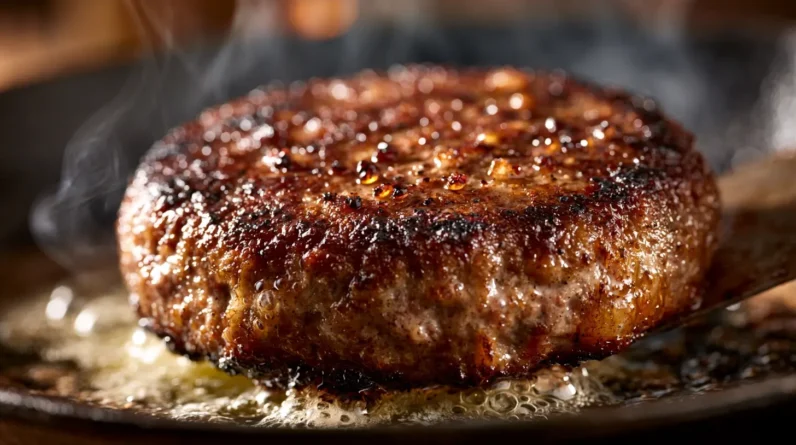
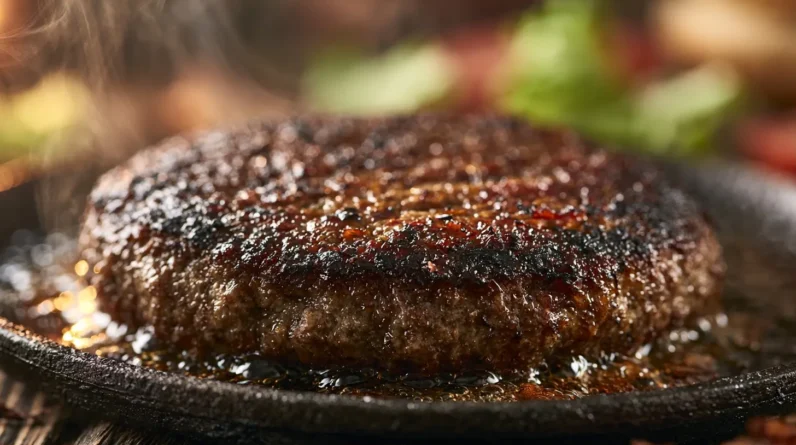
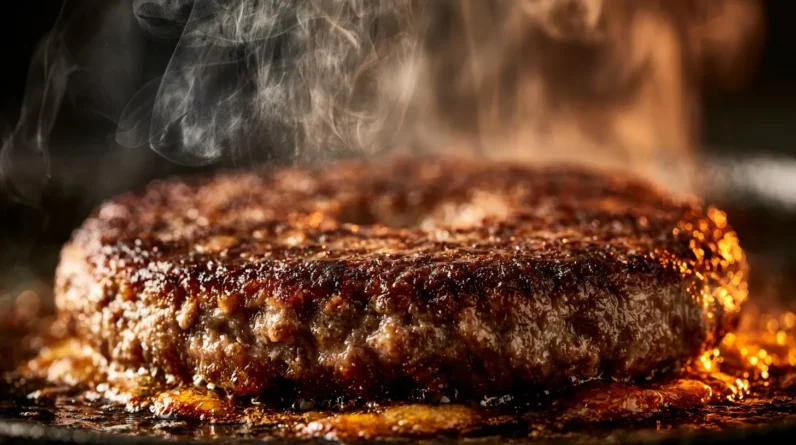
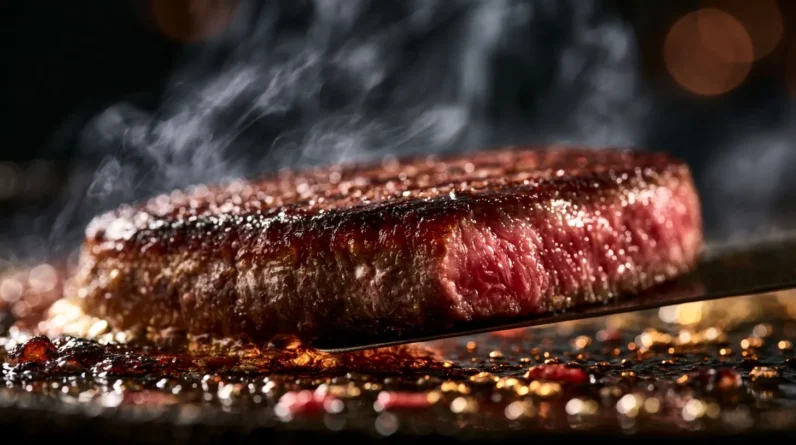
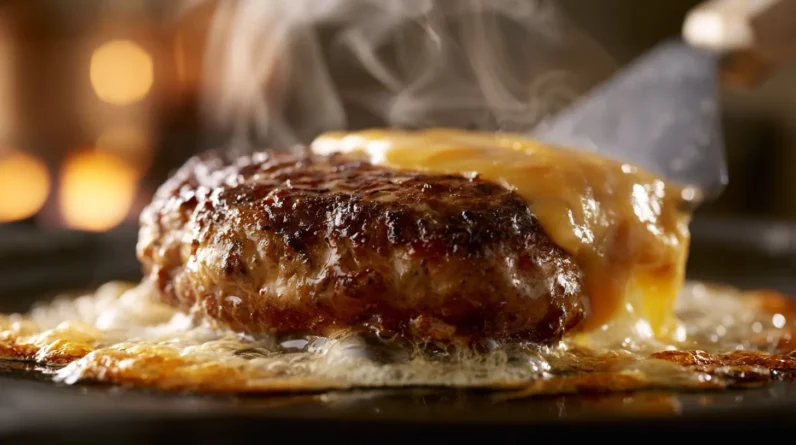
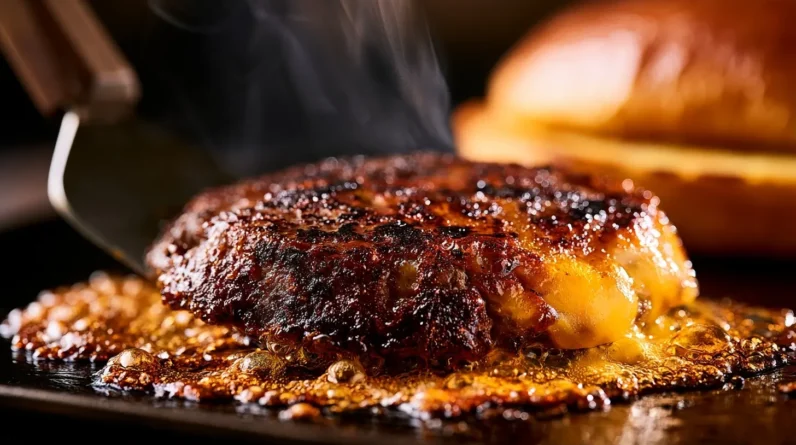
Getting the crust right depends entirely on heat, and the chemistry behind it is called the Maillard reaction—a rapid series of amino acid and reducing sugar interactions that occur above 280°F (138°C), producing the browned, complex-flavored surface we’re after. Our searing strategy must prioritize a screaming-hot surface—cast iron or carbon steel preheated until it smokes. Moisture is the enemy here; surface steam drops pan temperature below the threshold, stalling flavor development before it starts. We don’t press the patty—that expels fat and juice, robbing us of both moisture and browning potential. Two to three minutes undisturbed per side lets the crust build properly. High heat, dry surface, no interference—that’s the formula for a crust that actually delivers.
Why Resting Your Burger Patty Actually Matters
Resting isn’t optional—it’s the step that protects everything we just built. When we pull a patty off high heat, its internal proteins are still contracting, actively pushing moisture toward the center. Cut into it immediately, and we lose that juice to the plate. Resting allows those proteins to relax and reabsorb moisture throughout the patty.
Patty size dictates resting time precisely. A standard quarter-pound patty needs roughly two minutes. A thicker half-pound requires three to four. We’re not guessing—we’re accounting for thermal carryover, which continues cooking the burger even off heat. Tent it loosely with foil to retain surface temperature without trapping steam, which softens our crust. Respect the rest, and every bite delivers the full payoff of our technique.
Frequently Asked Questions
What Type of Bun Best Complements a Perfectly Cooked Beef Burger Patty?
We recommend a brioche bun for ideal ingredient synergy. Its slight sweetness enhances flavor pairing, while its soft yet sturdy texture balance complements the patty’s crust. Among bun types, brioche consistently elevates every bite.
Should You Press Down on a Burger Patty While It Cooks?
Pressing patties produces poor results. We’ll lose precious juices when we apply pressing techniques mid-cook. Preserve patty thickness by leaving it untouched—smash burgers are the sole exception, requiring immediate pressing upon first contact with the skillet.
Can Frozen Beef Patties Ever Match the Quality of Fresh Ones?
Frozen patties rarely match fresh ones. We’ve found that frozen flavor suffers from ice crystal damage to muscle fibers. However, we can minimize quality loss through proper thawing and cooking techniques like high-heat searing to restore crust development.
What Toppings Enhance Rather Than Overpower a Well-Crafted Burger?
Coincidentally, we’ve found ideal toppings mirror the burger’s own flavor profile. We recommend sharp cheddar, caramelized onions, and crisp lettuce—they complement without competing, maintaining flavor balance that elevates your craft rather than masking it.
How Does Beef Sourcing and Breed Affect the Final Burger Flavor?
Breed and sourcing dramatically shape your burger’s flavor profile. We recommend prioritizing grass-fed benefits—richer, minerally complexity—while understanding marbling impact determines juiciness and fat-driven savoriness. Wagyu and Black Angus consistently deliver superior intramuscular fat distribution for unforgettable results.
Conclusion
We’ve handed you the blueprint for a burger most restaurants can’t match, yet here’s the delicious irony — the secret isn’t some obscure culinary wizardry. It’s restraint. Stop overworking the beef, nail your fat ratio, season at the right moment, honor the Maillard reaction, and let the patty rest. The “unforgettable” burger everyone assumes requires professional training is actually built on doing less, not more.