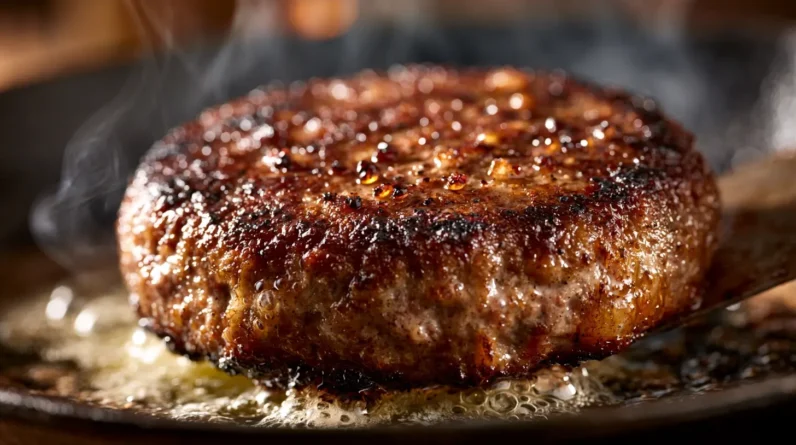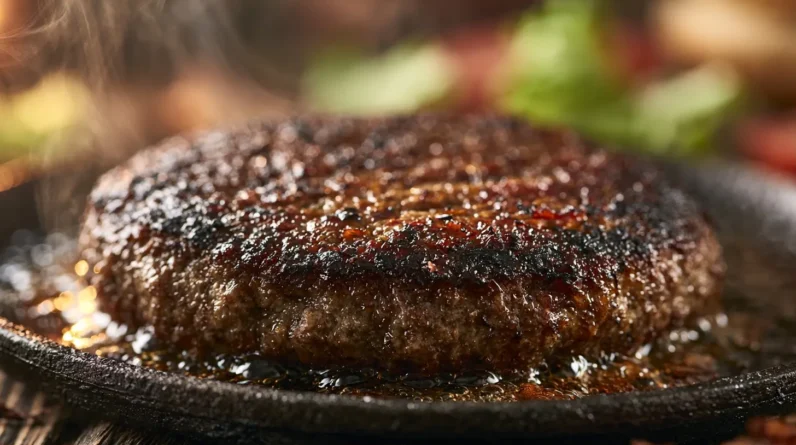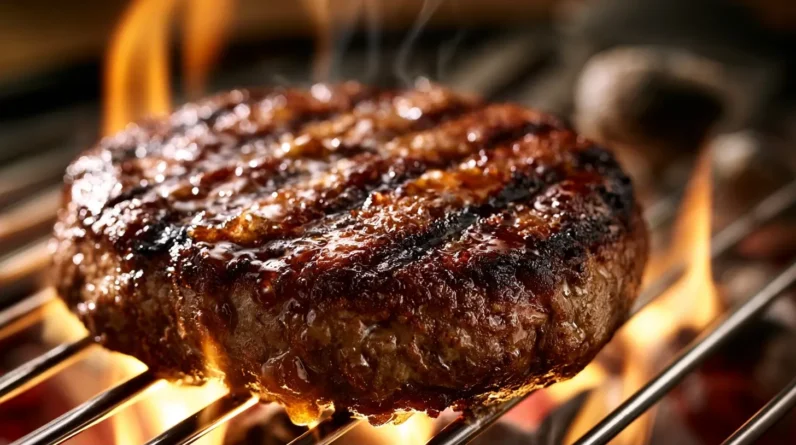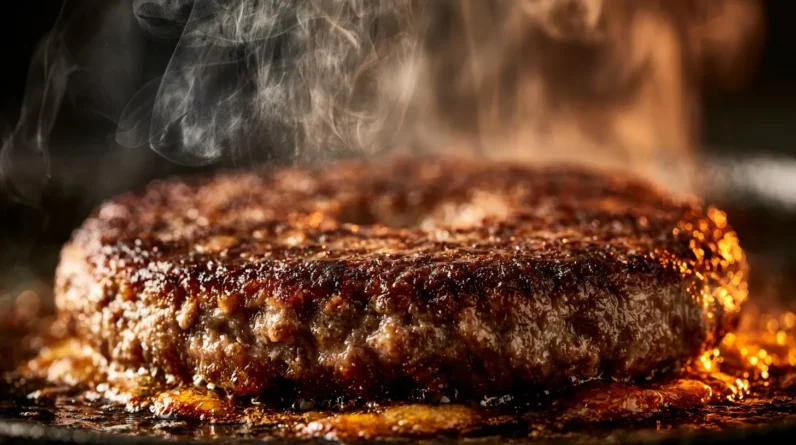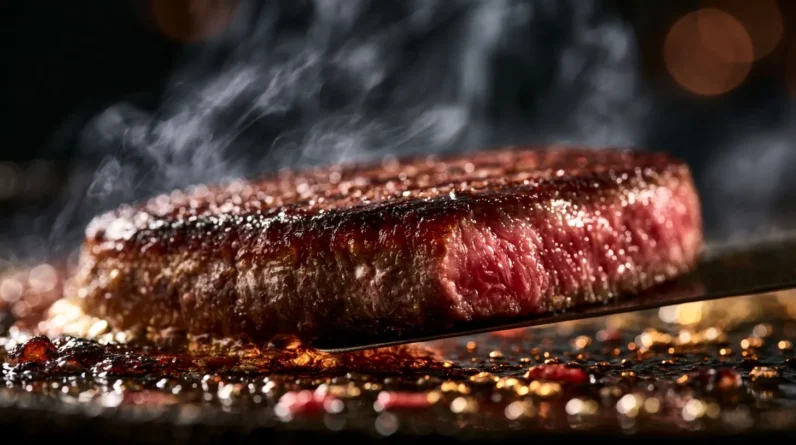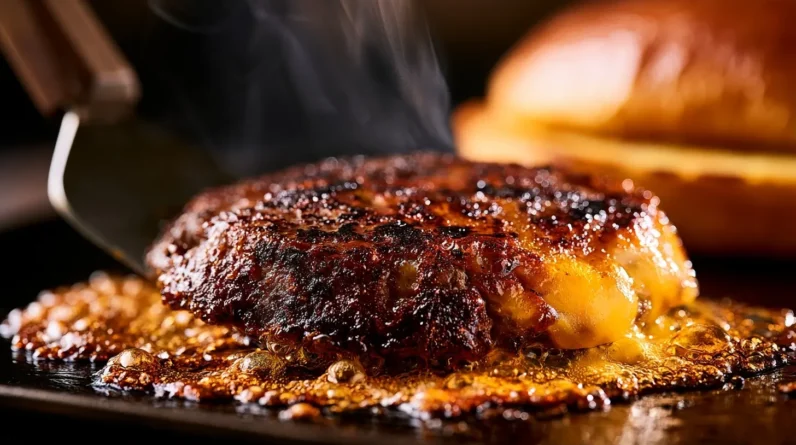



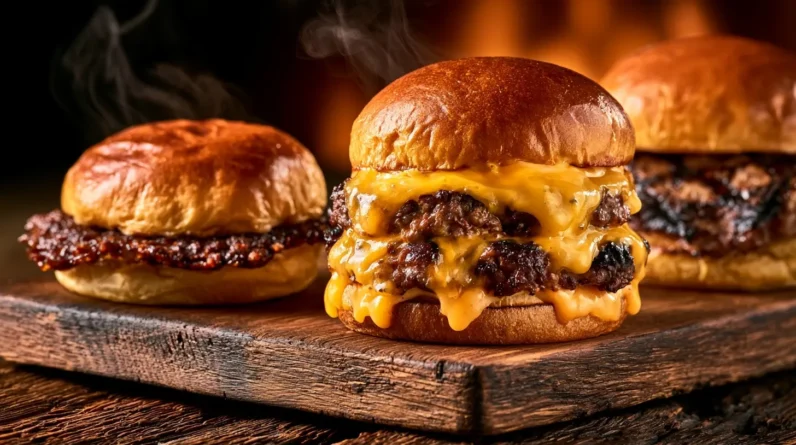
Whether we’re smashing, stacking, or grilling, fat content and technique drive every result. We recommend 80/20 chuck for smash burgers, seared on a 400°F griddle with a firm 10-second press. Stacked builds need uniform ¾-inch patties on toasted brioche for structural balance. Grilled burgers need a two-zone fire, a single flip, and a pull temperature of 155°F. Each method has its own precise logic, and we’ve mapped out every detail ahead.
The Right Ground Beef for Every Burger Style
Choosing the right ground beef is the foundation of any great burger, and fat content is the variable that matters most. Different ground beef types suit different cooking methods. For smash burgers, we recommend 80/20 chuck — its higher fat content renders aggressively on a screaming-hot flat-top, creating crispy, lacey edges. For grilled burgers, 85/15 offers enough fat to stay juicy without causing excessive flare-ups. Stacked burgers benefit from 80/20 or even 75/25 blends, where richness compensates for heat loss during assembly. Avoid anything leaner than 90/10 — it produces dry, dense patties regardless of technique. Always grind fresh when possible, as pre-ground beef loses moisture faster. Fat isn’t the enemy here; it’s the mechanism behind flavor, texture, and structural integrity.
How to Nail the Smash Burger Every Time
The smash burger lives or dies by heat and timing, so we need to start with a cast iron skillet or flat-top griddle preheated to at least 400°F — surface temperature, not ambient. Place a 2–3 oz loosely packed ball directly onto the dry surface, then apply the smash technique immediately: press firmly with a stiff spatula for exactly 10 seconds, achieving maximum contact between meat and metal. That aggressive contact triggers the Maillard reaction, driving serious flavor enhancement through caramelized crust formation. Don’t move the patty — let it cook undisturbed for 90 seconds. Flip once, add cheese immediately, and pull at 30 seconds. Thin patties overcook fast, so precision timing isn’t optional. Stack two patties for complexity without sacrificing that signature crispy edge.
Building a Tall, Juicy Stacked Burger at Home
When building a tall stacked burger, structural integrity matters as much as flavor — without it, the whole construction collapses mid-bite. Master these burger assembly tips to maintain height balance without sacrificing bite cohesion.
Start with a toasted, sturdy bun — brioche holds up well under moisture. Layer strategically: bottom bun, patty, cheese, structural vegetables (lettuce acts as a moisture barrier), second patty, sauces, then toppings. Place wet ingredients like tomatoes above lettuce, never directly against bread.
For height balance, keep patties uniform in thickness — roughly ¾ inch each. A center skewer locks everything in place during plating and photography, then pulls cleanly before serving. We recommend pressing the assembled burger gently from the top before your first bite to compress layers and control the eating experience.
Grilling Burgers Over Flame Without Drying Them Out
Once we’ve stacked and served that tower of beef, the flame becomes our next variable to master. Grilling demands deliberate flame control, precise seasoning techniques, and disciplined moisture retention to produce a burger that’s charred outside and juicy within.
Follow these non-negotiable principles:
- Two-zone fire setup: Sear over direct high heat, then finish over indirect heat
- Seasoning techniques: Apply kosher salt and cracked pepper immediately before hitting the grate — not before
- Moisture retention: Keep fat content at 80/20 and flip only once
- Resting periods: Pull the patty at 155°F internal and rest two minutes before serving
We’re not fighting the flame — we’re directing it. Every decision from coal arrangement to resting periods determines whether we serve excellence or mediocrity.
Toppings, Sauces, and Buns That Actually Match the Method
Every component we place on that patty either reinforces or undermines the cooking method we’ve committed to. Smash burgers demand brioche buns — their tight crumb handles rendered fat without collapse. American cheese, caramelized onions, and pickles create topping combinations that honor the crust’s intensity. Sauce pairings matter: special sauce or dijonnaise, never chunky salsas that overwhelm thin patties.
Grilled burgers carry smokiness that pairs with bolder flavor profiles — blue cheese, roasted peppers, aioli. Choose sturdy pretzel or ciabatta bun types that won’t disintegrate under structural weight.
Across all methods, texture contrasts drive satisfaction: creamy against crisp, soft against seared. Prioritize ingredient freshness — wilted lettuce or oxidized tomato destroys even a technically perfect cook. Match every element deliberately.
Frequently Asked Questions
Can I Mix Different Meats With Beef for a Better Burger?
Yes, we recommend meat blends to elevate your burger’s complexity. Try pairing beef with short rib or brisket for rich fat distribution. Mastering flavor pairing reveals deeper umami, superior texture, and unmatched juiciness in every bite.
How Do I Safely Store Leftover Cooked Burgers?
Like a ticking clock, burger safety demands urgency — we recommend prioritizing proper leftover storage immediately. We’ll cool cooked burgers within two hours, seal them airtight, and refrigerate them at 40°F or below, ensuring they’re consumed within three to four days.
What Internal Temperature Means a Burger Is Fully Cooked?
We recommend reaching 160°F (71°C) for safe burger doneness with ground beef. Across all cooking techniques—smashing, stacking, or grilling—we’ll always use a meat thermometer inserted into the thickest part to confirm it’s fully cooked.
Are Frozen Beef Patties Ever Acceptable to Use?
Yes, frozen patties are acceptable, but they’re a compromise. We recommend thawing them fully for better flavor enhancement, ensuring even cooking and proper Maillard reaction development — the key to achieving that superior, mastery-level burger crust.
How Do I Prevent Burgers From Shrinking During Cooking?
To minimize shrinkage, we’ll want to avoid overworking the beef protein, which tightens muscle fibers. Score the patty’s edges, start with cold meat, and match cooking methods to patty thickness for best results.
Conclusion
Whether you’re smashing, stacking, or grilling, we’ve shown you that technique is the backbone of every great burger. Fat percentage, heat control, and topping compatibility aren’t suggestions — they’re the architecture holding your build together. Match your method to your ingredients, respect the chemistry happening in that pan or over those coals, and you’ll stop guessing and start executing. The perfect burger isn’t luck; it’s a repeatable system you now own.