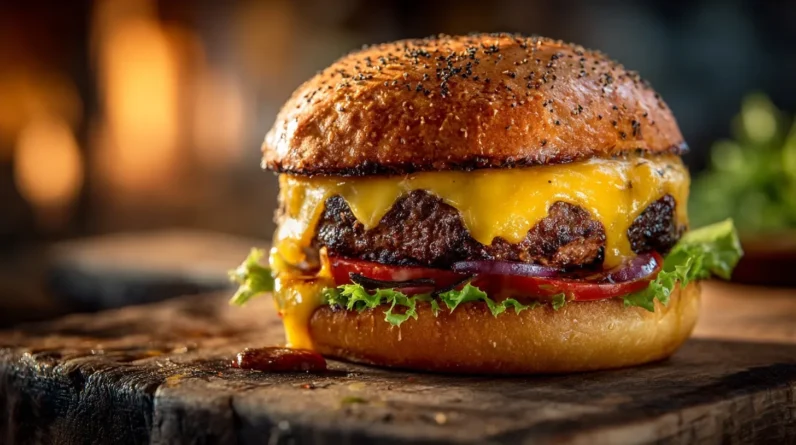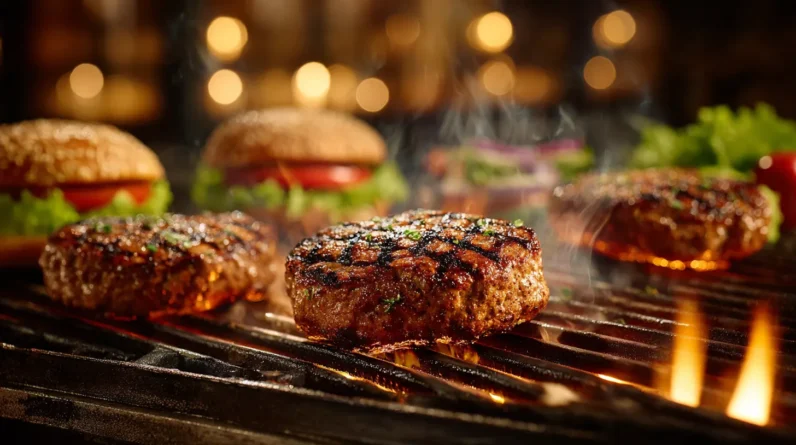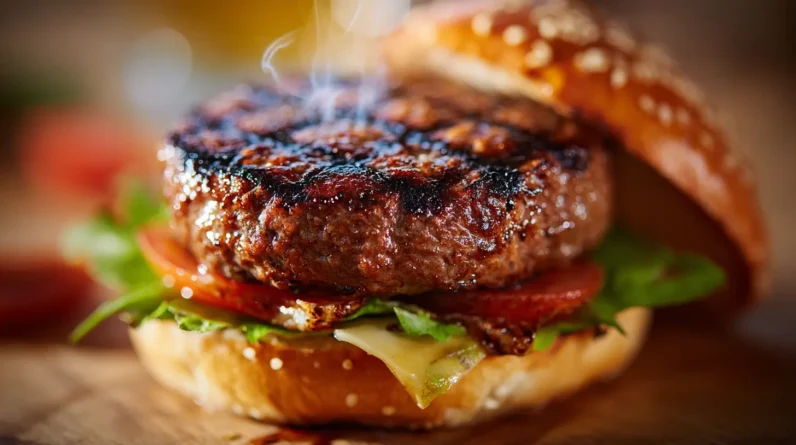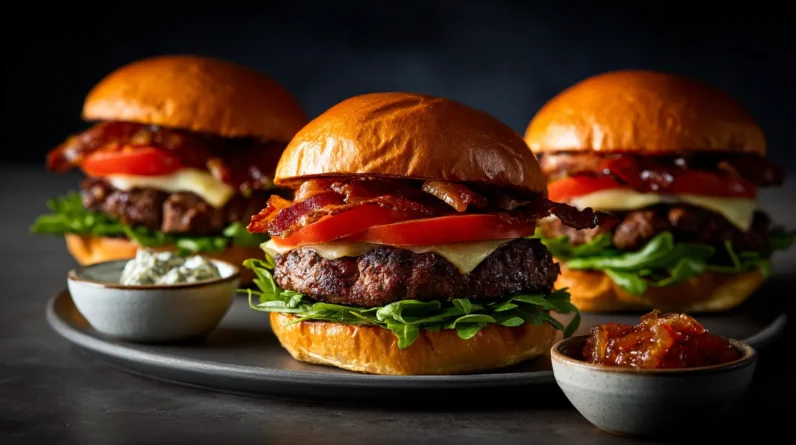



For the perfect beef burger, we recommend starting with an 80/20 lean-to-fat blend, ideally chuck, brisket, or short rib. Season simply with kosher salt and cracked pepper, shape patties to ¾-inch thickness, and create a center indent to prevent doming. Choose your cooking method—grill, cast iron, or smash—based on your desired texture and crust. Always verify doneness with an instant-read thermometer. Every technique we’ve outlined ahead will sharpen your approach considerably.
Choosing the Right Beef: Fat Ratio and Cut Explained
The three most critical decisions in crafting a superior beef burger begin with the meat itself — its fat content, muscle origin, and grind coarseness. For beef selection, we recommend an 80/20 lean-to-fat ratio; it’s non-negotiable for achieving a rich flavor profile without sacrificing structural integrity. Chuck delivers ideal intramuscular fat distribution, while brisket adds depth and short rib contributes buttery richness — blending all three elevates complexity considerably. Grind coarseness directly influences texture contrast: a coarser grind creates distinct, satisfying chew, whereas fine grinds produce density. We also can’t ignore cooking temperature — fat renders between 130°F and 160°F, so understanding this range determines whether your burger finishes succulent or dry. Master these variables first; everything else follows.
How to Season and Shape Your Burger Patty
Once we’ve locked in our meat selection, seasoning and shaping demand equal discipline — errors here unravel everything the grind achieved. Seasoning techniques should remain minimal: kosher salt and cracked pepper, applied externally just before cooking. Over-mixing salt into the blend draws out moisture, compromising patty moisture and producing a dense, sausage-like texture we’re actively avoiding.
Flavor balance emerges from restraint, not accumulation. Resist additives — eggs, breadcrumbs, Worcestershire — that mask the beef’s integrity.
For shaping methods, press each patty to roughly ¾-inch thickness, working the meat as little as possible. Thumb-press a shallow indent into the center; this counters the natural dome effect during cooking. Cold hands, cold meat, minimal contact — these aren’t suggestions. They’re the difference between a superior burger and an acceptable one.
Grill, Pan, or Smash: Which Cooking Method Wins?
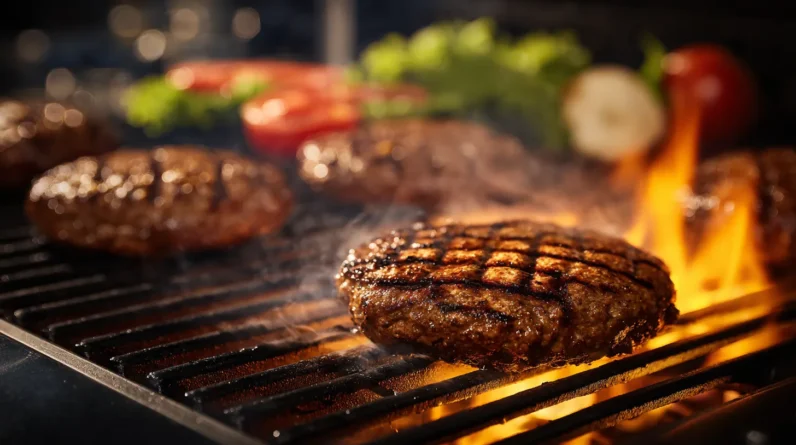
Each method — grill, pan, smash — produces a fundamentally different burger, and choosing correctly depends on what we’re prioritizing: smoke, crust, or caramelization.
Flavor comparison and texture differences break down cleanly:
- Grill pros: Hardwood or charcoal smoke penetrates the patty, delivering complexity no pan replicates. Equipment needed: grates, tongs, thermometer. Cooking time runs 4–5 minutes per side.
- Pan downs: Cast iron retains heat evenly, producing a controlled, consistent crust. Clean up ease is moderate. Cooking time: 3–4 minutes per side.
- Smash benefits: Maximum Maillard reaction occurs immediately upon contact with a screaming-hot surface. Thin patties cook in under 2 minutes per side, and clean up ease rivals the pan method.
We select the method the burger demands — not the one we’re comfortable with.
How to Tell When Your Beef Burger Is Done
Knowing when a burger is done separates a confident cook from a guessing one. We rely on internal temperature, not color indicators alone, for precision. After pulling the burger, honor the resting time — two minutes minimum — to preserve burger juiciness by redistributing moisture.
| Doneness Level | Internal Temperature |
|---|---|
| Rare | 120–125°F |
| Medium-Rare | 130–135°F |
| Medium | 140–145°F |
| Medium-Well | 150–155°F |
| Well-Done | 160°F+ |
Color indicators — pink center, clear juices — support our read, but they’re never definitive. A calibrated instant-read thermometer inserted laterally into the patty’s center gives us the only reliable, repeatable answer every time.
Build a Better Burger With the Right Toppings and Buns
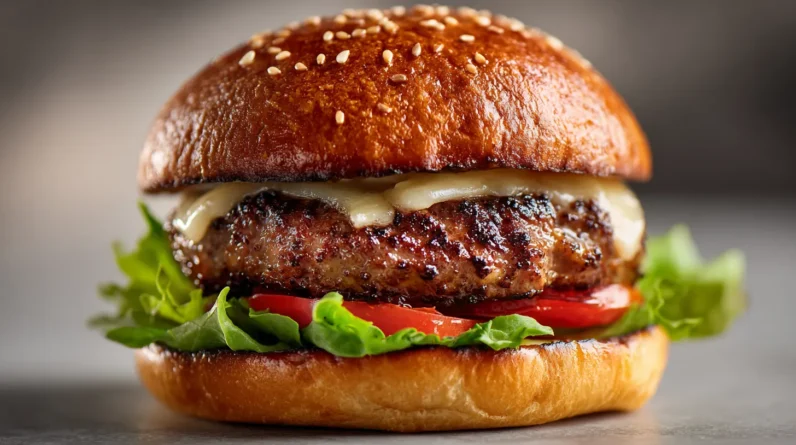
With the patty cooked to perfection, the toppings and bun we choose either elevate or undermine everything we’ve built. Selecting the right bun types and unique toppings demands the same intentionality we applied to the meat itself.
- Bun types matter: Brioche adds richness, potato buns offer softness, and pretzel buns deliver structural integrity without overwhelming flavor.
- Layer strategically: Place condiments directly on the bun to prevent sogginess, then stack from sturdiest to most delicate ingredients.
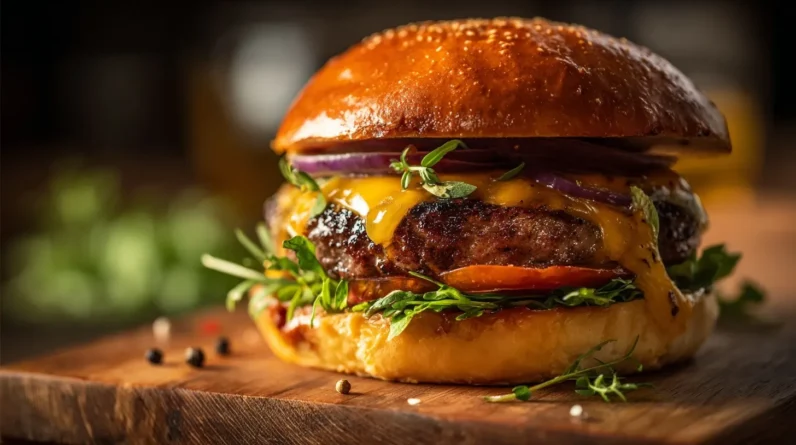
- Unique toppings create distinction: Caramelized onions, pickled jalapeños, compound butters, or aged cheeses transform a standard burger into a refined, memorable experience.
Every component should complement the beef’s flavor profile rather than compete with it.
Frequently Asked Questions
How Long Can Raw Burger Patties Be Safely Stored in the Refrigerator?
We recommend you store raw burger patties for no more than 1-2 days using proper safe storage refrigerator tips: maintain temperatures at or below 40°F and keep patties tightly wrapped to prevent contamination.
Can Beef Burgers Be Cooked From Frozen Without Thawing First?
Yes, we can cook frozen burgers directly—frozen cooking is achievable, but we must prioritize burger safety by extending cook time and verifying an internal temperature of 160°F to eliminate harmful pathogens.
What Are the Best Side Dishes to Serve Alongside Beef Burgers?
We’ve curated our favorite burger pairings: crispy shoestring fries, tangy coleslaw, and grilled corn. Complement these with ideal toppings—caramelized onions, aged cheddar, and house-made aioli—to elevate your burger experience to refined, masterful execution.
How Do I Prevent Cross-Contamination When Handling Raw Ground Beef?
Want to master sanitation practices? We’ll keep surfaces, utensils, and hands separate from other foods. Wash thoroughly between tasks, refrigerate promptly, and guarantee safe cooking temperatures reach 160°F to eliminate harmful bacteria effectively.
Are There Allergy-Friendly Bun Alternatives for People Avoiding Gluten?
We’ve found excellent gluten free options using alternative grains like rice flour, almond, and cassava-based buns. Lettuce wraps and portobello mushroom caps also offer refined, structurally sound solutions for those avoiding gluten entirely.
Conclusion
It’s no coincidence that the world’s most beloved burgers share the same foundation: quality beef, intentional seasoning, precise cooking, and thoughtful assembly. We’ve walked you through every critical layer, and now the path from raw patty to perfect plate is yours to command. When the fat renders correctly, the crust forms just right, and the toppings align seamlessly, what feels like culinary luck is actually mastery in disguise.