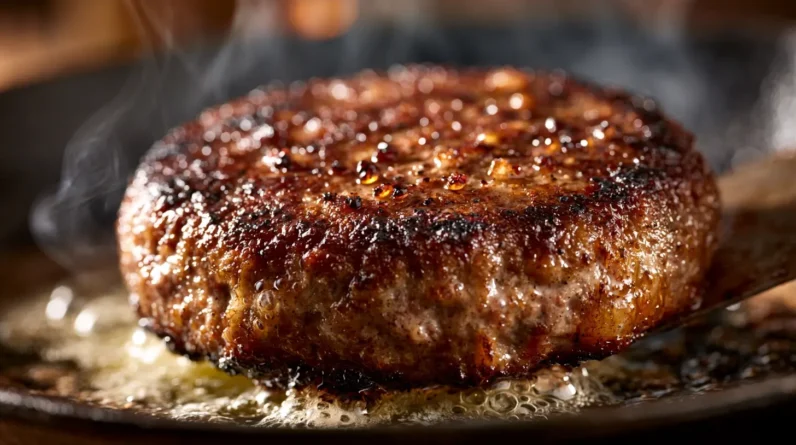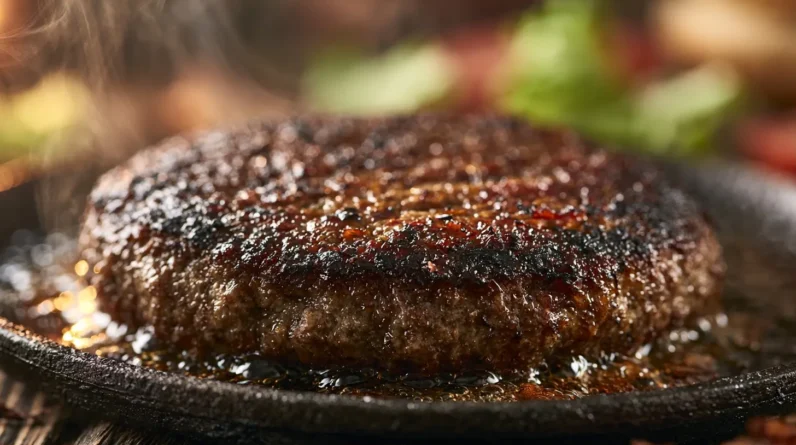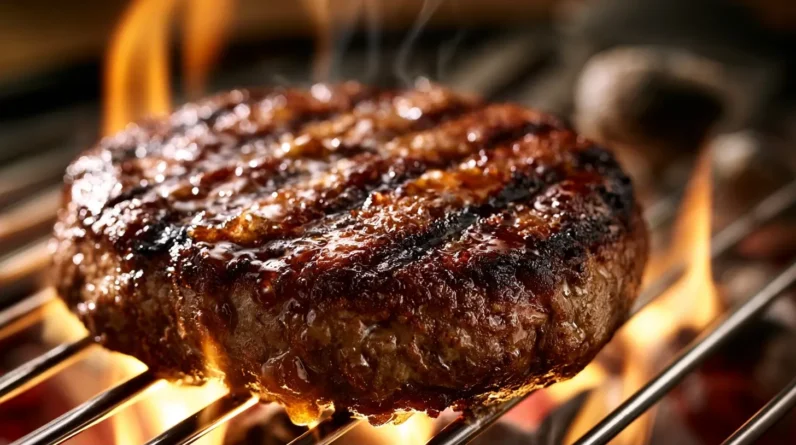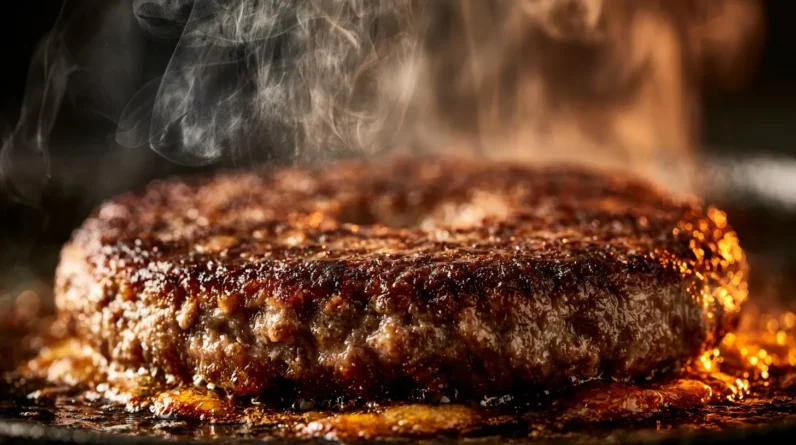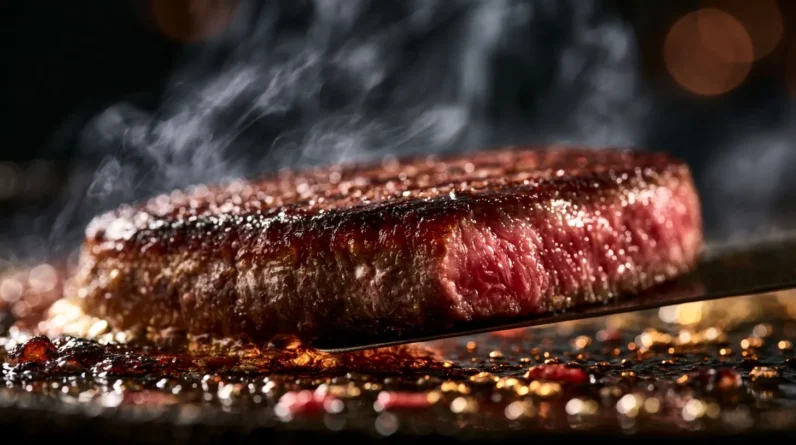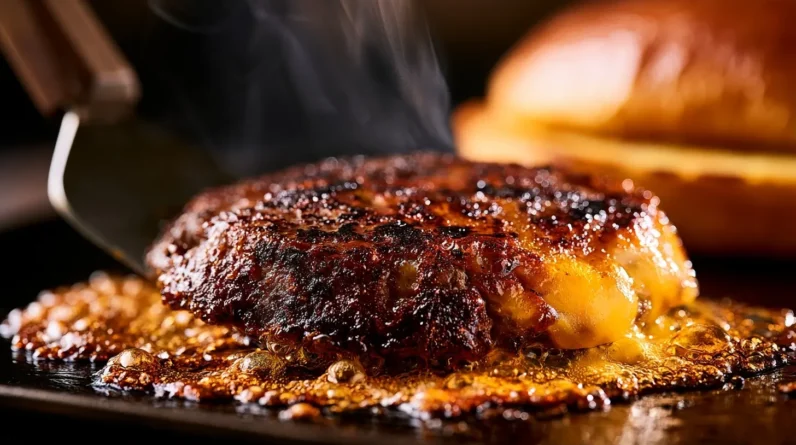



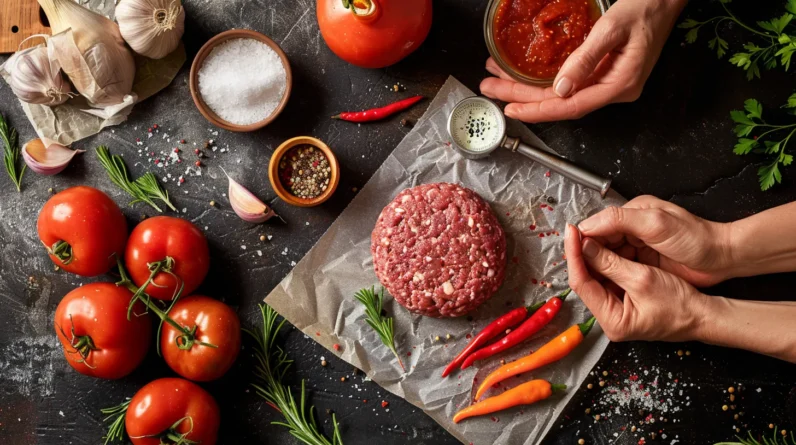
We’ll master five essential techniques to prevent beef burger disasters. Start with an 80/20 lean-to-fat blend from chuck or brisket, ground fresh and cold. Handle meat gently during patty formation, seasoning only the exterior immediately before cooking. Create a center dimple to safeguard even cooking and avert bulging. Finally, cook to precise internal temperatures using a thermometer, then rest your burgers for three to five minutes to retain juices. These foundational methods access burger excellence most home cooks haven’t yet discovered.
Choose the Right Beef Blend and Fat Content
When we’re grinding beef for burgers, we’re making our first critical decision—and it’ll directly impact texture, flavor, and juiciness. We’ll want an 80/20 or 75/25 lean-to-fat ratio; this fat content renders during cooking, creating moisture and flavor while preventing dense, dry patties.
We’re selecting chuck, brisket, or short rib blends for excellent marbling and taste complexity. Proper grinding techniques matter greatly—we’ll keep our meat and equipment cold throughout, preventing fat from smearing and compromising texture. We’re grinding just before cooking to maximize freshness.
For ideal storage conditions, we’ll maintain freezer temperatures at zero degrees Fahrenheit or below, wrapping patties individually in butcher paper. This prevents oxidation and freezer burn. We’re avoiding pre-ground supermarket beef when possible; grinding ourselves secures superior quality and precise fat ratios.
Handle Your Meat Gently to Preserve Texture
Since we’ve carefully selected and ground our beef, we’re now safeguarding that quality through deliberate handling—overworking the meat is one of the most common burger disasters we’ll encounter.
Excessive manipulation breaks down muscle fibers and fat globules, resulting in dense, tough patties. Instead, we’ll implement these critical practices:
- Minimize contact time during thorough patty formation; use gentle finger pressure only
- Utilize a proper thawing process to maintain structural integrity before shaping
- Avoid compressing or pressing patties during cooking, which expels flavorful juices
- Work with cold meat straight from refrigeration to prevent fat smearing
We’ll form patties using light hands and deliberate motions, creating uniform thickness without compression. This restraint preserves the natural texture and guarantees superior mouthfeel, allowing our carefully selected blend to deliver its intended flavor profile and juiciness throughout the cooking process.
Season Strategically Without Overworking the Patty
With our patties formed and resting, we’ll now address seasoning—the final opportunity to elevate flavor without compromising the texture we’ve just protected. The proper seasoning method demands precision: we’ll apply salt and pepper exclusively to the patty’s exterior immediately before cooking. This timing prevents salt from drawing out moisture and breaking down proteins, which would compromise our carefully preserved structure.
We’ll avoid mixing seasonings into the meat itself—this requires excessive handling that degrades texture. Instead, we’ll season just before the patties hit heat, ensuring flavors penetrate the surface while maintaining interior integrity. Ground beef’s delicate protein matrix demands this restraint. By respecting seasoning timing and method, we’ll achieve ideal flavor without sacrificing the textural excellence we’ve worked to preserve throughout every preceding step.
Create a Dimple to Prevent Bulging and Ensure Even Cooking
As heat contacts the patty’s surface, the exterior proteins contract faster than the interior, causing the burger to dome upward—a phenomenon we’ll counteract by creating a shallow depression in the center before cooking.
We’ll implement this technique through proper patty shaping:
- Press your thumb into the center, creating a dimple approximately ½-inch deep
- Maintain consistent thickness control across the remaining patty surface
- Guarantee the depression doesn’t extend to the edges, preserving structural integrity
- Account for the dimple’s reduction as proteins cook and contract
This strategic indentation accommodates the burger’s natural expansion during cooking, promoting even heat distribution and preventing the problematic bulging that compromises texture and presentation. The result? A uniformly cooked patty with a flat, professional appearance.
Cook to Temperature and Rest Before Serving
Now that we’ve shaped our patties to cook evenly, we’ll focus on the final determinants of burger quality: internal temperature and resting time. We’ll use a meat thermometer to monitor doneness precisely—medium-rare requires 130-135°F, medium needs 135-145°F. Proper cook time depends on patty thickness and heat intensity, but we shouldn’t rely on timing alone.
After achieving target temperature, we’ll remove burgers from heat and allow a critical resting period of 3-5 minutes. During this resting period, carryover cooking continues while muscle fibers relax, redistributing juices throughout the patty. Without this step, cutting into the burger immediately releases those essential juices onto the plate, compromising texture and flavor. We’ll cover burgers loosely with foil to retain warmth while preserving crust integrity.
Conclusion
We’ve covered the essentials for burger perfection: selecting quality beef with proper fat ratios, handling meat minimally to maintain texture, seasoning judiciously, dimpling for even heat distribution, and cooking to precise temperatures. As the saying goes, “the devil’s in the details”—and these techniques prove it. We’ll guarantee you’re never serving undercooked centers or dried-out patties again. Master these fundamentals, and you’ll consistently deliver exceptional burgers.