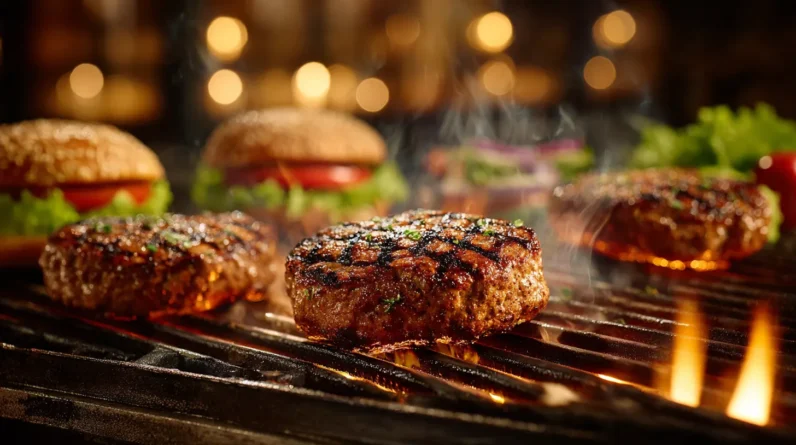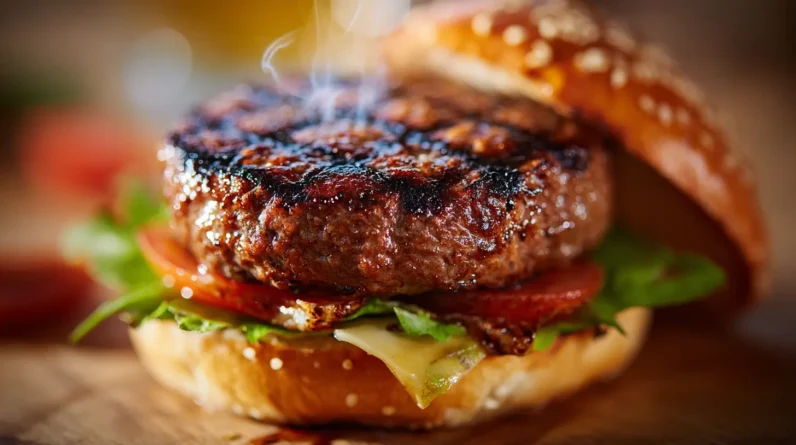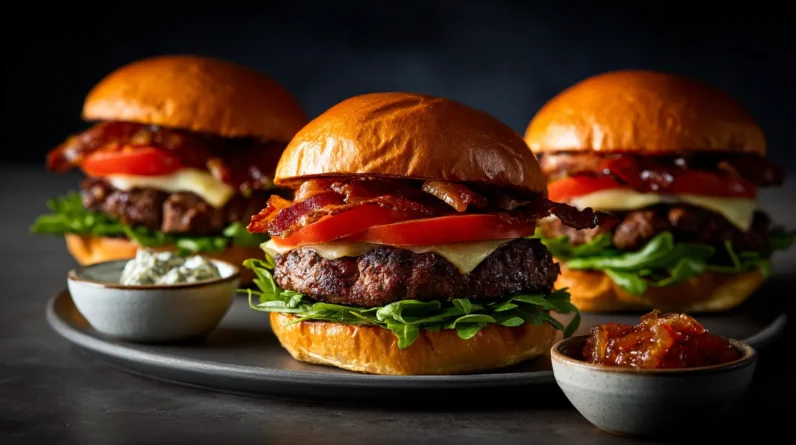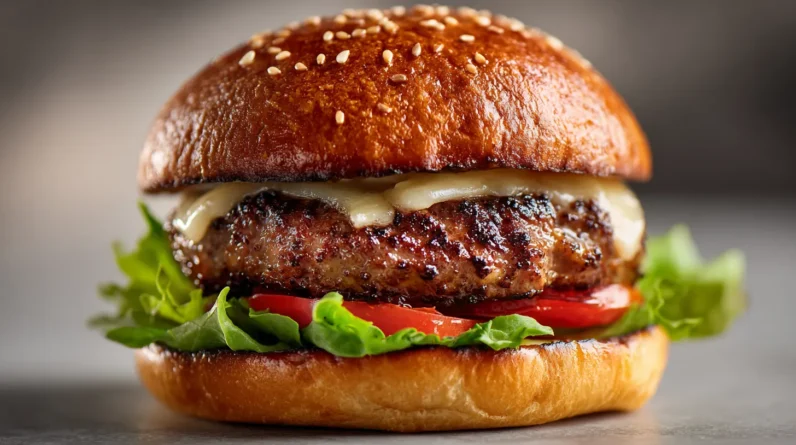



We’ve mastered the techniques separating mediocre backyard burgers from competition-grade patties. Start with an 80/20 fat-to-lean ratio using fresh-ground chuck or brisket, then form 0.75-inch patties with a thumb indent. Season aggressively just before grilling. Establish dual heat zones—375-400°F for searing, 300°F for even cooking—and monitor internal temps to 160°F. Use the reverse sear technique at 275°F, then finish at 500°F+ for maximum crust development. The advanced strategies we’ve uncovered extend well beyond these fundamentals.
Select the Right Meat Blend for Maximum Flavor and Juiciness
The foundation of an exceptional beef burger rests on choosing the correct meat blend, which we’ll break down into fat content and muscle composition. We’ll want to choose ideal optimal fat to lean ratio—typically 80/20 or 85/15—balancing moisture retention with structural integrity. Select high quality cuts like chuck, brisket, or short rib, avoiding pre-ground options that’ve lost volatile aromatics. Chuck alone provides adequate marbling; brisket adds depth through collagen breakdown; short rib contributes richness via intramuscular fat.
We recommend grinding meat yourself within two hours of cooking for prime optimal texture and flavor preservation. Coarse grinds yield looser, juicier patties; fine grinds create denser results. Temperature matters critically—keep your meat cold throughout grinding to prevent fat smearing, which compromises your burger’s final structure and mouthfeel.
Form and Season Your Patties Like a Pro
Now that you’ve selected and ground your meat, proper patty thickness and seasoning will determine whether your burger achieves restaurant-quality results or falls flat.
We’ll focus on consistent patty size and formation techniques that guarantee even cooking. Gentle handling prevents density; overworking the meat creates tough, dense burgers. Create a slight depression in each patty’s center—this counters bulging during cooking and maintains perfect thickness throughout the grilling process.
| Technique | Benefit |
|---|---|
| 0.75-inch thickness | Achieves perfect medium-rare doneness |
| Thumb indent | Prevents uneven puffing |
| Light pressing | Preserves moisture and texture |
Season aggressively just before grilling. We recommend kosher salt and fresh cracked pepper applied to both surfaces. This timing prevents osmotic breakdown of proteins. Avoid pre-seasoning; salt draws out moisture, compromising juiciness and crust development critical for superior results.
Master Temperature Control and Grill Setup
Your perfectly formed and seasoned patties won’t reach their full potential without precise temperature management and strategic grill positioning. We’ll master both by creating distinct heat zones on our grill.
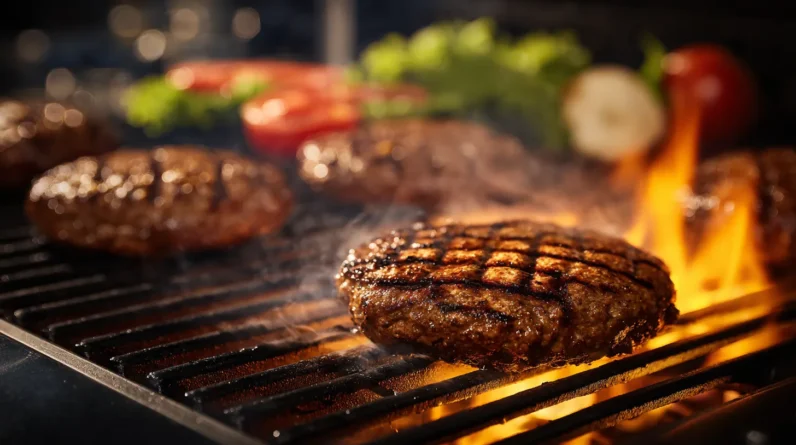
For direct heat placement, we’re targeting 375-400°F for initial searing. This high-temperature zone creates that coveted crust through the Maillard reaction. We’ll sear each patty 3-4 minutes per side here.
Indirect heat management requires a cooler zone, around 300°F, where we’ll finish cooking without charring. This two-zone approach prevents burning while ensuring thorough, even cooking.
We’ll preheat our grill for 15 minutes, establishing consistent temperatures. Proper airflow control—managing vents on charcoal grills or burner adjustments on gas—ensures stability. Monitor internal temps with a meat thermometer: 160°F for well-done burgers. This precision separates competent grilling from exceptional results.
Achieve the Perfect Crust Without Overcooking the Interior
We’ve built our temperature zones; now we’ll execute the technique that separates a burnt exterior from a perfectly caramelized crust—the reverse sear method. We’ll cook our patties low-and-slow until they reach 110°F internally, then sear them hard over high heat for maximum flavor development.
| Stage | Temperature | Duration |
|---|---|---|
| Low Heat Cook | 275°F | 4-6 minutes |
| Internal Target | 110°F | Check constantly |
| High Heat Sear | 500°F+ | 90 seconds per side |
| Proper Resting | Room temp | 5 minutes minimum |
| Ideal Cooking Time | Total | 15-20 minutes |
This approach eliminates overcooking while building that coveted crust. We’ll let proper resting techniques work their magic post-sear, allowing carryover cooking to finish the burger at 130°F medium-rare without sacrificing exterior quality.
Know When to Flip and Resist the Common Mistakes
Once our patties hit that 275°F zone, we’re committing to a single-flip protocol that maximizes crust development without disrupting the interior’s gentle cooking process. Timing the flips requires discipline—we resist the urge to check prematurely, which breaks the critical Maillard reaction occurring on the cooking surface.
Avoiding premature flipping ranks among the most consequential mistakes we make. Every interference disrupts heat distribution and prevents ideal browning. We wait until the patty naturally releases from the grate, typically three to four minutes for medium-thickness burgers.
When we do flip, we execute decisively—one rotation only. We don’t flip multiple times or adjust positioning unnecessarily. This restraint allows the second side equivalent crust development while preserving our precisely cooked interior. Trust the process, resist the impulse.
Build Flavor Beyond Salt and Pepper
While salt and pepper establish our foundational seasoning layer, three additional flavor components—umami amplifiers, aromatic compounds, and textural elements—elevate our burger’s complexity.
We’ll infuse aromatics through minced garlic, shallots, and fresh herbs directly into the patty. Optimize fat content by incorporating 20% beef fat, which carries flavor compounds and promotes Maillard browning. Umami amplifiers like Worcestershire sauce, soy sauce, or aged cheese intensify savory depth.
| Component | Application |
|---|---|
| Umami | Worcestershire, soy, cheese |
| Aromatics | Garlic, shallots, herbs |
| Fat Content | 20% ratio optimization |
| Texture | Breadcrumb binding agents |
We’ll avoid overworking the meat, which compromises texture. These layered approaches transform our burger from pedestrian to exceptional, delivering sophisticated flavor profiles that distinguish mastery-level execution.
Conclusion
We’ve taken you through the fundamentals—meat selection, patty formation, temperature management, crust development, and timing. Like a chef we understand who spent two seasons perfecting his technique before landing consistent results, you’ll find that mastery compounds. Each burger you grill builds neural pathways that sharpen your instincts. We’re confident that applying these principles systematically will elevate your results from good to exceptional, transforming your backyard into a legitimate competitive arena.