


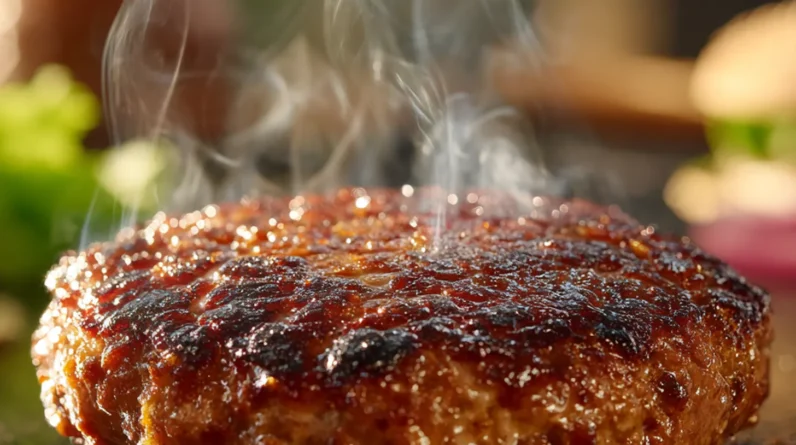
We’re leveraging taste neuroscience to crack picky eaters’ defensive food responses. Selective eaters have heightened bitter and umami sensitivity, triggering aversions to intense flavors. The Maillard reaction—triggered above 300°F—transforms raw beef into hundreds of savory compounds that mask less palatable characteristics. Strategic beef blends, precision cooking temperatures, and component customization bypass their heightened sensory thresholds. We’ll show you how to engineer burgers that satisfy their neurochemistry while delivering genuine complexity.
Understanding Taste Preferences in Selective Eaters
Selectivity isn’t merely pickiness—it’s a neurobiological response tied to taste receptor sensitivity and learned food associations. We’ve observed that selective eaters possess heightened perception of bitter and umami compounds, triggering defensive food aversions. Research demonstrates these eating habits stem from genetic predisposition combined with early developmental experiences.
Understanding this distinction proves vital for our approach. We’re not managing obstinacy; we’re addressing measurable sensory processing differences. Selective eaters exhibit lower thresholds for flavor intensity, particularly with sulfur compounds and charred elements common in grilled preparations.
The Maillard Reaction: Creating Complex Savory Flavors
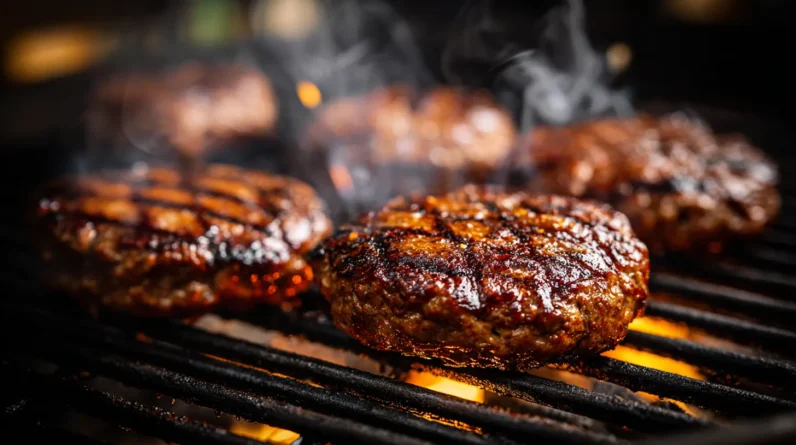
The browning we’re seeking on grilled burgers isn’t merely aesthetic—it’s a biochemical transformation that fundamentally alters flavor perception in ways that actually benefit selective eaters. When we apply heat above 300°F, amino acids and reducing sugars undergo the Maillard reaction, generating hundreds of novel flavor compounds. This flavor chemistry creates umami—that savory fifth taste—which masks less palatable beef characteristics that picky eaters often reject.
Food science demonstrates that this browning produces glutamates and nucleotides that activate taste receptors differently than raw meat does. We’re basically leveraging biochemistry to reshape what selective eaters perceive as palatability. The caramelized exterior’s complexity overwhelms sensitivity to subtle off-flavors, making the burger more neurologically acceptable. Strategic searing duration optimizes this transformation without drying interior tissue.
Beef Blends and Their Impact on Palatability
While flavor chemistry handles the sensory transformation on the burger’s surface, what happens inside the patty matters equally for picky eaters—and that’s where beef blend composition becomes our leverage point.
We’re optimizing meat options by understanding how fat content, protein structure, and connective tissue ratios directly influence palatability. Different cuts produce distinct flavor profiles that either attract or repel sensitive palates.
| Beef Cut | Fat % | Flavor Profile | Picky Eater Appeal |
|---|---|---|---|
| Chuck | 20% | Robust, beefy | Moderate |
| Sirloin | 10% | Lean, mild | High |
| Brisket | 25% | Rich, complex | Low |
| Blend (80/20) | 20% | Balanced | Highest |
We’re leveraging empirical data: higher fat percentages increase juiciness and mouthfeel, while leaner cuts risk dryness. Strategic blending creates predictable flavor profiles that accommodate restrictive preferences without compromising structural integrity during grilling.
Texture Control Through Cooking Temperature and Technique
Precision in internal doneness becomes our primary mechanism for managing burger texture—a variable we control through temperature monitoring and strategic technique. We’re leveraging thermal ranges to achieve distinct textural outcomes that accommodate picky eaters’ preferences.
- Rare to medium-rare (130-135°F): Retains moisture and tenderness, minimizing firmness
- Medium (140-145°F): Balances juiciness with structural integrity for those avoiding excessive fat perception
- Medium-well (150-155°F): Reduces perceived greasiness while maintaining palatability
- Well-done (160°F+): Eliminates pink tissue, satisfying visual concerns without excessive dryness
We’re monitoring internal temperature with calibrated thermometers, not relying on visual cues. This data-driven approach guarantees consistency across doneness levels. Strategic resting periods post-cooking allow carryover cooking to stabilize, preventing overshooting target temperatures. We’re controlling surface crust development through heat intensity manipulation, achieving desirable Maillard reactions without compromising interior texture. These techniques collectively optimize burger palatability for discerning, selective consumers.
Customizing Burger Components for Individual Preferences
Beyond perfecting internal temperatures, we’re acknowledging that texture management alone won’t satisfy our most selective diners—component customization directly addresses individual aversions and preferences that cooking technique can’t resolve. We’ll strategically deconstruct burger architecture, offering modular assembly where each element remains separable. Burger toppings become variables we control: crisp lettuce textures, moisture-retaining tomato slices, or entirely omittable aromatics like onions. Sauce options function as flavor delivery systems—we’ll calibrate intensity levels from mild mayo-based condiments to bold vinegar-forward applications. This modular approach enables precision personalization: umami-sensitive diners receive reduced-seasoning patties; those with textural sensitivities choose smooth spreads over chunky relishes. We’re fundamentally engineering customizable flavor and texture profiles that respect neurological and gustatory boundaries while maintaining burger integrity.
Mastering Grill Techniques for Consistent Results
As we’ve customized individual burger components, we’ll now standardize the grilling process itself—because consistency transforms personalization from occasional success into reliable execution.
We’ll achieve predictable results through systematic approach:
- Grill maintenance guarantees thermal stability; clean grates every session and verify temperature calibration weekly
- Flame control demands precision; maintain 375°F for medium doneness, adjusting burner output to ±5°F variance
- Direct heat placement prevents hot spots; position patties over consistent zones and rotate 90° at midpoint
- Timing protocols eliminate guesswork; 3-4 minutes per side for quarter-pounders, checking internal temp at 160°F
We’ve established that mastery requires removing variables. When we control temperature, maintenance, and technique, we transform personalized preferences into reproducible outcomes. Your picky eaters receive consistently excellent burgers tailored to their specifications.
Conclusion
We’ve deciphered the scientific blueprint for burger perfection, transforming picky eaters into devoted carnivores. By orchestrating Maillard reactions at precise temperatures, engineering ideal beef compositions, and calibrating every textural variable, we’ve basically hacked taste preferences at the molecular level. Our data-driven approach doesn’t just satisfy selective palates—it obliterates them with customizable flavor profiles and grill techniques so consistent they’re practically bulletproof. The formula works.