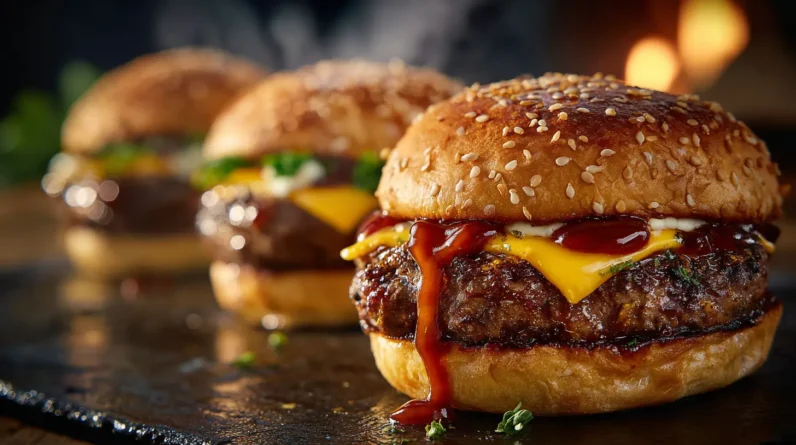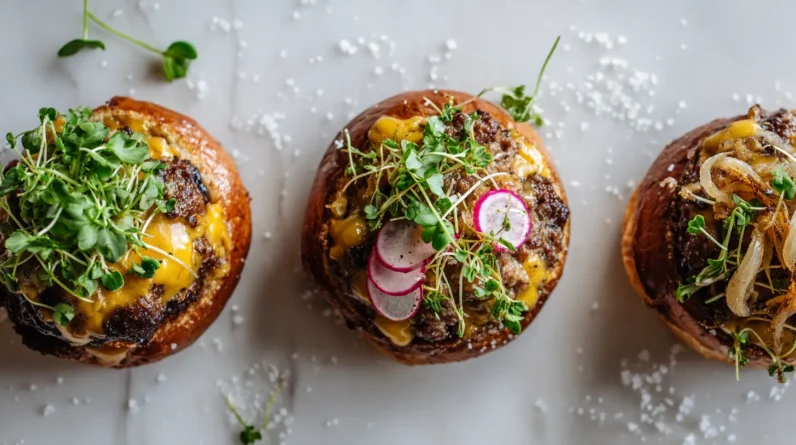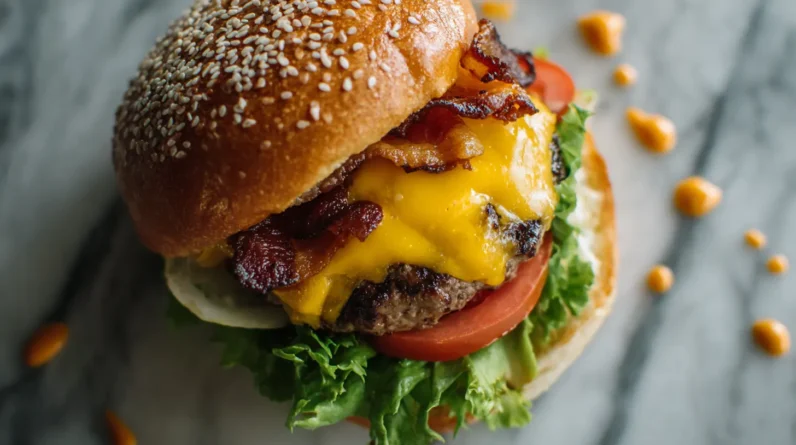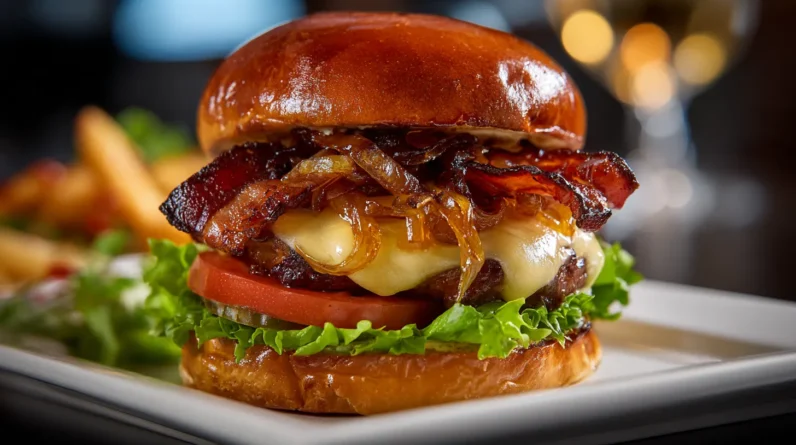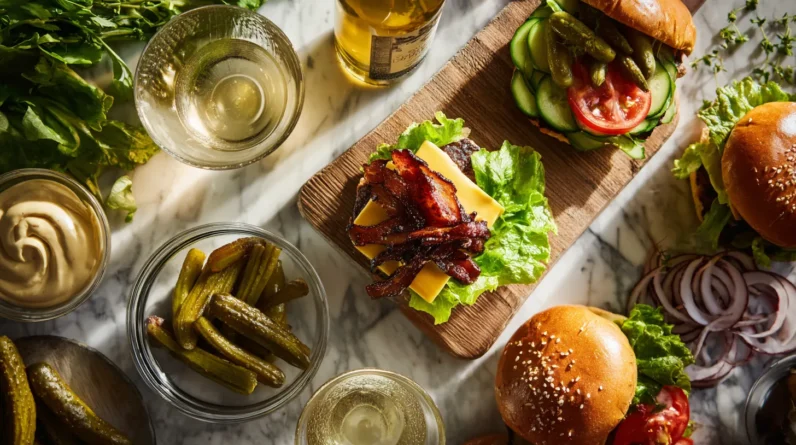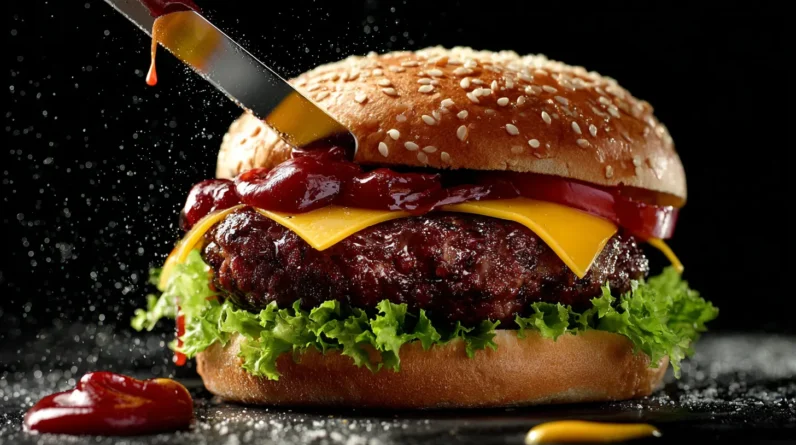



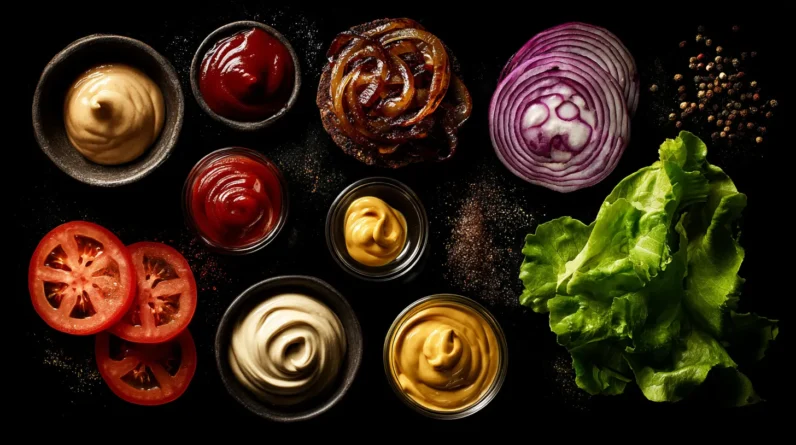
We’re orchestrating flavor at the molecular level when we build a burger. Caramelized onions and aged cheddar activate umami through glutamates and the Maillard reaction. Pickles provide acidity that cuts through richness while capsaicin in spicy sauces stimulates thermal receptors. Crispy, creamy, and juicy textures prevent sensory adaptation across successive bites. Each topping serves a functional purpose—amplifying savory notes, balancing heat, or cleansing the palate. Understanding these synergistic interactions reveals why certain pairings work.
The Five Basic Tastes and How Toppings Activate Them
Since our taste buds perceive five distinct categories—sweet, salty, sour, umami, and bitter—we can strategically layer burger toppings to engage each receptor type and create a more complex flavor profile. Umami flavor activates through glutamate-rich ingredients like aged cheddar, caramelized onions, and tomatoes, delivering that savory taste we crave. Salt enhances perception across all receptors while amplifying umami compounds. Acidic elements—pickles, vinegar-based sauces—balance richness and cleanse the palate between bites. Sweet components from ketchup or caramelized elements provide counterpoint to savory depth. Bitter notes from arugula or charred surfaces add sophistication. By understanding how each topping stimulates specific taste receptors, we’re able to construct burgers with measurable flavor complexity rather than relying on intuition alone.
Why Caramelized Onions and Aged Cheese Enhance Beef Flavor
The Maillard reaction—that chemical process transforming amino acids and reducing sugars under heat—creates the foundation for why caramelized onions and aged cheese work so effectively with beef. When we caramelize onions, we’re concentrating their natural sugars and developing hundreds of new flavor compounds that amplify savory umami notes in the meat. Aged cheese contains glutamates and nucleotides that directly trigger umami receptors, intensifying beef’s inherent savoriness. These beef enhancing toppings function as flavor boosters through complementary chemistry rather than mere addition. The sulfur compounds in caramelized onions interact synergistically with beef’s amino acid profile, while aged cheese’s proteolytic breakdown products create concentrated flavor molecules that enhance perception of the burger’s overall depth. Together, they’re not simply toppings—they’re strategic flavor amplifiers grounded in food science.
Acidity and Heat: Using Pickles and Spicy Sauces to Cut Through Fat
While umami-rich toppings deepen savory intensity, we must counterbalance beef’s inherent fat content with complementary sensory mechanisms—namely acidity and heat. Pickles provide enzymatic fat reduction through vinegar’s acetic acid, which dissolves lipid compounds and cleanses the palate between bites. This chemical interaction enhances flavor perception by resetting taste receptors, allowing subsequent tastes to register with greater clarity.
Spicy sauces containing capsaicin activate TRPV1 receptors, creating thermal sensation that masks fat’s heaviness while amplifying other flavor notes. The combination proves synergistic: acidity cuts through richness while heat stimulates salivation, promoting continued flavor enhancement and improving mouthfeel.
We’re leveraging biochemistry to create balanced taste experiences. Strategic deployment of pickles and capsaicin-forward condiments transforms fat from a dulling agent into a complementary backdrop for dynamic, multisensory beef burger experiences.
Texture Contrast: The Science of Crispy, Creamy, and Juicy Elements
Beyond flavor profiles, we must architect textural complexity to sustain palatability throughout consumption. Crispy elements—crunchy lettuce and toasted buns—provide tactile contrast against the burger’s inherent moisture, engaging mechanoreceptors and enhancing perceived flavor intensity. This textural variance prevents sensory adaptation, maintaining engagement across successive bites.
Creamy components like mayonnaise or aged cheese create lubricating layers that facilitate mastication while coating oral tissues, prolonging flavor perception. Juicy beef itself delivers moisture through myofibrillar protein breakdown during cooking, creating gustatory satisfaction.
The interplay between these elements—crispy exterior, creamy middle, and succulent interior—establishes what we call “textural orchestration.” This stratification activates multiple sensory pathways simultaneously, creating multidimensional mouthfeel that elevates burger composition from simple assembly to engineered sensory experience.
Building Your Perfect Burger: Flavor Pairing Combinations That Work
Now that we’ve established how textural elements sustain sensory engagement, we can strategically leverage flavor compounds to amplify these sensory pathways through deliberate pairing combinations. We’ll construct burgers using complementary flavor profiles—umami-rich beef paired with acidic tomatoes, for instance, enhances perception of both elements through contrast. Incorporating burger customization into your meal planning requires understanding foundational pairings: caramelized onions with balsamic reduction, aged cheddar with horseradish, or fresh herbs with citrus aioli.
We’re fundamentally orchestrating volatile compounds that interact on your palate, creating synergistic effects. Each topping selection should serve a functional purpose—whether amplifying savory notes, brightening richness, or balancing heat. This analytical approach transforms burger assembly from intuitive indulgence into precise culinary construction.
Conclusion
We’ve demonstrated how strategic topping and sauce selection engages all five basic tastes, creating neurologically satisfying flavor profiles. By layering umami-rich aged cheese with acidic pickles and crispy textural elements, we’re optimizing sensory contrast while cutting through beef’s inherent fat content. We’ve shown that caramelization and heat amplify flavor perception through Maillard reactions and capsaicin stimulation. Understanding these mechanisms lets us construct burgers that’ll deliver maximum gustatory impact.