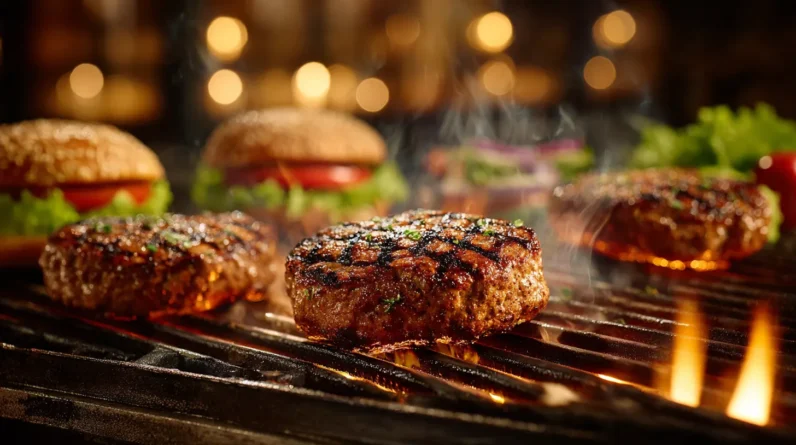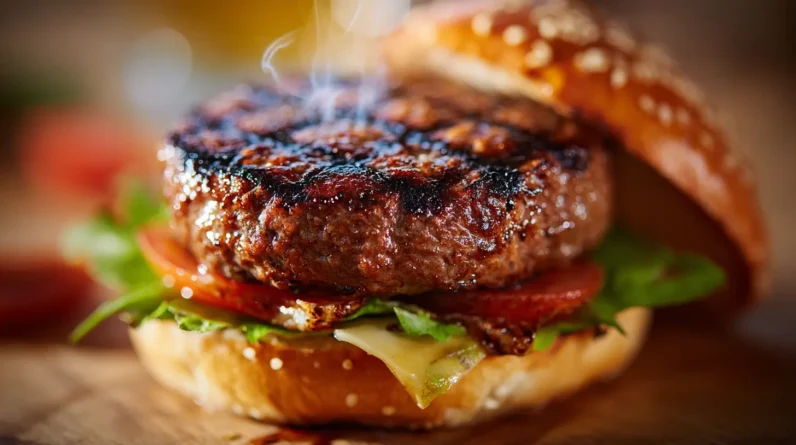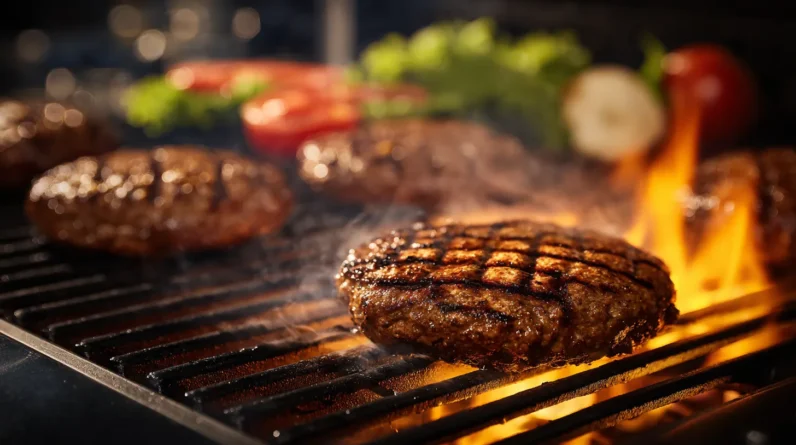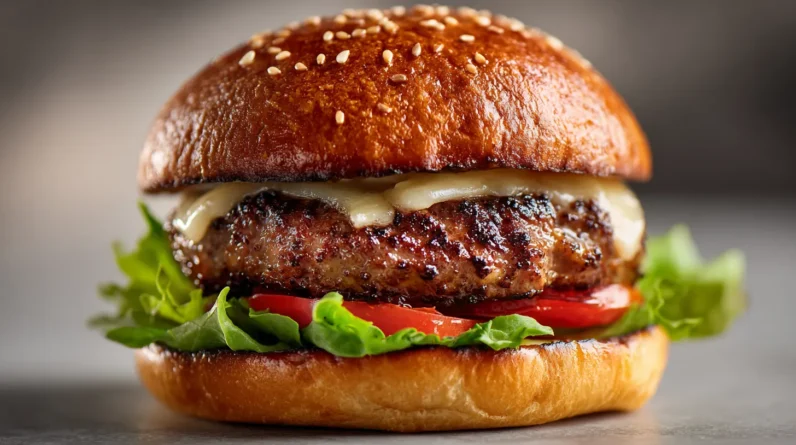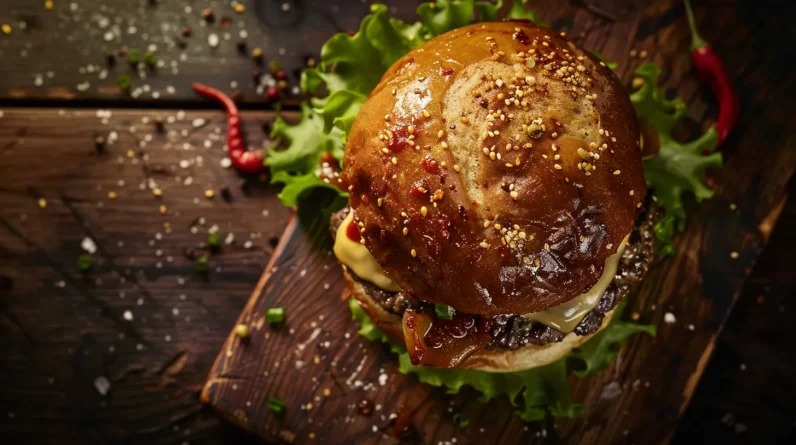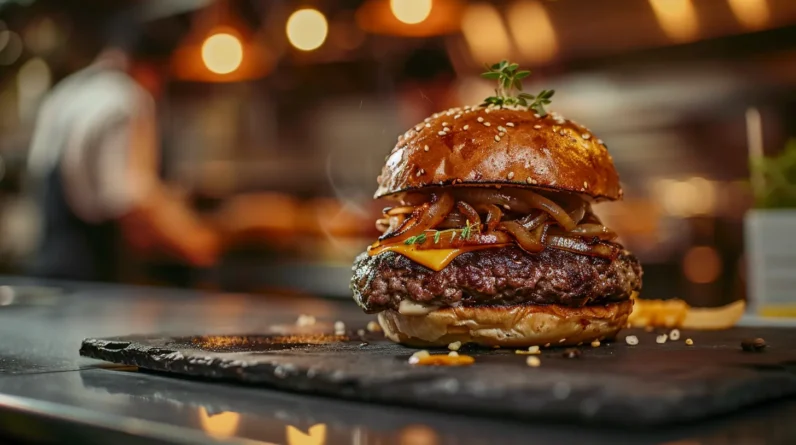



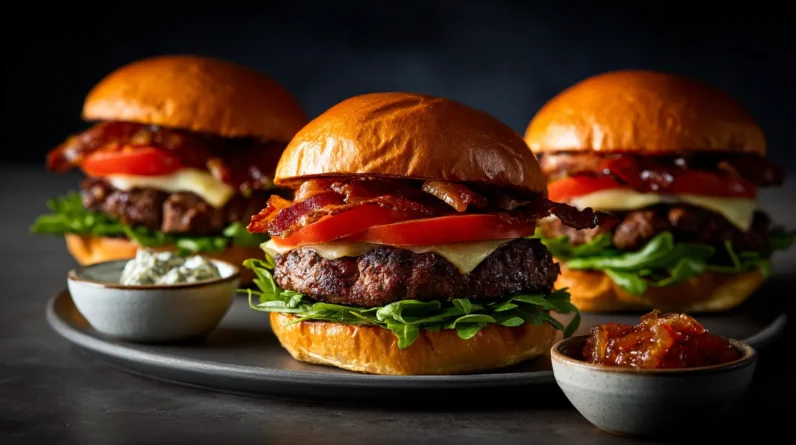
We’ve discovered that burger excellence hinges on six interconnected techniques that transform ordinary ground beef. Start with an 80/20 chuck-and-short-rib blend, medium-coarse ground and minimally handled. Shape quarter-pound patties with center dimples. Sear undisturbed on cast iron above 300°F for three to four minutes, flipping once. Season with coarse salt pre-cook, adding umami through MSG or anchovy powder. Cook to 130-135°F, rest three to four minutes, then finish with lightly toasted buns. Each step compounds the others in ways we’ll explore further.
Select the Right Meat Blend and Grind Size
Because the meat blend determines both texture and flavor profile, we’ll want to prioritize fat content and muscle composition. We’re targeting an 80/20 ratio—80% lean muscle to 20% fat—which delivers ideal juiciness without excessive grease loss during cooking.
For grinding technique optimization, we’ll use cold equipment and meat, processing just before cooking. Medium-coarse grinds create superior texture compared to fine grinds, which compact and yield dense, rubbery patties.
We’ll combine chuck for its robust beef flavor and marbling, adding short rib for enhanced richness. This fat content balance prevents dryness while maintaining structural integrity through the cooking process.
Temperature control throughout grinding preserves fat particle definition, ensuring they remain suspended within the meat rather than smearing into a paste. This distinction separates competent burgers from exceptional ones.
Shape and Handle Patties for Maximum Texture
Now that we’ve established our meat blend, we’ll shift focus to how we shape and handle the patties—a step that directly impacts texture and cooking performance.
Proper patty formation requires a deliberate approach:
- Use minimal handling – Overworking the meat compacts it, resulting in dense, tough burgers. Handle only enough to create cohesion.
- Create slight dimples – Press a shallow indent into each patty’s center. This prevents the burger from puffing during cooking while maintaining even thickness.
- Achieve consistent dimensions – Efficient patty shaping means uniform thickness and diameter. We recommend quarter-pound patties at three-quarters inch thick for ideal heat penetration.
These techniques preserve the meat’s natural structure, ensuring a tender crumb and superior moisture retention. Your burger’s texture directly reflects this precision.
Master the Maillard Reaction Through Heat Control
How do we transform a perfectly formed patty into a burger with a deeply caramelized crust and complex savory depth? Heat control and surface selection are critical. We need an ideal cooking surface—cast iron or stainless steel—that generates sustained temperatures above 300°F, triggering the Maillard reaction that creates those coveted brown compounds and umami flavors.
Preheat thoroughly for even heat distribution across the entire cooking surface. We’ll sear each patty for 3-4 minutes undisturbed, resisting the urge to flip prematurely. This patience builds that flavorful crust while the interior remains tender. A single flip prevents moisture loss and allows residual heat to finish cooking the center to your target temperature.
This technique-driven approach transforms ground beef into restaurant-quality results.
Season Strategically for Depth Without Overpowering
While a perfectly seared crust delivers textural contrast, we can’t overlook what happens before the patty hits the pan—strategic seasoning that builds complexity without masking the beef’s inherent flavor.
We’re constructing a balanced seasoning profile by layering complementary elements:
- Salt timing: Apply coarse salt immediately before cooking to enhance browning without drawing out moisture that’d inhibit crust formation.
- Umami depth: Incorporate flavorful seasoning combinations using freshly ground black pepper and a whisper of MSG or anchovy powder to amplify savory notes.
- Acid integration: Add finely minced garlic or Worcestershire sauce directly into the meat, allowing flavors to distribute evenly throughout.
This approach respects the beef while amplifying its natural qualities through precise technique and ingredient selection.
Cook to Temperature While Preserving Juiciness
With our seasoning foundation locked in, the cooking method itself determines whether we’ll achieve that perfect pink center or end up with a dry, gray disk. We’re targeting an internal temperature of 130-135°F for medium-rare, where even doneness develops without sacrificing balanced moisture. High heat searing creates a flavorful crust while the interior stays tender and juicy.
We’ll use a dual-temperature approach: sear the patty aggressively in a screaming-hot cast-iron skillet, then finish in a 400°F oven. This prevents overcooking the exterior while the center reaches ideal doneness. Resist the urge to press down—we’re preserving those rendered fats that carry flavor. Pull the burger slightly before target temperature; carryover heat completes the cook without drying the meat.
Rest and Finish for Better Flavor Release
Why do we rest the burger at all when we’ve just pulled it from heat? Resting allows carryover cooking to stabilize the internal structure while redistributing moisture throughout the patty. We’re leveraging moisture retention techniques that transform a good burger into an exceptional one.
- Rest for 3-4 minutes on a warm plate—this halts the cooking process and allows juices to redistribute evenly across consistent patty thickness
- Apply finishing salt just before serving, enhancing surface flavor without drawing out internal moisture
- Toast your bun lightly to create textural contrast while the patty reaches ideal temperature equilibrium
This deliberate pause intensifies umami perception, allowing beef’s complex flavor compounds to fully register on your palate. The resting phase isn’t downtime—it’s where technique meets mastery.
Conclusion
We’ve opened the burger’s ultimate transformation—from mediocre patty to transcendent masterpiece. You’re now wielding six revolutionary techniques that’ll catapult your burgers into legendary territory. That perfect crust? The precise meat blend? The mathematically ideal rest period? They’re not accidents anymore; they’re your competitive advantage. Every sear, every grain of salt, every degree of doneness becomes intentional. You’ve mastered the science. Now go dominate the grill.