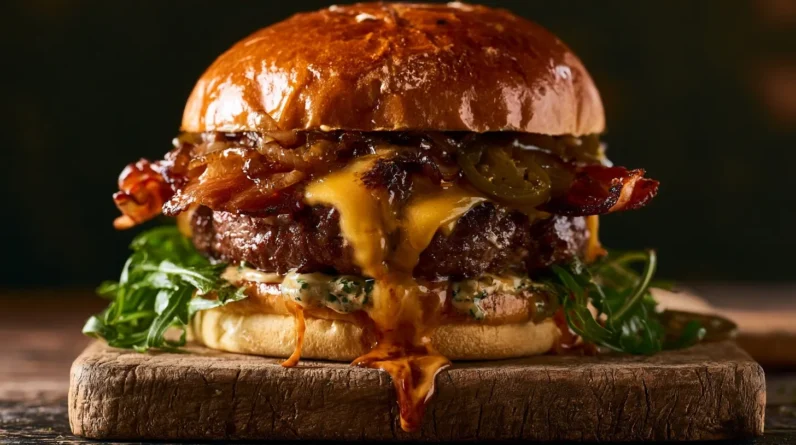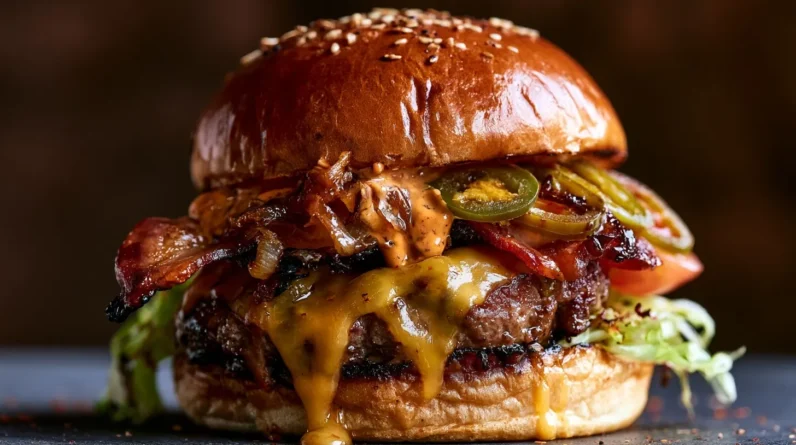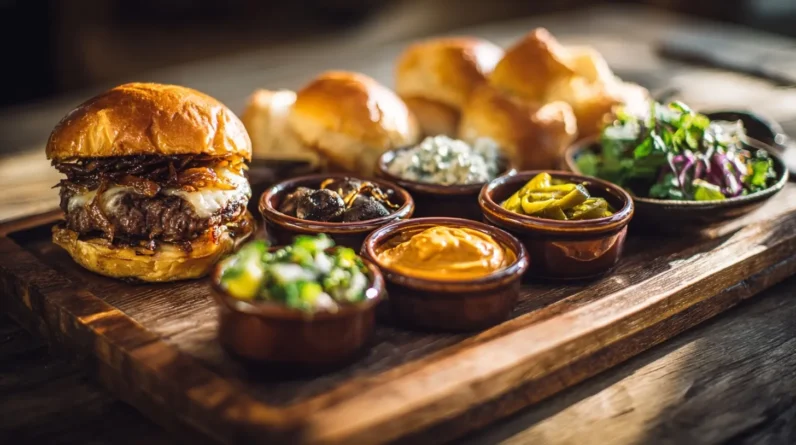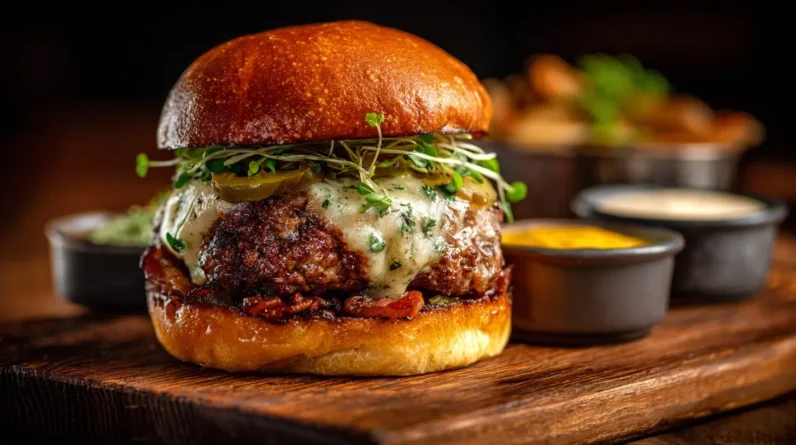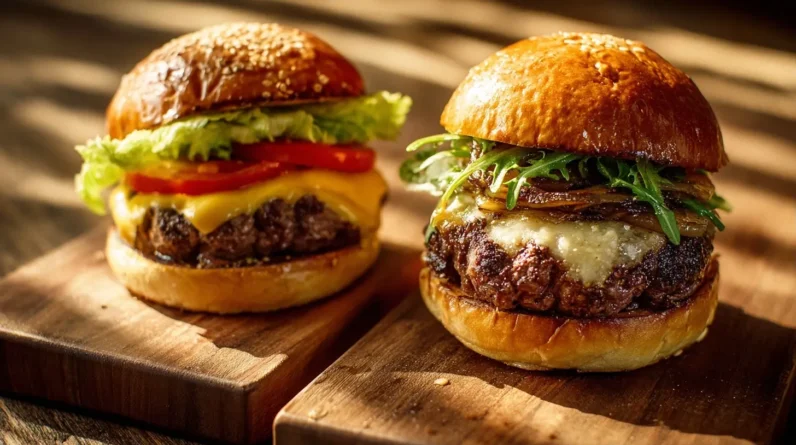



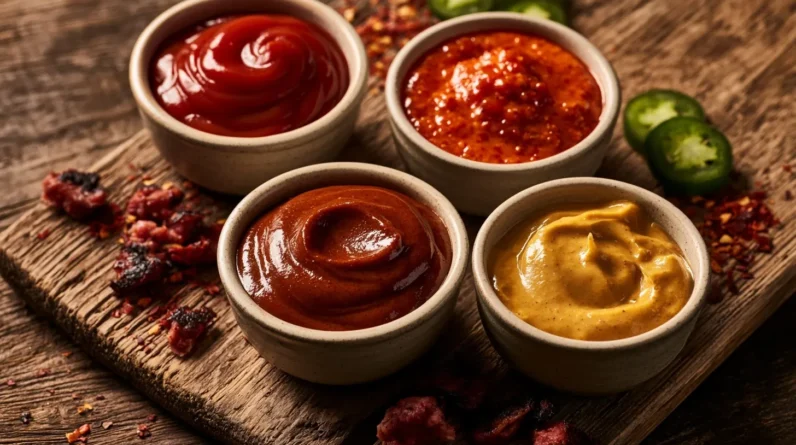
When we’re building heat into a beef burger, sauce selection matters more than most people realize. Sriracha delivers consistent fermented heat, chipotle mayo adds smoky depth, and harissa brings complex North African spice. We always match sauce intensity to the beef’s fat content for true flavor harmony. Mid-range peppers pair with vinegar-based sauces, while high-Scoville options need cream to balance aggression. There’s a precise science to getting this right, and it goes much further than simply reaching for the hottest bottle on the shelf.
The Best Spicy Sauces for Beef Burger Toppings
When it comes to elevating a beef burger, few toppings pack the same punch as a well-crafted spicy sauce. We’ll start with spicy sauce basics: balance heat with acidity and fat to prevent overwhelming the palate. Sriracha delivers consistent, fermented heat; chipotle mayo introduces smoky depth; harissa brings complex North African spice layers.
Mastering flavor pairings separates adequate burgers from exceptional ones. We recommend matching sauce intensity to beef fat content — leaner patties handle aggressive heat better, while fattier blends demand sauces with acidic counterpoints like vinegar-forward hot sauces. Ghost pepper and habanero-based sauces work best with bold toppings like aged cheddar or caramelized onions, which temper extreme Scoville levels without neutralizing the sauce’s essential character.
How Hot Pepper Heat Levels Change Your Burger’s Flavor
Understanding how the Scoville scale translates to actual flavor impact helps us build burgers with intentional heat profiles rather than accidental ones. Different pepper varieties don’t just deliver varying heat intensities — they contribute distinct flavor profiles that fundamentally alter a burger’s character. Jalapeños offer bright, grassy heat that amplifies beef’s richness without overwhelming it. Habaneros introduce fruity, floral notes alongside aggressive heat that demands balance through fat-rich toppings. Ghost peppers deliver delayed, deep heat with earthy undertones that can dominate everything beneath them. We use this knowledge strategically. Matching heat levels to sauce bases — cream for high Scoville peppers, vinegar for mid-range — preserves complexity. The goal isn’t maximum heat; it’s precise heat that enhances rather than obliterates our burger’s overall flavor architecture.
Smoky vs. Vinegary: Which Spicy Sauce Style Suits You?
Choosing between smoky and vinegary spicy sauces isn’t merely a preference decision — it’s a structural one that determines how heat integrates with beef’s fat content and Maillard-developed crust.
Both flavor profiles interact differently with your heat preference:
- Smoky sauces — chipotle, smoked habanero — bind fat molecularly, extending capsaicin contact and deepening perceived heat duration.
- Vinegary sauces — Louisiana-style, fermented pepper mashes — cut through fat quickly, delivering sharp, front-loaded heat that dissipates faster.
- Hybrid applications — combining both — layer complexity without sacrificing structural integrity against the beef’s crust.
We recommend matching your heat preference to cooking method: smoky profiles suit charred, high-heat grilling; vinegary profiles complement pan-seared crusts where brightness balances caramelization.
Make These Fiery Burger Sauces at Home
Once you’ve identified your preferred heat profile, building these sauces at home gives you direct control over capsaicin concentration, acid balance, and fat-binding ratios that commercial products rarely achieve. Homemade sriracha and chipotle mayo represent two foundational formulas worth mastering before experimenting further.
| Sauce | Key Ratio | Heat Level |
|---|---|---|
| Homemade Sriracha | 3:1 chili-to-garlic | High |
| Chipotle Mayo | 2:1 mayo-to-chipotle | Medium |
| Ghost Pepper Aioli | 4:1 oil-to-pepper | Extreme |
| Habanero Vinaigrette | 1:2 pepper-to-acid | Medium-High |
| Calabrian Chili Butter | 3:2 butter-to-chili | Medium |
We recommend cold-emulsifying fat-based sauces to lock volatile capsaicin compounds within the lipid matrix, maximizing heat delivery directly onto the beef patty’s surface without premature dissipation.
How to Layer Spicy Sauces Without Overpowering the Beef
Layering spicy sauces effectively requires treating heat as a structural element rather than a finishing note, which means we apply sauces at different burger assembly points to distribute capsaicin impact across each bite. Precise flavor layering prevents any single sauce from overwhelming the beef’s umami foundation.
Follow this sauce balance sequence:
- Bun base coat — Apply a mild chili mayo directly to the toasted bun, creating a fat-rich buffer that tempers heat intensity.
- Protein contact layer — Press a fermented hot sauce onto the patty’s seared surface, anchoring heat to the meat’s crust.
- Crown application — Finish with a vinegar-forward sauce on the top bun, cutting through fat and brightening the entire flavor profile.
Frequently Asked Questions
Can Spicy Burger Sauces Be Safely Stored in the Refrigerator Long-Term?
Yes, we recommend refrigerating spicy burger sauces for sauce preservation, but limit storage to two weeks. We’ll guarantee flavor enhancement remains intact by sealing containers airtight, preventing oxidation and microbial degradation that compromises heat profiles and overall quality.
Are Spicy Burger Sauces Generally Safe for People With Acid Reflux?
40% of adults experience acid reflux. We’ll caution you: spicy sauces typically worsen symptoms. For effective acid reflux management, we recommend exploring spicy ingredient alternatives like ginger or turmeric-based sauces, which deliver heat without triggering esophageal irritation.
Which Spicy Sauces Pair Best With Non-Beef Burger Patties?
For non beef options, we recommend these spicy sauce pairings: sriracha mayo complements turkey, harissa enhances lamb, chipotle aioli elevates black bean, and gochujang glaze perfectly amplifies salmon patties’ natural umami richness.
Do Spicy Sauces Significantly Increase the Overall Calorie Count of Burgers?
Spicy sauces minimally impact calorie comparisons—most add 10–30 calories per tablespoon. We recommend adjusting portions based on your heat preference, ensuring bold flavor without greatly compromising your burger’s nutritional profile.
Can Children Safely Consume Mildly Spicy Burger Sauces Without Digestive Issues?
Most children can safely tolerate mild spice in burger sauces, though children’s tolerance varies individually. We recommend introducing low-Scoville condiments gradually, monitoring for gastrointestinal sensitivity, and adjusting heat levels based on each child’s digestive response.
Conclusion
We’ve covered a lot of fiery ground here, and the key takeaway is balance. Think of layering spicy sauces like calibrating a stereo equalizer — too much bass and you lose the melody entirely. One test kitchen experiment found that burgers sauced beyond 2,000 Scoville units without fat-based buffers consistently masked beef’s natural umami compounds. We’re not here to numb your palate; we’re here to amplify it.