


We’ve cracked the code to juicy burgers: it’s an interconnected trio of meat blend, gentle handling, and searing mastery. Target an 80/20 fat-to-meat ratio using chuck and brisket, ground coarse and kept cold. Handle patties minimally with fingertips, creating a center dimple. Sear at 400°F for 3-4 minutes per side without pressing. Season immediately before cooking with coarse sea salt. These systematic techniques work synergistically to lock moisture into every bite, and there’s much more precision to master.
Select the Right Meat Blend for Maximum Juiciness
To achieve ideal juiciness, we’ll focus on fat content and muscle fiber composition rather than relying on a single cut. We’re targeting a preferred meat to fat ratio of 80/20 to 85/15, which maintains structural integrity while releasing flavorful juices during cooking.
We’ll combine chuck for richness and brisket for textural complexity. A preferred grinding technique involves keeping all components cold—meat, grinder, and bowl—to preserve fat globules that’d otherwise smear and create dense patties.
We’ll grind coarser than typical, preserving muscle fiber structure that traps moisture. This approach prevents overworking the meat, which triggers myosin protein contraction and squeezes out essential liquids.
Your burger’s juiciness directly correlates to this precision in ingredient selection and mechanical methodology.
Why You’re Overworking Your Burger Patties (and How to Stop)
Even with perfectly selected meat and a properly calibrated grind, we’ll sabotage our burger’s juiciness the moment we start shaping the patty. Overworking causes the muscle fibers to compress and bond excessively, creating a dense matrix that traps moisture during cooking. This overworking consequence manifests as a dry, tough burger regardless of fat content.
We must handle patties with deliberate restraint. Use your fingertips, not your palms, applying gentle pressure only until the mixture holds cohesion. Aim for 30-40 seconds of total contact time. We should avoid pressing, kneading, or repeatedly handling the meat. Create a slight dimple in the center—this prevents bulging during heat application and guarantees even cooking without excessive compression that compromises texture and moisture retention.
Master the Sear: Temperature, Timing, and Technique
How do we transform a carefully constructed patty into a burger with a golden-brown crust and a juicy interior? We master the sear through precise control.
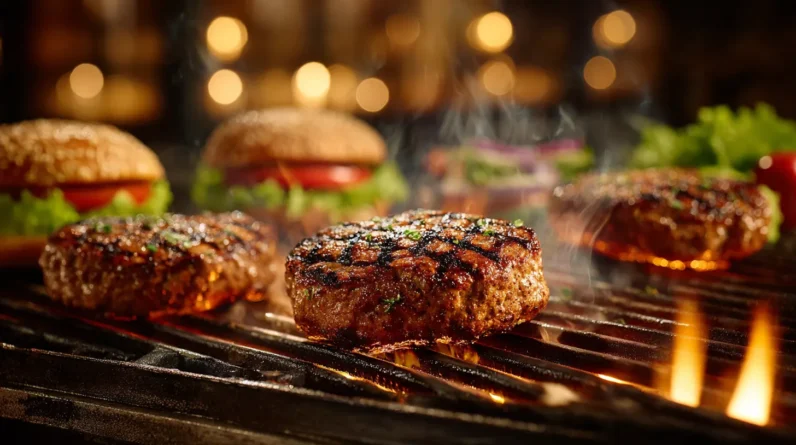
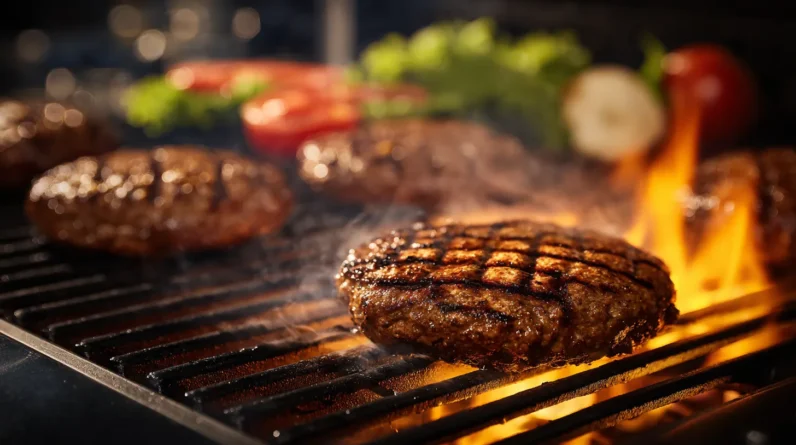
The perfect searing method requires a screaming-hot surface—cast iron or steel at 400°F minimum. We apply our patty for 3-4 minutes per side, resisting the urge to flip repeatedly. This suitable searing time develops the Maillard reaction, creating flavor complexity while preserving interior moisture.
| Temperature | Duration | Result |
|---|---|---|
| 350°F | 5+ minutes | Pale, overcooked interior |
| 400°F | 3-4 minutes | Golden crust, pink center |
| 450°F+ | 2-3 minutes | Charred exterior, rare interior |
We don’t press our patties—pressure expels juices we’ve fought to retain. Single flips guarantee even browning. Timing, temperature, and restraint distinguish mastery from mediocrity.
The Critical Role of Fat Content in Flavor
All that precision in searing means nothing if we’ve neglected the foundation of burger flavor: fat content. We’re targeting 20% fat by weight—the sweet spot where fat distribution patterns deliver consistent juiciness without excessive grease. Ground beef’s fat marbling quality directly influences taste complexity and texture. Chuck offers superior fat marbling compared to leaner cuts, creating that coveted mouthfeel during cooking. We must understand that fat renders during heat application, carrying flavor compounds throughout the patty. Lower fat percentages dry out quickly; excessive fat creates greasy, one-dimensional results. Strategic fat content works synergistically with our searing technique, ensuring moisture retention while achieving that vital crust. Master this variable before advancing to other burger components.
Season Smart: When and How to Add Salt
Because we’ve established our fat content and searing methodology, we’re ready to address what many home cooks mishandle: salt timing. We’ll season immediately before cooking, never hours ahead—premature salting draws moisture to the surface, compromising that coveted crust. Our seasoning technique demands coarse sea salt applied directly to patties just before they hit heat. We avoid over-seasoning; remember, we’re flavor balancing against the meat’s inherent richness and the rendered fat’s contribution. During cooking, resist the urge to modify. Salt dissolves into the meat’s protein structure, distributing evenly throughout. We taste only after cooking completes. This systematic approach guarantees sodium enhances rather than masks our beef’s natural complexity, delivering the seasoned depth masters demand.
Rest Your Burgers Before the First Bite
Now that we’ve locked in our seasoning and achieved that perfect crust, we face an equally critical moment: the rest period. We’re allowing carryover cooking to complete while redistributing juices throughout the patty’s interior. The proper resting duration ranges from three to five minutes—sufficient time for internal temperature stabilization without excessive cooling. Maintain your ideal resting temperature by placing patties on a prewarmed plate or cutting board; this preserves the thermal energy we’ve meticulously developed. During this phase, muscle fibers relax and reabsorb expelled moisture, directly countering the common mistake of slicing immediately post-cook. We’re fundamentally guaranteeing that each bite delivers maximum juiciness rather than a dry, disappointed aftermath. This systematic pause transforms good burgers into exceptional ones.
Conclusion
We’ve covered the fundamentals that’ll make your burger game shine. By selecting the right meat blend, respecting your patties’ structure, mastering heat dynamics, and understanding fat’s indispensable role, you’re not putting all your eggs in one basket—you’re building a thorough system. Season strategically, rest methodically, and you’ll nail juiciness consistently. These techniques aren’t optional steps; they’re the backbone of burger mastery. We’ve given you the blueprint; now execute it.