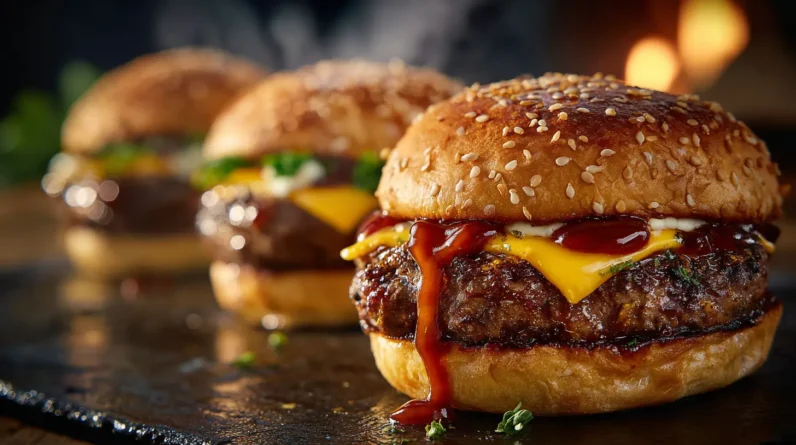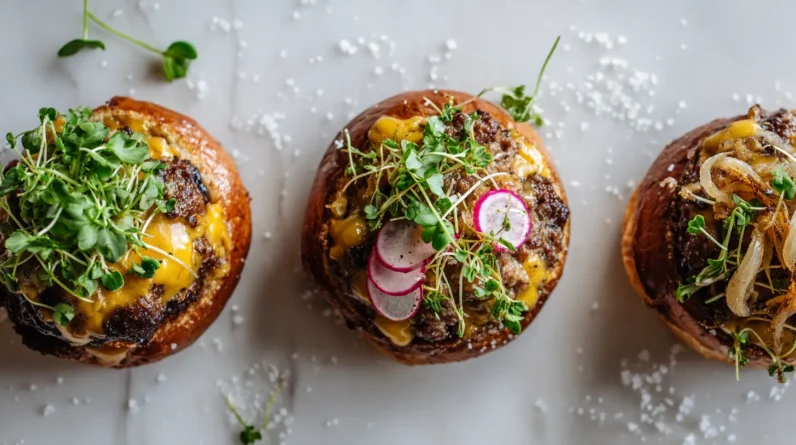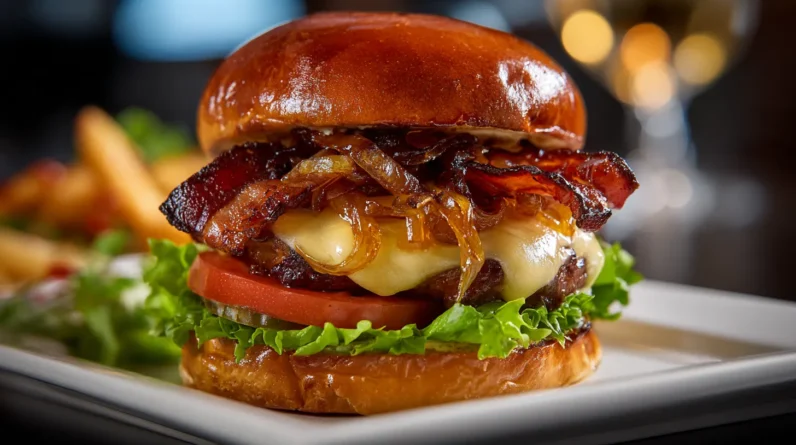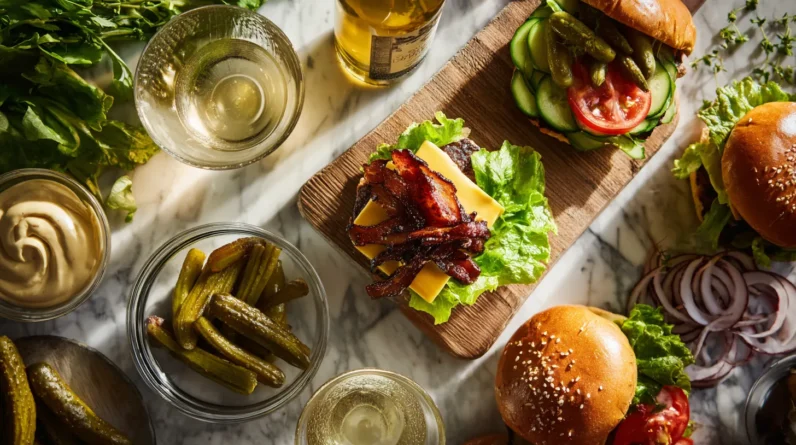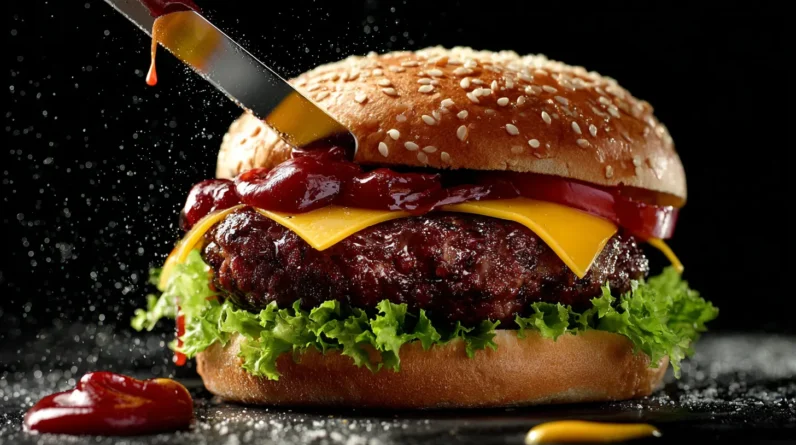



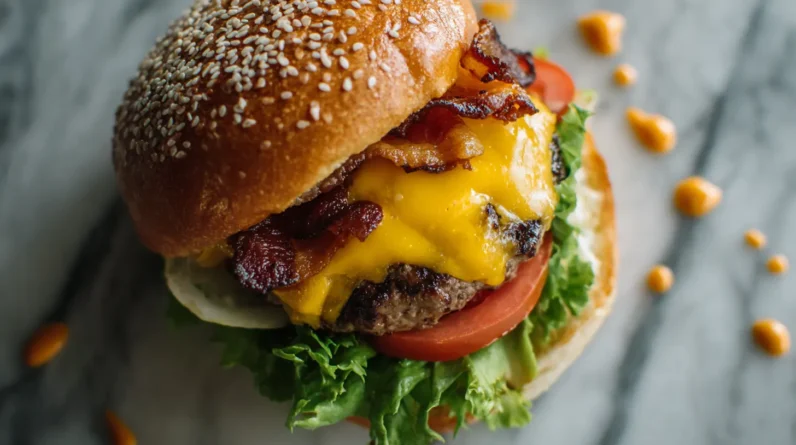
We’ll show you how to build a burger that doesn’t crumble under its own ambition. Start with an 80/20 beef patty on a toasted brioche bun—your structural foundation. Layer proteins and cheese first for ideal melting, then apply sauce strategically to unify flavors without saturation. Balance rich toppings with pickled vegetables and umami-forward cheeses. Assembly order determines everything: proteins first, sauce thin and deliberate, vegetables distributed for weight management. Master these principles, and you’re ready to explore how each component transforms into something greater than the sum of its parts.
The Foundation: Why Your Patty and Bun Matter More Than Toppings
Foundation—it’s what separates a memorable burger from a forgettable one. We can’t overlook patty quality; it’s the centerpiece demanding our attention. You’ll want beef with proper fat content—ideally 80/20—to guarantee juiciness and flavor complexity. We grind it coarsely, handle it minimally, and form a gentle patty with a slight depression in the center to prevent bulging during cooking.
Bun texture matters equally. We source brioche or artisanal bread with sufficient structural integrity to contain juices without disintegrating. The crumb must be tight yet tender, the crust delicate but resistant.
These foundational elements—superior patty quality and bun texture—establish the burger’s framework. Toppings and sauces enhance rather than compensate for weak fundamentals. Master these basics, and you’ve won half the battle.
Classic Combinations That Actually Work Together
Now that we’ve mastered the patty and bun, we’re ready to layer flavors that complement rather than compete. We’ve identified proven pairings that elevate burger construction to precision.
Classic beef demands umami-forward accompaniments: caramelized onions, aged cheddar, and Worcestershire-spiked mayo. When we explore meat varieties like lamb or bison, we shift toward Mediterranean influences—feta, arugula, and herb-infused aioli work harmoniously.
Bun alternatives reshape our approach entirely. Brioche accommodates heavier toppings; pretzel buns demand sharper, more assertive flavors. Sourdough pairs exceptionally with pork variants and distinctive cheeses.
The principle remains constant: each element must serve a function. We’re not accumulating toppings—we’re orchestrating textural and flavor contrasts that build complexity without chaos. This methodical approach separates exceptional burgers from mediocre assemblies.
The Sauce Strategy: Building Flavor Without Drowning Your Burger
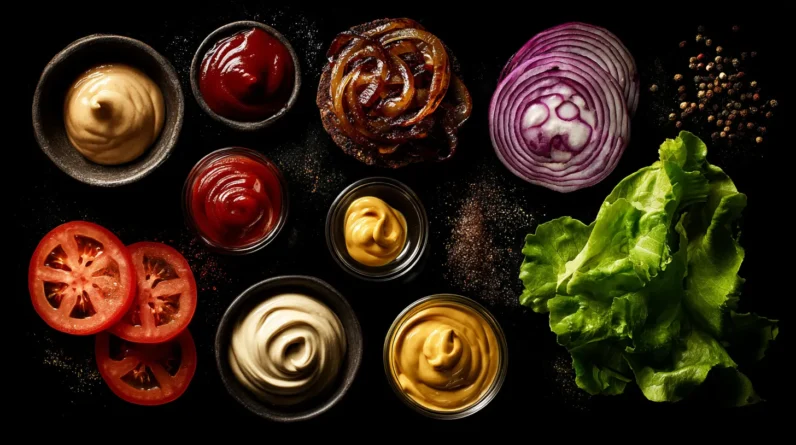
Sauce is the bridge between ingredients—it’s where we either unify flavors or obliterate them with excess. We apply sauce strategically, not generously. Consider sauce varieties: mayo-based spreads anchor umami, while vinegar-forward options cut through richness. Mustard acts as a powerful flavor enhancer, amplifying other tastes without adding moisture.
We spread thin, even layers on both bun surfaces, creating barriers that prevent sogginess while distributing flavor enhancers evenly. This technique protects structural integrity while maximizing taste penetration. We reserve heavier sauces for sturdy buns and lighter applications for delicate ones.
The mastery lies in restraint. It is recognized that sauce complements—it doesn’t dominate. We calibrate quantities based on patty richness and topping composition, ensuring every component remains distinct yet harmonious. This disciplined approach elevates your burger from mediocre to exceptional.
Creative Toppings for Bold Palates (Without Chaos)
With our sauce foundation secured, we’re ready to explore toppings that command attention without descending into incoherence. Strategic layering elevates your burger from competent to exceptional.
We’ll build complexity through deliberate choices:
- Fancy cheeses like aged gruyère or smoked gouda provide umami depth and textural contrast
- Exotic meats such as prosciutto or duck confit add sophistication and richness
- Pickled vegetables cut through fatty elements while introducing brightness
The key’s understanding flavor profiles. Pair umami-forward cheeses with complementary proteins. Balance richness with acidic components. We’re not cramming everything available onto a bun—we’re orchestrating elements that enhance rather than compete.
Each topping serves a purpose. This disciplined approach separates masterful burgers from indulgent chaos.
Assembling Your Burger: Order, Balance, and Structural Integrity
Once we’ve selected our toppings with intention, we must consider how we’ll stack them—because assembly order determines whether our burger holds together or collapses under its own ambition. Strategic topping placement starts with the bottom bun, which we’ll lightly toast to prevent moisture absorption. We layer proteins first, followed by cheese positioned directly on the patty’s residual heat for maximum melting. Next comes our sauce application—a thin, deliberate spread prevents saturation. Vegetables follow, with denser items like tomatoes and onions placed before delicate greens. We crown the structure with our top bun, which we’ve also toasted. This burger assembly method distributes weight evenly while maintaining structural integrity. Moisture management throughout guarantees every bite delivers balanced flavor without compromise.
Conclusion
We’ve established that burger excellence hinges on foundational quality—your patty and bun set the stage. We’ve explored tested flavor pairings, strategic sauce application, and creative toppings that enhance rather than overwhelm. You’ve learned assembly sequencing matters structurally and gustatorily. We’re confident you’ll now build burgers with precision, balancing innovation with restraint, creating cohesive flavor profiles that don’t sacrifice integrity or taste.