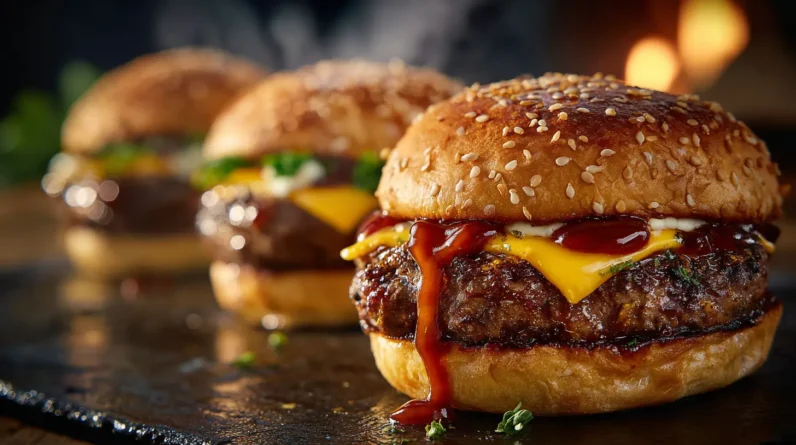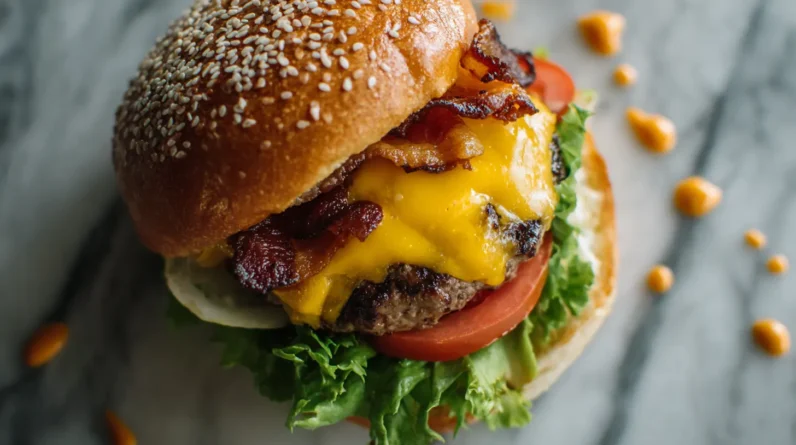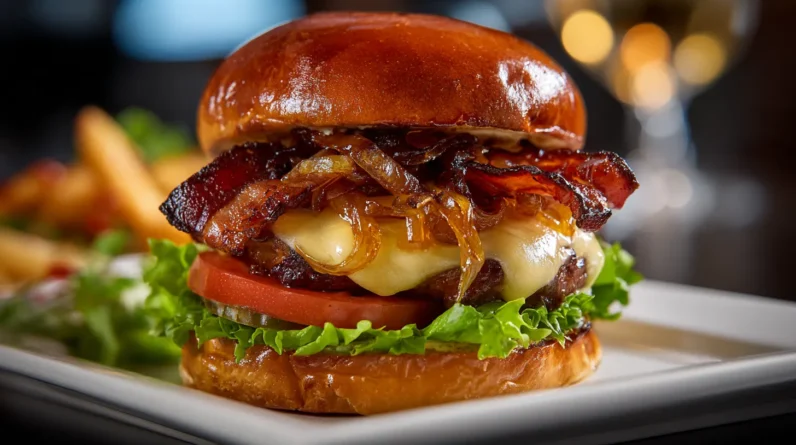



To build a beef burger that balances toppings and sauces, we start with quality beef, ideally with 15-20% fat for juiciness. We gently shape the patty, guaranteeing even cooking and minimal compression. We select toppings that complement the burger’s theme, adding crunch, sweetness, or astringency. Pairing sauces based on their viscosity, flavor profile, and heat level enhances the overall taste without overpowering it. Assembling the burger strategically guarantees every bite is balanced. Let’s explore these steps further to master the art of burger building.
Choosing the Right Beef
When building a beef burger, selecting the appropriate beef is paramount. We must consider the beef quality, which is determined by several factors, including the cut and fat content. For ideal meat selection, we should focus on cuts with a good balance of lean meat to fat, such as chuck, brisket, or short rib. These cuts provide the necessary fat content (around 15-20%) to guarantee juiciness and flavor. Leaner cuts, like sirloin, can result in drier burgers and are best avoided for this purpose. Additionally, we should choose freshly ground beef or grind it ourselves to maintain the best texture and flavor.
Crafting the Perfect Patty
Crafting the perfect patty begins with handling the beef properly. We want to minimize compression to maintain juiciness, so we’ll avoid overworking the meat. For ideal patty formation, gently shape the beef into a uniform disk, about 1/2 inch thicker at the edges to counteract shrinkage and promote even cooking. This technique guarantees the patty cooks evenly and retains moisture.
Next, we’ll focus on flavor enhancement. While the beef’s inherent flavors are paramount, we can amplify them with strategic seasoning. Coarse salt and freshly ground black pepper, applied liberally to both sides of the patty, will draw out moisture, forming a savory crust during cooking. Additionally, we can introduce umami notes by incorporating ingredients like Worcestershire sauce or soy sauce into the beef mixture before forming the patties. However, we must be cautious not to overmix, as this can lead to a dense, tough texture.
Selecting Complementary Toppings
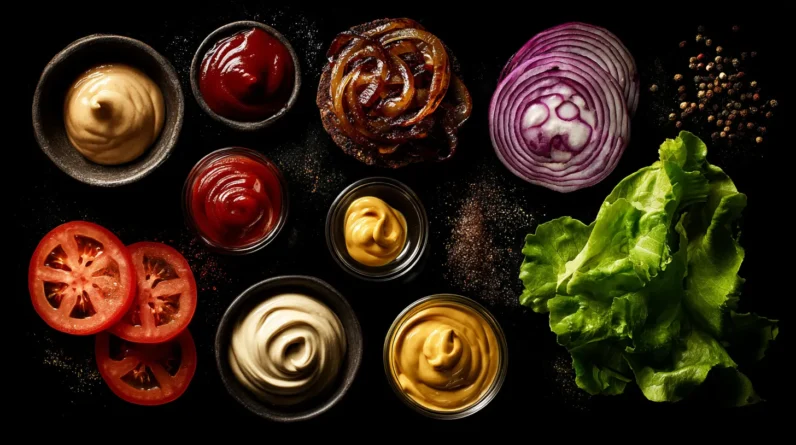
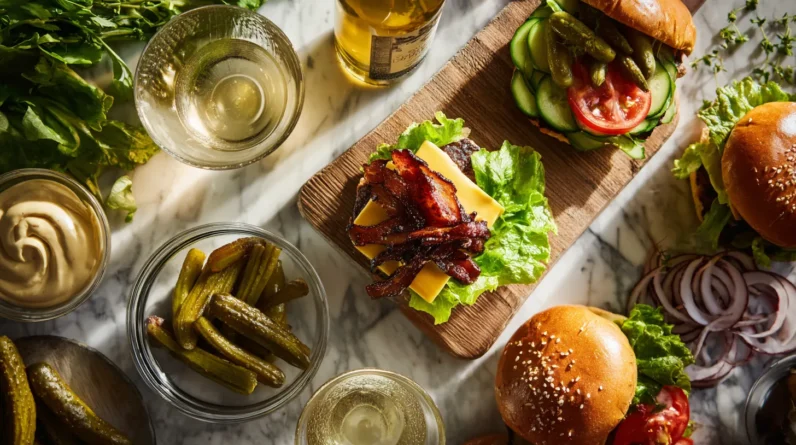
Now that we’ve mastered the art of creating the perfect patty, we’ll turn our attention to selecting complementary toppings. Our goal is to enhance the burger’s flavor profile without overwhelming it. First, consider fresh vegetables like lettuce and tomatoes—they provide an invigorating crunch and subtle sweetness. Next, evaluate the merits of crispy onions; they offer a satisfying texture and astringent bite, cutting through the richness of the beef. To maximize balance, align the toppings’ flavors with the burger’s overall theme. For instance, a classic burger might benefit from pickles and raw onions, while a gourmet one could incorporate caramelized onions and sautéed mushrooms. Each topping should serve a purpose, whether it’s amplifying taste or adding texture.
Pairing With Sauces
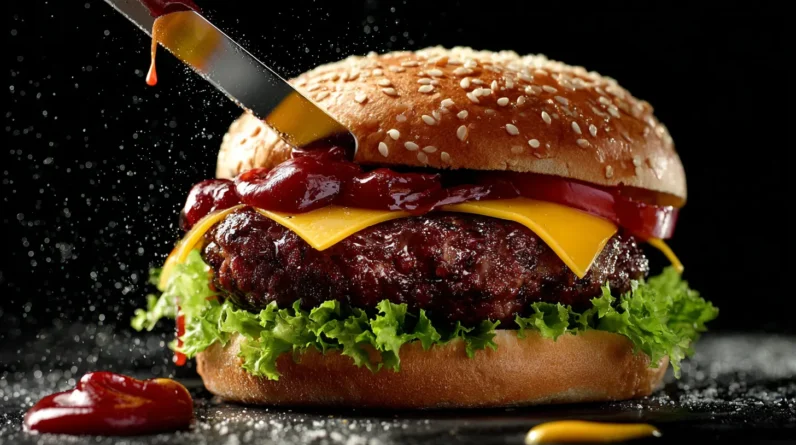
Sauces play a pivotal role in elevating a burger’s flavor profile, providing an additional layer of complexity that can truly set it apart. When pairing with sauces, we must consider the balance between the beef patty, selected toppings, and our special sauces. A well-chosen sauce can amplify the existing flavors or add a contrasting note, creating a gourmet experience.
Let’s examine key factors when choosing our sauces:
- Viscosity: Thicker sauces tend to remain on the burger, while thinner ones may make the bun soggy.
- Flavor Profile: Consider acidity, sweetness, and umami notes to complement or contrast the beef and toppings.
- Heat Level: For spicy sauces, guarantee they enhance rather than overpower other components.
- Gourmet Condiments: Explore unique, high-quality options like truffle aioli, chipotle mayo, or balsamic glaze for an exceptional touch.
Assembling the Burger
Assembling the burger is a critical step that demands attention to detail and a strategic approach. First, we must consider bun placement. The bun should be sturdy enough to hold the patty and toppings without becoming soggy. Place the bottom bun on a flat surface, ensuring it’s stable and ready to support the burger’s weight. Next, position the patty centrally on the bun to maintain balance and ideal burger presentation. Layer toppings strategically, placing heavier items like tomatoes or onions directly on the patty to prevent slippage. Spread sauces evenly on the top bun, ensuring every bite delivers a balanced flavor profile. Finally, crown the burger with the top bun, aligning it perfectly with the bottom. Press down gently to secure all components.
Tips for Cooking and Serving
With the burger assembly process detailed, we turn our focus to optimizing cooking and serving techniques. Mastering these steps guarantees not only a delicious burger but also maintains food safety and enhances the dining atmosphere.
- Cooking Temperature: Aim for an internal temperature of 160°F (71°C) to kill any bacteria. Use a meat thermometer for precision.
- Resting Time: After cooking, let the patty rest for 2-3 minutes. This allows juices to redistribute, guaranteeing a moister burger.
- Bun Toasting: Lightly toast the bun to prevent sogginess and add a crispy texture. This elevates the overall burger structure.
- Presentation: Serve the burger on a clean, warm plate. A well-presented burger, garnished with fresh ingredients, sets a inviting dining atmosphere.
Conclusion
We’ve engineered a burger that’s not just a meal, but a symphony of flavors and textures. It’s a tribute to our prowess, a monument to our culinary acumen. So, let’s raise our buns, not just to eat, but to salute the perfect balance of toppings and sauces, the magnum opus of our grilling endeavors.