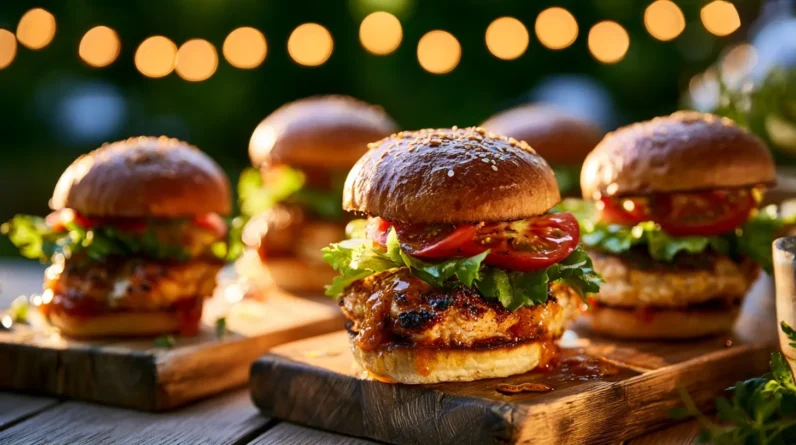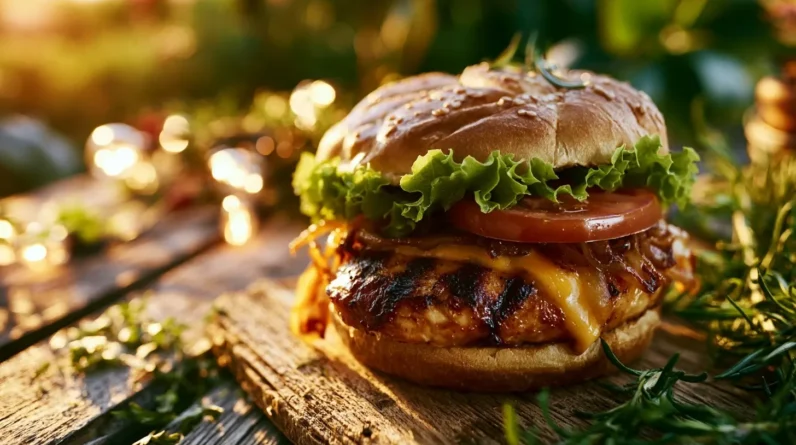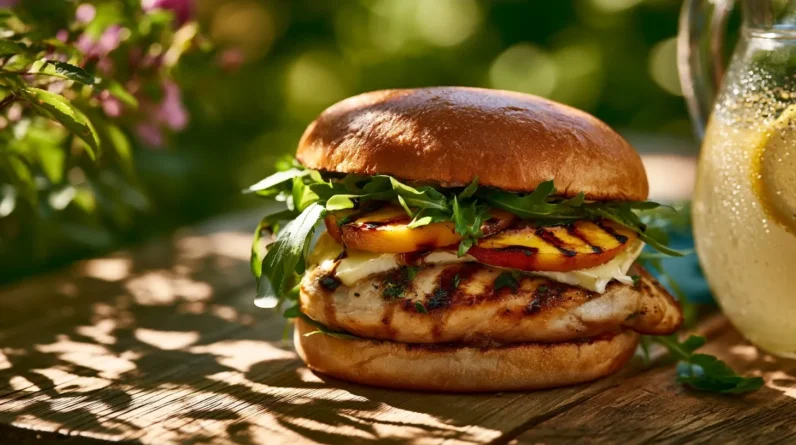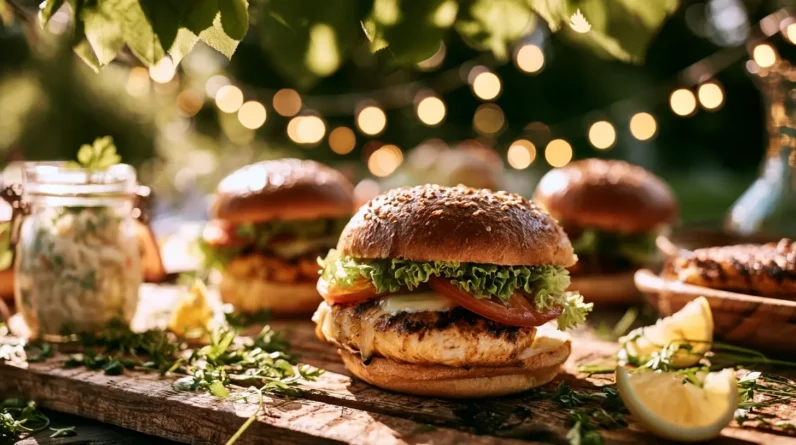



We fix chicken burgers by controlling fat, moisture, and heat. We start with 85/15 or 90/10 ground chicken, season boldly with fresh herbs and aromatics, and bind everything with egg, panko, and Parmesan for structure that holds. Then we grill on a two-zone fire, searing first and finishing indirect until we hit exactly 165°F. Stick with us, and we’ll show you exactly how each step comes together.
Pick the Right Ground Chicken for Juicy Burgers
Because ground chicken varies widely in fat content, we always check the label before buying. We target 85/15 or 90/10 blends—lean varieties below that ratio dry out fast on the grill, no matter our cooking techniques. Pure breast meat, while lean, lacks the fat needed for self-basting, so we mix in ground thigh when we can find it separately.
We also inspect for organic options when budget allows; birds raised without antibiotics often carry cleaner, more consistent flavor profiles, since diet and stress levels directly affect meat quality. We avoid pre-seasoned tubes—they mask true poultry flavor and complicate our own seasoning choices.
Freshness matters too: we buy chicken with a bright pink hue, minimal liquid in the packaging, and a tight sell-by date, ensuring maximum juiciness once it hits the grate.
Build Bold Flavor Into the Patty Mix
Once we’ve settled on the right ground chicken, we turn our attention to building flavor directly into the meat before it ever touches the grill. Chicken’s mild protein structure demands deliberate seasoning, so we treat herb infusion and spice selection as foundational, not optional. We chop fresh herbs—tarragon, dill, or cilantro—finely enough to distribute evenly without clumping. For spice selection, we favor smoked paprika, ground coriander, and cracked black pepper, layering warmth without overwhelming the chicken’s delicate profile. Salt goes in last, right before shaping, to prevent premature moisture loss.
We also incorporate aromatics like grated shallot or minced garlic, which release moisture and flavor as they cook. Mixing by hand, not machine, keeps the texture loose and prevents overworking. This precision at the mixing stage sets up every patty for consistent, robust flavor at the grill.
The Binding Trick That Keeps Chicken Burgers From Falling Apart
Ground chicken’s low fat content and loose protein structure leave it prone to crumbling, so we rely on a binder to hold each patty together under heat. The right binding ingredients absorb moisture, create structural adhesion, and prevent the burger from disintegrating on the grill grates.
We choose our binder based on the texture enhancement we want:
- Egg: adds protein-based structure and richness without heaviness
- Panko breadcrumbs: absorb excess moisture while keeping the crumb light
- Grated Parmesan: binds proteins and injects concentrated umami
- Finely minced onion: releases moisture that redistributes through the mix
- Mustard: emulsifies fat and liquid for a tighter, cohesive bind
We mix gently, since overworking the meat toughens the final texture and defeats the binder’s purpose.
Grill Chicken Burgers Without Drying Them Out
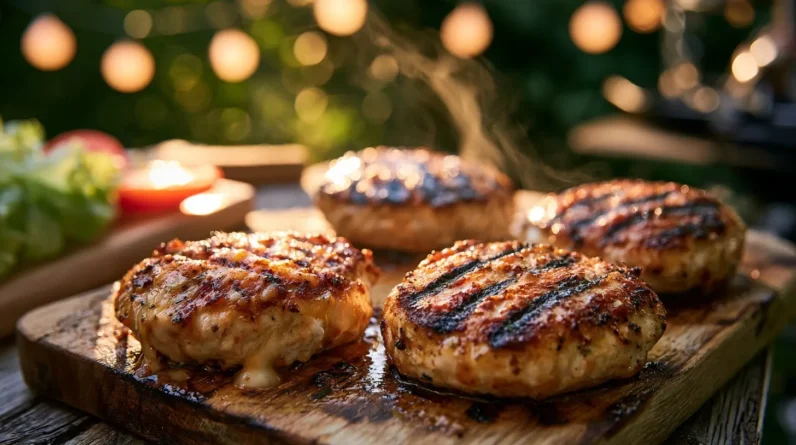
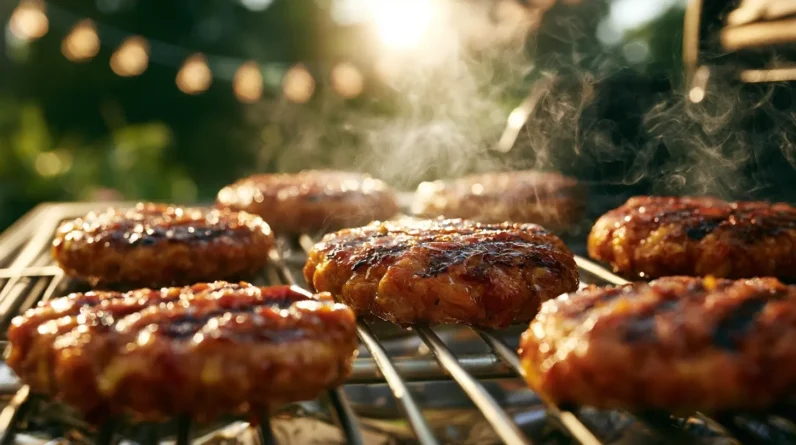
Since chicken breast tightens up fast under direct heat, we manage temperature more carefully than we would with beef. We build a two-zone fire: sear over direct heat for structure, then finish over indirect heat until the internal temperature hits 165°F. This cooking technique prevents the exterior from scorching while the interior catches up. Marinades methods matter here too—we favor buttermilk or yogurt-based marinades, since their mild acidity tenderizes without breaking down proteins the way citrus or vinegar can.
| Stage | Action |
|---|---|
| 1 | Pat patties dry, season |
| 2 | Sear 3 min per side, direct heat |
| 3 | Move to indirect heat |
| 4 | Check temp at 165°F |
We pull them the moment they hit target, no later.
Toppings and Buns That Take Your Burger Over the Top
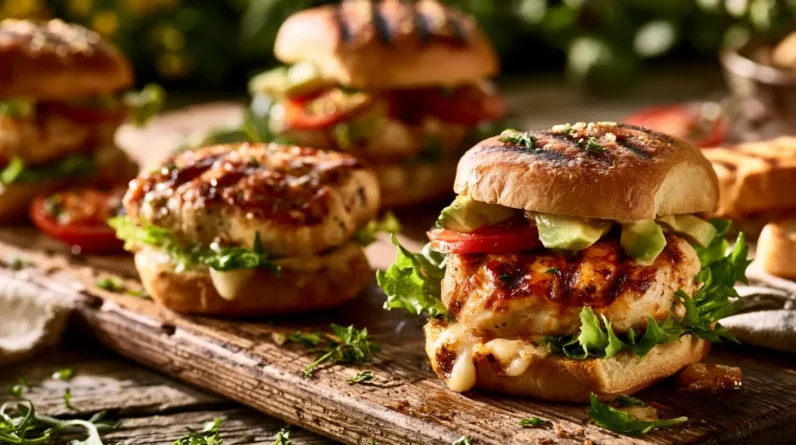
A perfectly grilled patty still lives or dies by what surrounds it. Gourmet buns matter more than most cooks realize—a brioche or pretzel roll adds structural integrity and a subtle sweetness that plain white bread can’t match. Toast them lightly on the grill for crunch and char.
Sauce pairings should complement, not mask, the chicken’s flavor. Skip generic condiments and build intentional flavor combinations instead:
- Chipotle mayo with pepper jack and pickled jalapeños
- Herbed yogurt sauce with cucumber and feta
- Garlic aioli with roasted red peppers
- Honey mustard glaze with crispy bacon
- Avocado crema with pico de gallo
Creative toppings add textural contrast—think crispy onions, arugula, or grilled pineapple. We layer for balance, not excess.
Frequently Asked Questions
Can I Make Chicken Burger Patties Ahead of Time?
Yes—we recommend meal prep by forming patties up to 24 hours ahead, refrigerated on parchment-lined trays. This technique locks in moisture and lets you experiment with flavor variations, seasoning batches differently for garlic-herb, smoky paprika, or citrus-infused profiles before grilling.
How Long Can Raw Chicken Patties Stay in the Fridge?
24 hours max—that’s the USDA’s hard limit for raw poultry. We recommend strict chicken patty storage: 34-38°F, sealed containers, back-of-fridge placement. These best fridge practices prevent bacterial growth and preserve texture until grilling time.
Is It Safe to Freeze Uncooked Chicken Burger Patties?
Yes, we recommend freezing raw patties for safe storage. Wrap each individually in plastic, then place in an airtight freezer bag. Following these freezing tips prevents freezer burn and preserves ideal texture for up to four months.
What Internal Temperature Confirms Chicken Burgers Are Fully Cooked?
165°F is your threshold—the line between raw risk and safe reward. We verify with a meat thermometer, not guesswork, regardless of cooking methods used. Once confirmed, layer on flavor enhancements: your patties are ready to reward you.
How Many Patties Should I Plan per Guest?
We recommend planning 1.5 patties per guest to account for variable guest appetite. Standardize serving sizes at 4 ounces raw weight; you’ll balance portion control with satisfaction, ensuring you don’t undershoot demand or overproduce inventory.
Conclusion
We’ve given you the technical framework: fat ratios, panade binding, two-zone heat management. Execute these principles precisely, and you’ll turn out chicken burgers with genuine structural integrity and flavor depth—no Achilles’ heel of dry, crumbling patties. We’re not chasing culinary trends here; we’re applying fundamentals that guarantee results. Master the method, and every burger off your grill delivers consistent, juicy performance your guests will actually remember.