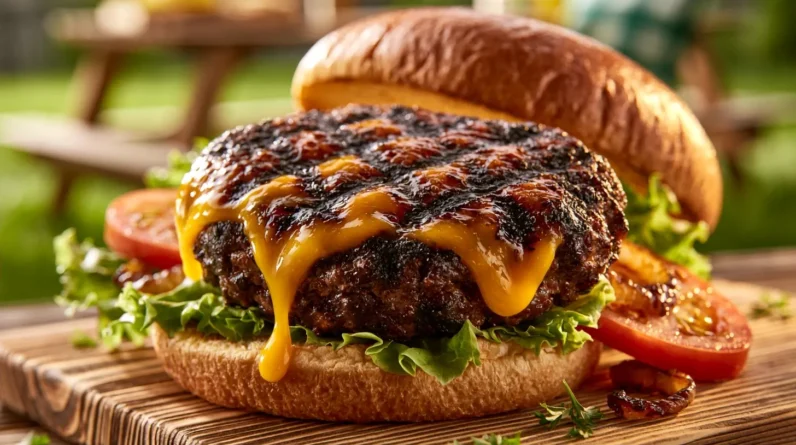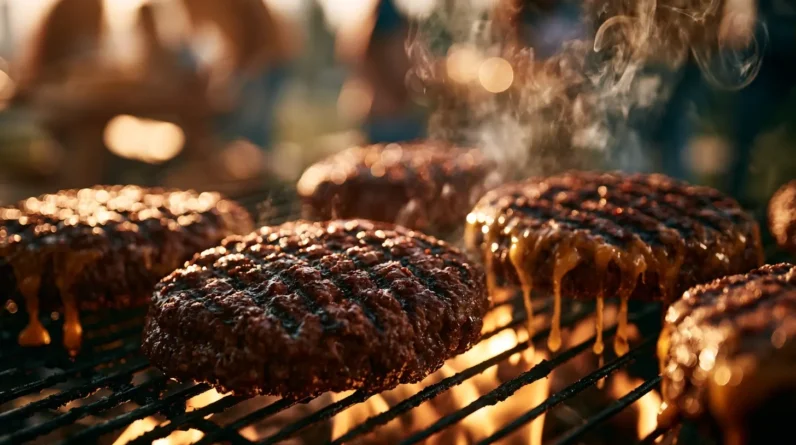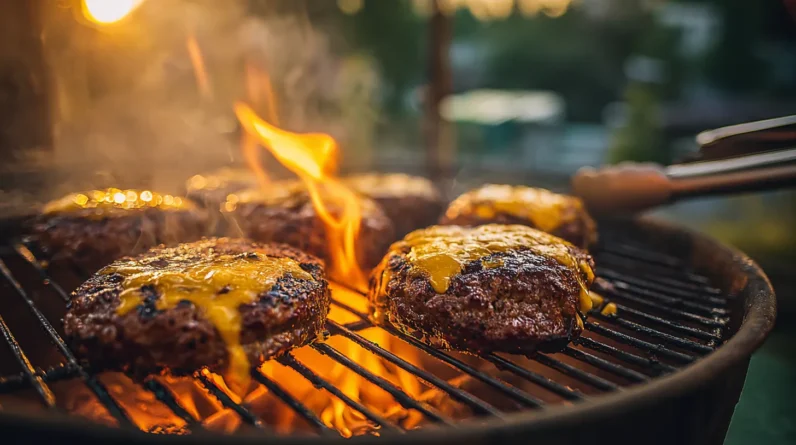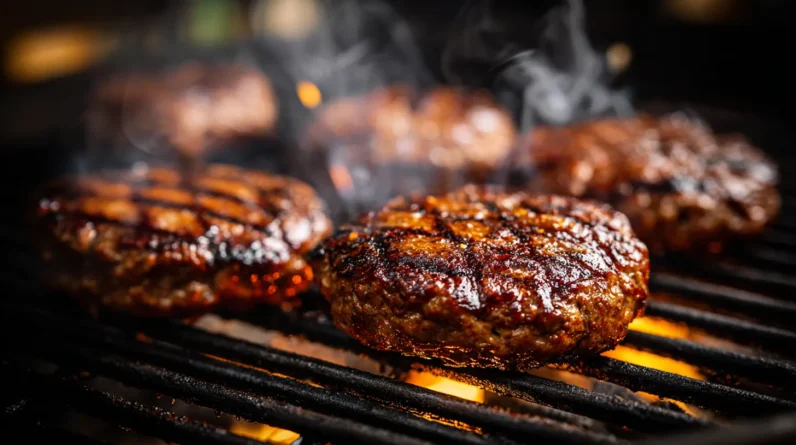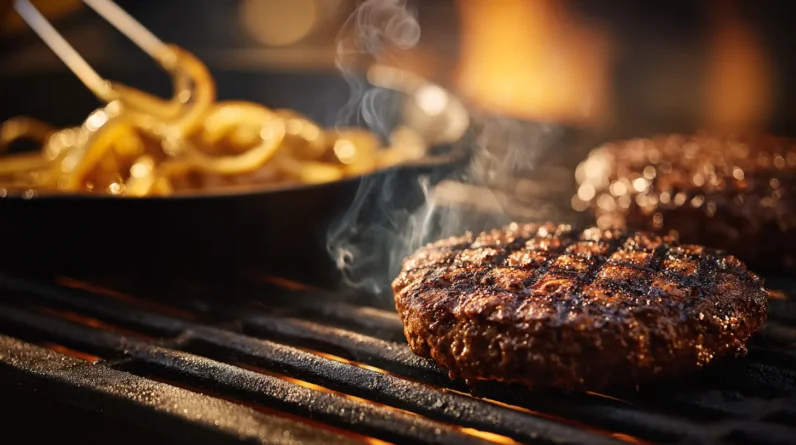



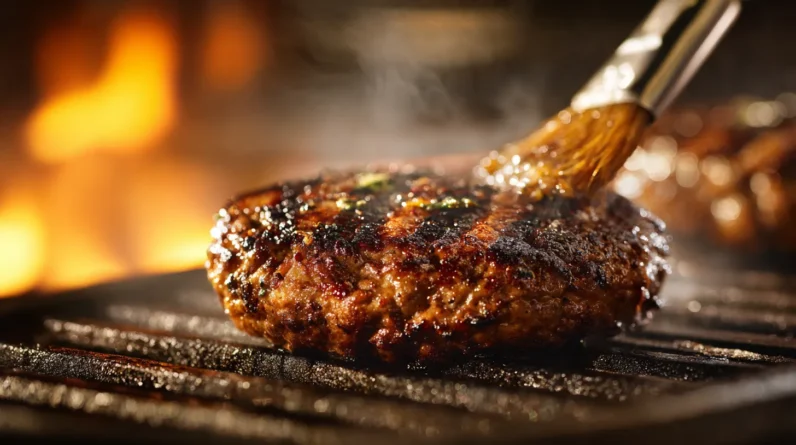
Dry grilled burgers come down to technique, not luck. We start by choosing an 80/20 fat ratio, which keeps patties moist as the fat renders. We handle the meat gently, press a thumb dimple in the center, and never press down mid-cook. High heat builds a fast sear, then we pull back and rest the burger before serving. Each step compounds into a noticeably juicier result, and there’s more worth knowing.
Choose Beef With the Right Fat Ratio
When it comes to grilling the perfect burger, fat content is everything. We recommend an 80/20 lean-to-fat ratio as your baseline — it delivers enough fat to keep patties juicy throughout the cook without causing excessive flare-ups. Leaner blends, like 90/10, sound healthier, but they’ll punish you with dry, crumbly results every time.
Fat isn’t just moisture — it’s flavor. As it renders during grilling, it bastes the meat from within, creating that rich, savory bite we’re all chasing. If you want to elevate further, consider chuck blends or ask your butcher for a custom grind.
Don’t treat fat as the enemy. Embrace it strategically, and you’ll eliminate dry patties before they ever hit the grill.
Stop Overworking Your Ground Beef
How you handle ground beef before it hits the grill matters just as much as what’s in it. Overworking the meat compacts the protein strands, squeezing out moisture and producing a dense, rubbery patty instead of a tender one.
Mix and shape your patties with a light touch. Use your fingertips rather than your palms, and stop the moment the meat holds together. We’re aiming for loose, shaggy cohesion—not a tightly packed ball.
Keep your hands cold, too. Warm hands melt the fat before cooking even starts, which is exactly what we don’t want. Form each patty quickly, press a shallow dimple in the center to prevent puffing, and get them straight onto a cold surface until grilling time.
How Heat and Timing Affect Burger Juiciness
Getting the heat and timing right are the two levers that control how juicy a burger ends up. We start on high heat—around 450°F—to build a fast sear that locks surface proteins before interior moisture escapes. After two minutes, we drop to medium or shift the patty to a cooler zone, letting the center climb gradually without forcing moisture out through violent heat. We pull the burger at 130°F internal for medium-rare, 160°F for fully cooked, using a thermometer rather than guessing. We never press the patty mid-cook; that physically squeezes trapped juices onto the grates. Resting the burger two minutes post-grill lets juices redistribute before the first cut, preserving every drop we worked to keep inside.
Lock in Moisture With a Thumb Dimple
One simple trick separates flat, puffed-up patties from ones that stay level on the grill: press a thumb dimple into the center of each raw patty before it hits the grates. As heat builds, muscle proteins contract and push the center upward. That shallow indentation counteracts the lift, keeping the patty uniform and the juices evenly distributed throughout the cook.
Here’s what that dimple actually does for us:
- Prevents doming — the patty stays flat instead of ballooning into a meatball shape
- Reduces moisture loss — juices circulate rather than pooling and dripping from an uneven surface
- Ensures even contact — full grate contact means consistent caramelization across the entire crust
Press firmly, roughly half an inch deep, right before grilling.
Rest Your Grilled Burgers Before Serving
After pulling burgers off the grill, we need to let them rest for three to five minutes before serving. During cooking, heat drives moisture toward the center of the patty. Cutting in immediately causes those juices to spill onto the plate rather than redistribute through the meat.
Resting allows the internal temperature to equalize and muscle fibers to relax, pulling moisture back outward. We’re not losing heat that matters — a properly rested burger still arrives hot and satisfying.
Tent the patties loosely with foil to retain warmth without trapping steam, which softens the crust we’ve worked to develop. This single step recovers much of the moisture that aggressive heat expelled, transforming a potentially dry patty into something genuinely worth eating.
Frequently Asked Questions
Can Frozen Patties Be Grilled Without Becoming Dry and Tough?
Yes, we can grill frozen patties without drying them out. We’ll use medium heat, resist pressing them down, and let carryover cooking finish the job for juicy, tender results.
Does Cheese Placement Timing Affect How Juicy Burgers Stay?
Like Prometheus shielding his flame, we’ll trap moisture by placing cheese in the final 60 seconds. It creates a protective seal, locking in precious juices before they escape—mastering this timing transforms your patties completely.
Should Burgers Be Covered While Grilling to Retain Moisture?
We recommend covering burgers during the final cooking stage, especially after adding cheese. It traps steam, melts toppings evenly, and locks in juices that’d otherwise escape, keeping your patties noticeably more moist throughout.
Can Marinades or Brines Help Prevent Dry Homemade Burger Patties?
Yes, we can absolutely use marinades or brines to prevent dry patties. Brining adds moisture at a cellular level, while oil-based marinades create a protective barrier, ensuring we lock in juices during grilling.
Does Patty Thickness Significantly Impact Moisture Retention During Grilling?
Yes, thickness substantially impacts moisture retention. We recommend ¾-inch patties—they’re thick enough to develop a seared crust while keeping the interior juicy before overcooking strips the moisture away.
Conclusion
We’ve covered everything you need to stop serving dry, disappointing burgers. Let’s say you’re hosting a backyard cookout for twelve people — by choosing 80/20 beef, handling it gently, managing your heat, pressing that thumb dimple, and letting patties rest, every single burger stays juicy. These aren’t complicated tricks. They’re small habit shifts that transform your results every time you fire up the grill.