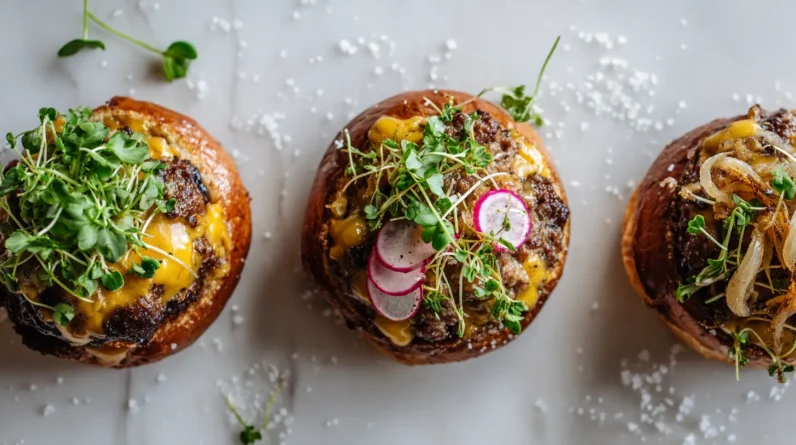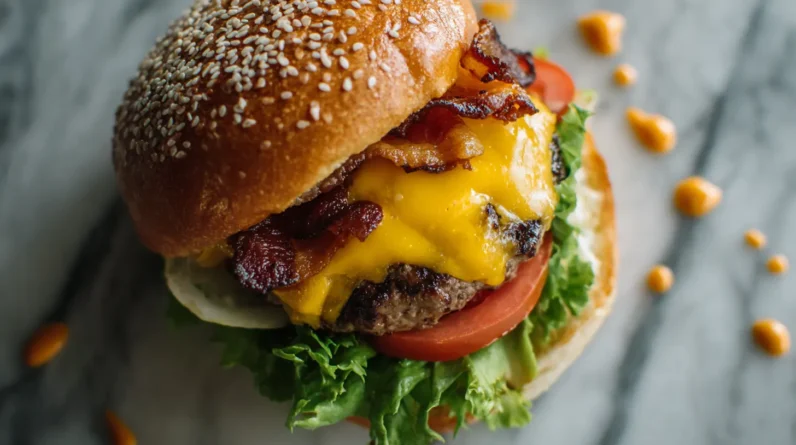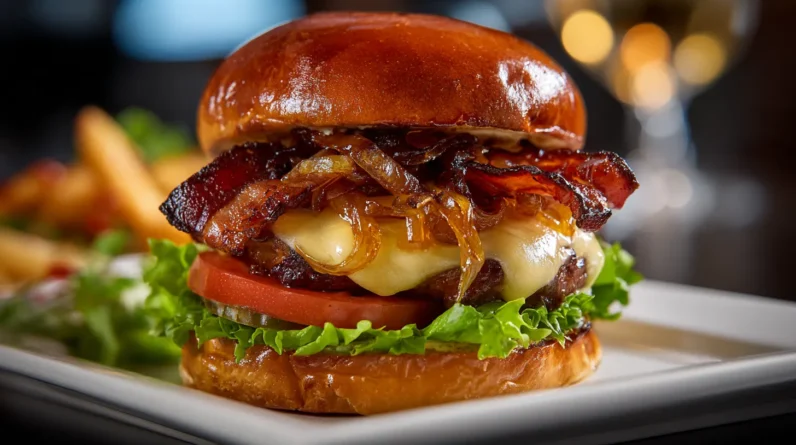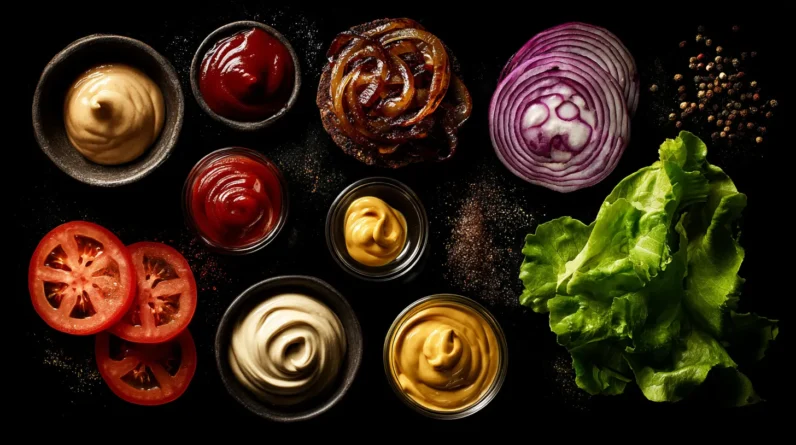



We’re calibrating sauce profiles that amplify rather than mask bold beef’s savory intensity. Acidic components—vinegar, citrus—cut through rendered fat at precise 2-3% ratios, resetting your palate with each bite. We pair fattier cuts with bright, herbaceous sauces while leaner varieties demand umami-forward depth. Classic mayo provides neutral richness; specialty aiolis introduce smoky complexity. Our signature approach restrains sauce potency, letting Maillard-crusted beef shine while complementary flavors enhance every layer of flavor you’ll discover.
Understanding the Flavor Profiles That Work With Bold Beef
When we’re crafting sauces for beef burgers, we’re basically balancing umami-rich proteins with complementary flavor compounds. Different beef varieties—from lean sirloin to fatty brisket—demand distinct sauce profiles. Fattier cuts benefit from acidic components like vinegar or citrus that cut through richness, while leaner varieties require richer, more savory sauces enhanced with ingredients like soy sauce, Worcestershire, or miso.
We’re considering depth and complexity here. Flavor enhancers such as caramelized onions, roasted garlic, and fermented ingredients amplify the beef’s natural savoriness without overwhelming it. The goal’s achieving equilibrium: your sauce should enhance, not mask, the meat’s inherent qualities. We’re layering umami upon umami, creating a unified sensory experience where sauce and beef become inseparable partners rather than competing elements.
How Acidity and Fat Balance Create the Perfect Bite
Because fat coats our palate and extends flavor perception, we’re strategically deploying acid to cleanse and brighten each bite. This fundamental flavor balance principle transforms sauce harmony from guesswork into deliberate chemistry.
Beef’s richness demands acidic counterpoints—vinegar, citrus, or fermented elements—that cut through rendered fat and reset taste receptors. We’re calibrating pH levels to amplify umami while preventing sensory fatigue that dulls subsequent flavors.
Consider our ratio: high-fat beef demands acidity percentages around 2-3% by volume. Vinegar-based sauces provide both structural integrity and palatal relief. Citric acid delivers brighter notes without vinegar’s aggressive bite.
We’re not masking beef’s boldness; we’re architecting complexity. Each acidic note punctuates fatty richness, enabling fuller flavor perception across every component. This interplay—acid cutting fat, fat extending acid’s reach—defines truly balanced burger sauces.
Sauce Styles: From Classic Mayo to Complex Aiolis
We’re building our sauce foundation on emulsified bases that transform simple ingredients into flavor delivery systems. Classic mayo provides neutral richness that doesn’t compete with beef’s savory notes. We layer complexity through specialty sauces—chipotle-infused versions introduce smoky depth, while garlic aiolis deliver pungent intensity that cuts through fat. Hot sauce brings acidic punch and thermal heat, activating taste receptors and cleansing the palate between bites.
We craft these emulsions by whisking egg yolks with oil, creating stable suspensions that coat the tongue effectively. Each variation serves strategic purpose: charred mayo develops caramelized undertones, herb aiolis brighten heavy patties, and fermented hot sauces add complexity that evolves as you chew.
Mastery means understanding that sauce viscosity, emulsion stability, and ingredient ratio directly impact how flavors adhere to meat and bread.
Matching Sauce Intensity to Your Beef’s Character
Just as a delicate white fish demands restraint while bold game welcomes assertiveness, your sauce’s potency must calibrate to your beef’s inherent character. We’re crafting meat pairing through understanding beef history—from grass-fed’s grassy minerality to grain-finished’s buttery richness.
Lean, high-integrity beef benefits from acidic, herbaceous sauces that amplify rather than mask. Conversely, fattier cuts—brisket-derived blends, short ribs—demand robust, umami-forward condiments that cut through marbling without overwhelming. Consider the Maillard complexity: charred exteriors require sauce with sufficient depth to complement rather than compete.
We calibrate enzyme activity and fat solubility when selecting our condiments. A chimichurri’s peppery volatility suits leaner grinds, while bone marrow-enriched sauces anchor fatty beef’s intensity. This precision transforms burgers from coincidental combinations into deliberate flavor architectures.
Building Your Signature Burger Sauce Without Overpowering the Meat
Restraint—not absence—defines a sauce that honors rather than hijacks beef’s inherent flavors. We build our signature by layering complementary elements: umami-forward bases like soy or Worcestershire provide depth without volume, while acidic components (vinegar, citrus) brighten rather than dominate. A spicy kick arrives through measured heat—jalapeño or cayenne calibrated to enhance, not overshadow. The savory twist emerges from caramelized aromatics and quality fats that amplify beef’s natural complexity.
We’re calculating ratios meticulously: acid balances fat at roughly 1:2, while spice occupies perhaps 5-10% of total volume. This precision prevents sauce from masking what we’ve carefully selected and prepared. Our condiment becomes an amplifier, not a mask—each element supporting the beef’s character rather than competing for dominance.
Conclusion
We’ve explored how acidity cuts through beef’s richness, how fat amplifies umami, and how sauce intensity must calibrate to your patty’s character. You’ll find that balancing tangy vinegar, creamy emulsions, and subtle spice creates that perfect bite—where the sauce enhances rather than masks the meat’s deep, savory notes. Master these ratios, and you’re crafting burgers where every component sings.