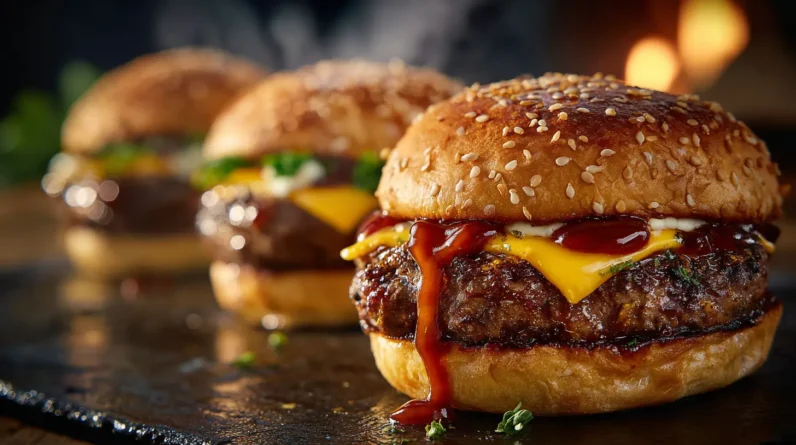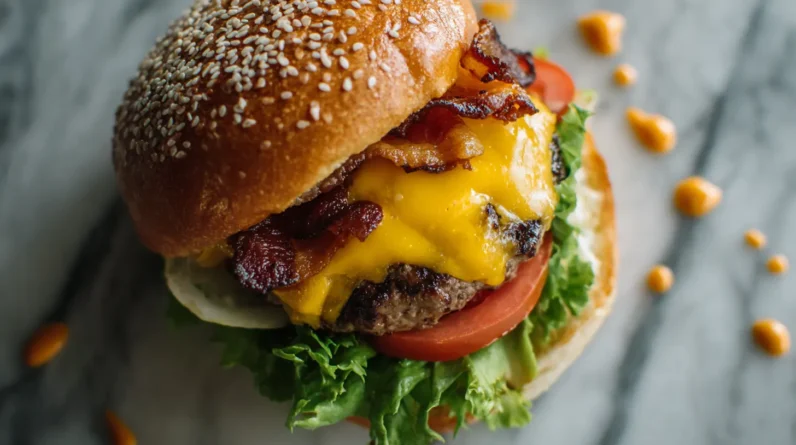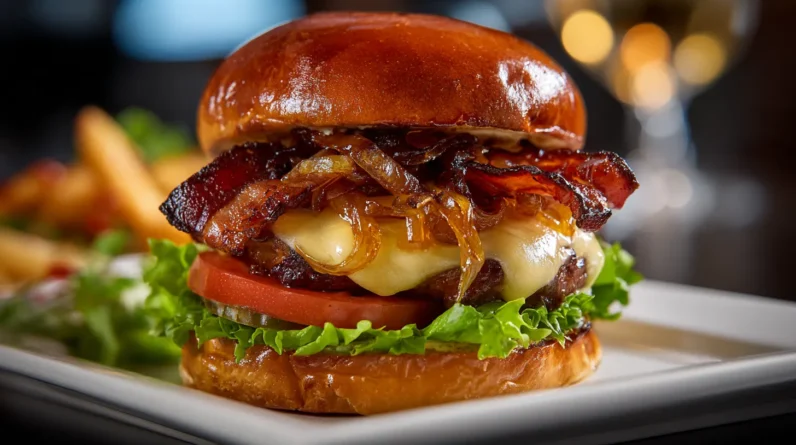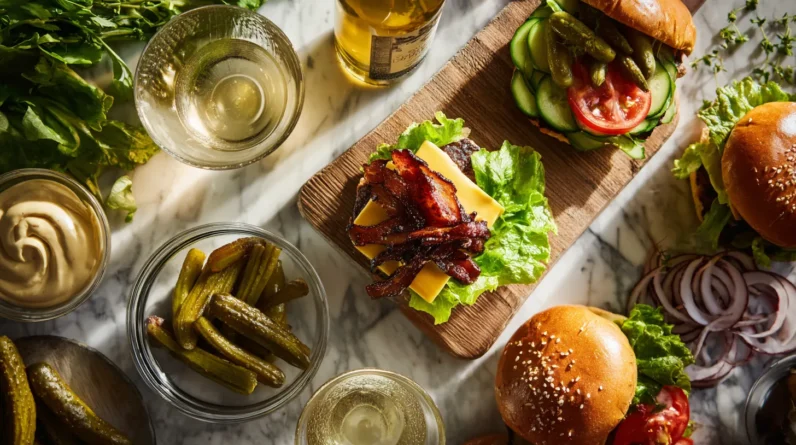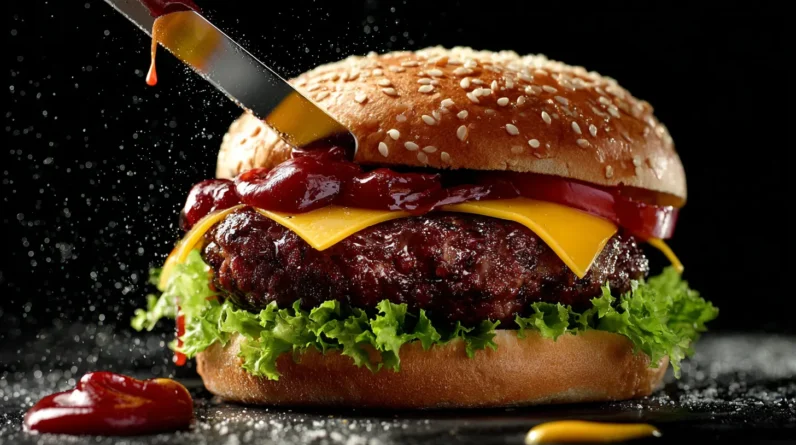



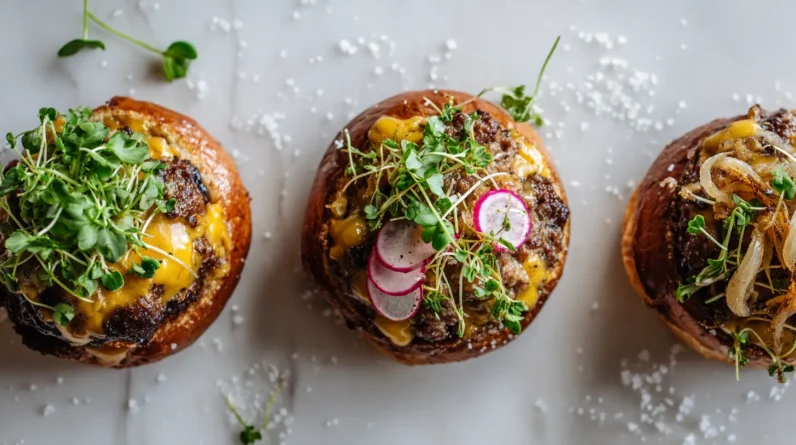
We’re transforming classic beef burgers into umami-rich experiences by layering caramelized onions, aged cheddar, and fermented toppings that deepen savory complexity. Our approach combines heritage breed beef with bold sauces—think miso mayo and bacon jam—that cut through richness without overwhelming the patty. Textural contrasts matter too: crispy fried onions shatter against tender beef while toasted buns provide subtle char notes. When you stack these elements strategically, you’ll discover how each component amplifies the others in surprising ways.
The Foundation: Selecting the Right Patty and Base Flavors
Ground beef—the canvas upon which we’ll build something extraordinary—demands our full attention before we ever touch a skillet. We’re choosing between 80/20 and 90/10 ratios, understanding that fat content directly impacts juiciness and flavor complexity. Don’t overlook patty options beyond standard ground chuck; we’ll experiment with brisket blends for deeper richness or short rib combinations for enhanced texture.
Consider beef alternatives like grass-fed varieties, which offer distinctive mineral notes, or heritage breeds delivering superior marbling. We’re also exploring umami-building techniques: incorporating Worcestershire sauce, soy, or finely minced anchovies into our patties before forming.
Season minimally—salt and freshly cracked pepper—allowing our selected beef’s inherent character to shine. This foundational precision guarantees our modern toppings experiments have a worthy vessel to transform.
Umami-Forward Toppings That Transform Your Burger
We’ve built our patty with intention—now we’ll amplify those savory depths through toppings that don’t merely sit atop our burger but actively dialogue with the beef’s inherent richness. Caramelized onions aren’t just sweet; they’re umami bombs that concentrate glutamates through prolonged heat. Aged cheddar and miso-spiked mayo layer competing savory notes that create complexity. Consider fermented options: kimchi introduces funk and depth, while soy-cured egg yolks deliver concentrated umami. Mushroom preparations—whether duxelles or charred shiitake—amplify those fifth-taste savory twists exponentially. Anchovy-forward Caesar mayo might sound unconventional, but it dissolves into background richness, elevating beef rather than competing. These aren’t garnishes; they’re strategic players orchestrating a multilayered umami experience that transforms your burger from satisfying into revelatory.
Creamy Condiments and Bold Sauces Worth Making
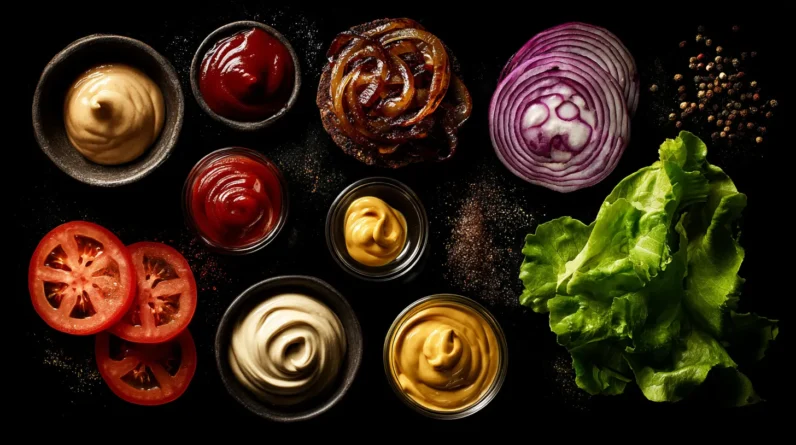
If umami-forward toppings construct the savory architecture of our burger, then creamy condiments and bold sauces become the binding force that unifies every element into coherent brilliance. We’re crafting compositions that demand precision—silky avocado spread balanced against acidic brightness, or bacon jam’s concentrated pork intensity cutting through richness. Consider a sriracha-infused mayo that coats without overwhelming, or a fermented black garlic aioli that deepens complexity. We’re experimenting with miso-butter compounds, charred onion reductions, and smoked paprika crema. These aren’t afterthoughts; they’re deliberate architectural choices that elevate humble beef patties into sophisticated experiences. When we layer these condiments strategically, we’re engineering flavor synergy—each sauce amplifying what came before, nothing competing, everything converging toward burger mastery.
Textural Contrasts: Why Crispy, Crunchy, and Chewy Elements Matter
Just as a perfectly composed sauce demands balance, texture transforms a burger from one-dimensional to transcendent. We’re discovering that layering contrasting textures elevates every bite. Crispy fried onions shatter against your teeth, delivering umami-forward bursts that punctuate softer elements. Toasted buns provide structural integrity while offering subtle char notes that complement beef’s savory depth. Chewy cheese, tender patty, and crunchy vegetative components create orchestrated complexity.
We’ve learned that this interplay isn’t accidental—it’s deliberate composition. The friction between textures engages multiple sensory pathways simultaneously, intensifying flavor perception. A burger lacking textural variety becomes monotonous; one strategically constructed demands your attention. When we master these contrasts, we’re not simply building sandwiches—we’re engineering memorable eating experiences that reward intentional craftsmanship.
Modern Cheese and Protein Pairings Beyond the Classics
The classical burger—beef patty, American cheese, simple condiments—served its purpose for decades, but it’s become a template rather than a ceiling. We’re now exploring global inspiration and regional twists that elevate the foundation. Smoked gouda paired with heritage breed beef creates complexity that American cheese can’t match. We’re experimenting with aged cheddar from Vermont, gruyère from Alpine regions, and even funky washed-rind varieties that challenge conventional palates. Beyond cheese, we’re incorporating alternative proteins strategically—bone marrow butter, anchovy-enriched mayo, crispy pork belly—that intensify umami without overwhelming the beef. These pairings demand intentionality. Each combination must enhance rather than distract. We’re discovering that mastery lies in understanding flavor architecture: how regional ingredients interact with quality beef to create burgers that transcend nostalgia while respecting tradition.
Conclusion
We’ve discovered that reinventing the classic burger means honoring its foundation while boldly experimenting with umami-rich toppings, creamy sauces, and textural layers. You’re not simply stacking ingredients—you’re orchestrating a symphony of flavors and sensations. By pairing modern cheeses and proteins strategically, we’ve opened burger potential that transcends tradition. Your next burger isn’t just a meal; it’s an edible manifesto of culinary courage.