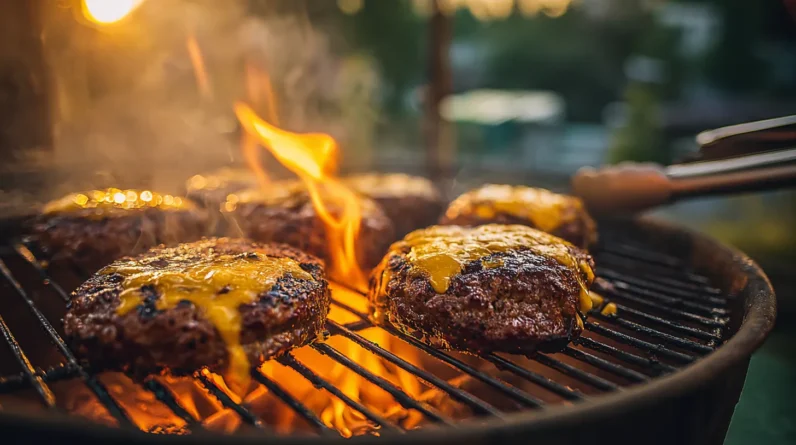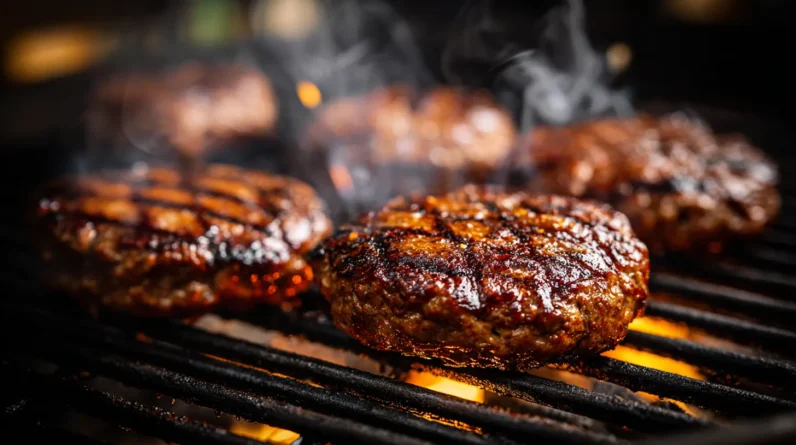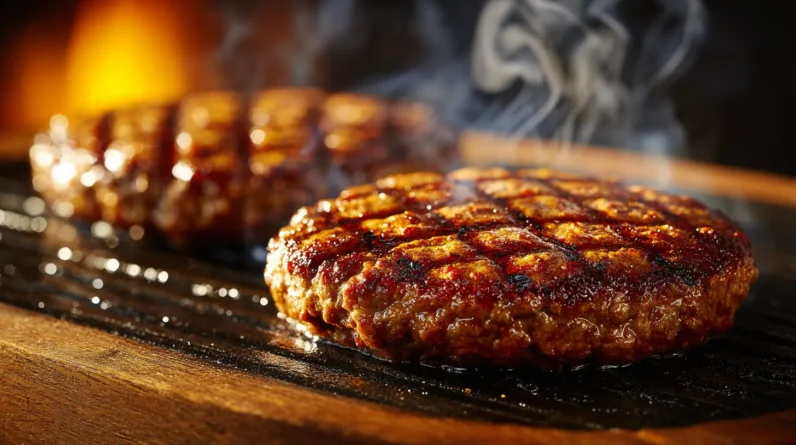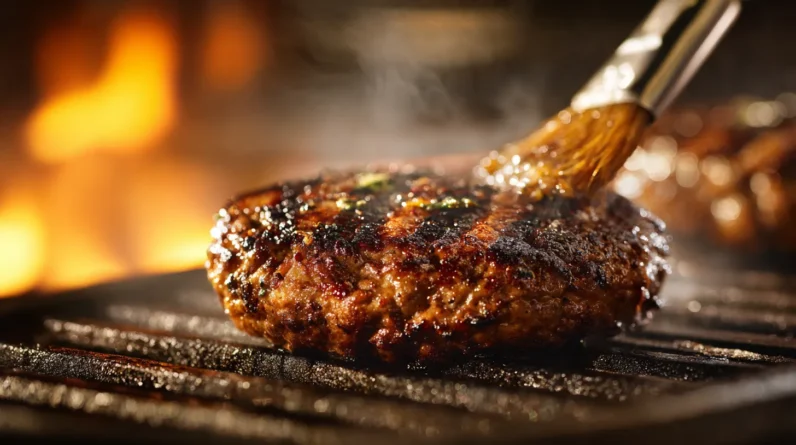



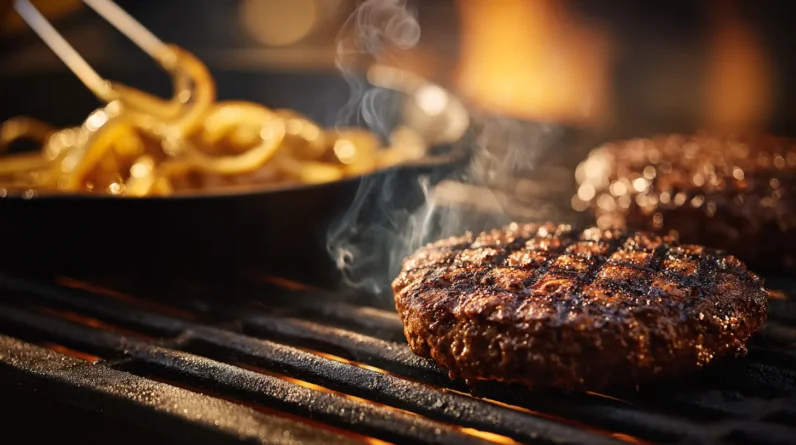
Turning average grilled burgers into standouts starts well before the patty hits the grates. We recommend an 80/20 ground chuck blend, gently shaped into 6-ounce patties with a center dimple. Set up a two-zone grill for better heat control. Season with just salt and pepper right before grilling, and use an instant-read thermometer instead of guessing doneness by color or time. Stick with us, and we’ll walk you through every technique that makes the difference.
Choose the Right Meat and Fat Ratio
When it comes to grilling burgers, the meat you choose makes all the difference. We recommend an 80/20 blend of ground chuck — 80% lean meat, 20% fat. That fat content isn’t negotiable. It’s what delivers juiciness, flavor, and the kind of char that makes a burger memorable. Drop below 80/20, and you’re risking dry, crumbly patties that no amount of toppings can save.
We prefer freshly ground chuck over pre-packaged ground beef whenever possible. Pre-ground meat sits longer, oxidizes, and loses flavor. Ask your butcher to grind it fresh, or grind it yourself if you’re serious about results. The difference is immediately noticeable — better texture, richer taste, and patties that hold together without becoming dense.
Handle the Meat Gently and Shape Patties Right
Once you’ve chosen the right meat, how you handle it determines everything that follows. Overworking the grind develops the myosin proteins, binding fat and muscle fibers into a dense, rubbery puck. We want to avoid that entirely.
Work cold meat quickly and loosely. Divide your grind into equal portions—roughly six ounces for a substantial burger—then gently form each into a ball before pressing lightly into a patty about three-quarters of an inch thick. Keep the edges slightly irregular rather than perfectly smooth; rustic edges crisp up beautifully on a hot grate.
Press a shallow dimple into the center of each patty with your thumb. As burgers cook, they puff at the center. That dimple counteracts the bulge, giving you a flat, even surface throughout.
Set Up Your Grill for Two-Zone Cooking
The grill itself needs two distinct heat zones before a single patty hits the grates. On a charcoal grill, bank the coals to one side, creating an intense sear zone and a cooler, indirect zone opposite it. On a gas grill, crank one or two burners to high and leave the remaining burner off. This setup gives us control we simply can’t get from a uniformly hot grill.
We sear patties over high heat to develop that coveted crust, then shift them to the cooler zone to finish cooking without scorching the exterior. Thick patties especially benefit from this technique—the inside reaches a safe temperature gradually while the outside stays perfectly charred, not burned. Two zones eliminate guesswork entirely.
Season Simply and at the Right Moment
Seasoning burgers is deceptively simple—salt, pepper, and nothing else. Resist the urge to mix seasonings into the meat; that changes the protein structure and produces a denser, tougher patty. Instead, we season the exterior only, and timing matters enormously.
Salt draws moisture to the surface through osmosis. If we season too early, that moisture dissolves the surface proteins, creating a tacky, sausage-like texture rather than a distinct crust. We want that crust. So here’s our rule: season generously with kosher salt and cracked black pepper immediately before the patties hit the grates—not five minutes before, not fifteen.
Use more salt than feels comfortable. Burgers are thick, and under-seasoned beef tastes flat no matter how perfectly we’ve cooked it.
Know When Your Burger Is Actually Done
Most of us rely on time or color to judge doneness, and both will betray us. Color varies by meat source, grind, and added ingredients. Time shifts with patty thickness, starting temperature, and flame intensity. Neither gives us certainty.
A reliable instant-read thermometer does. We want 160°F for beef when food safety is the priority, though many cooks pull at 155°F, knowing carryover heat finishes the job off the grill. Insert the thermometer horizontally through the edge of the patty, pushing toward the center — that’s the only accurate read.
We should also know that a burger continues cooking after it leaves the grate. Resting for two to three minutes isn’t optional courtesy; it’s part of the cooking process. Account for it every time.
Frequently Asked Questions
Can I Mix Different Types of Meat Together for Better Flavor?
Yes, we absolutely recommend blending meats for superior burgers! Combine 80% chuck with short rib or brisket to elevate fat content, depth, and complexity—it’s a proven technique that’ll transform your patties dramatically.
What Toppings Best Complement a Perfectly Grilled Burger?
73% of burger enthusiasts rank toppings as critical to overall satisfaction. We’ve found that caramelized onions, aged cheddar, crispy bacon, fresh arugula, and house-made aioli elevate your burger’s complexity, balancing umami, acidity, and textural contrast masterfully.
How Do I Prevent My Burger Buns From Getting Soggy?
Toast your buns directly on the grill for 30-60 seconds. We’ll also recommend spreading a thin layer of butter or mayo as a moisture barrier before adding wet toppings like tomatoes or sauces.
Should I Toast My Burger Buns Directly on the Grill?
Yes, we recommend toasting your buns directly on the grill’s cooler zone, cut-side down, for 30-45 seconds. We’ll get a golden crust that adds texture, prevents sogginess, and complements the smoky char of our patties.
Can I Prepare and Freeze Burger Patties Ahead of Time?
Yes, we can freeze patties up to three months ahead. Shape them, place parchment between each, and seal tightly in freezer bags. Thaw overnight in the refrigerator before grilling for best results.
Conclusion
We’ve covered everything from choosing the right fat ratio to nailing that perfect internal temp. Think of your grill as a partner, not just a tool — work with it, and it’ll reward you every time. When we handle the meat gently, season at the right moment, and trust a two-zone setup, we transform something ordinary into something worth talking about. Now fire up that grill and let’s get cooking.