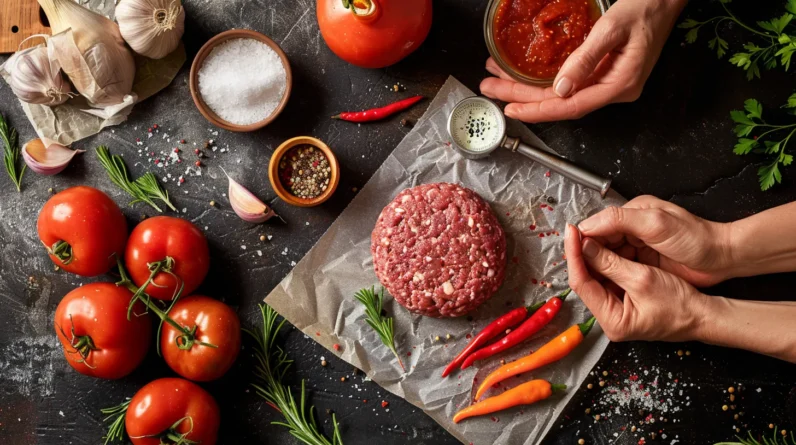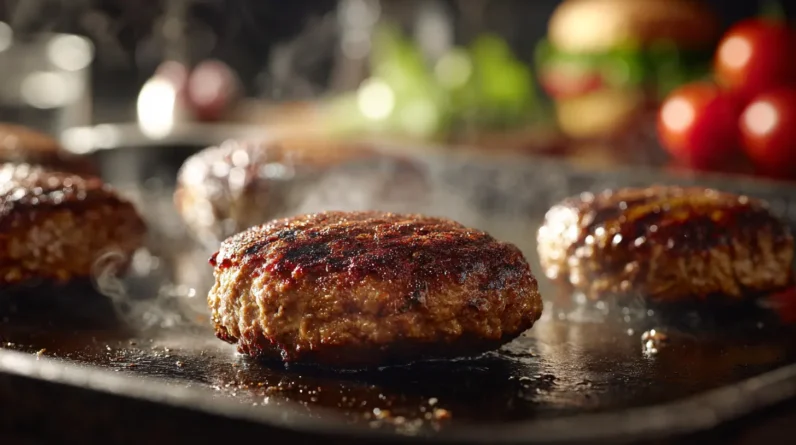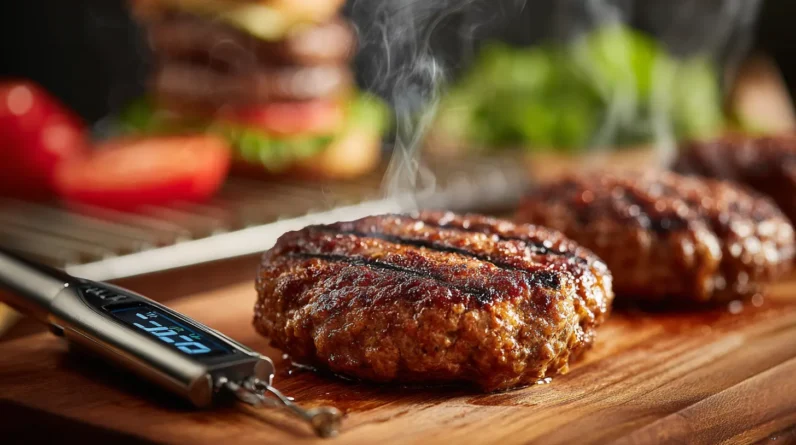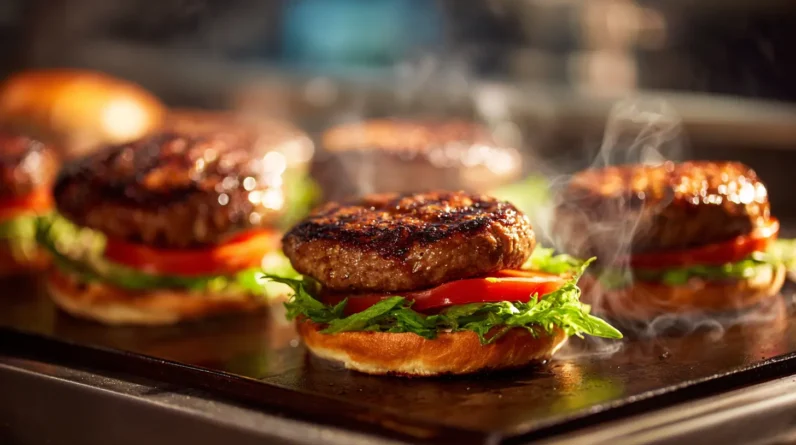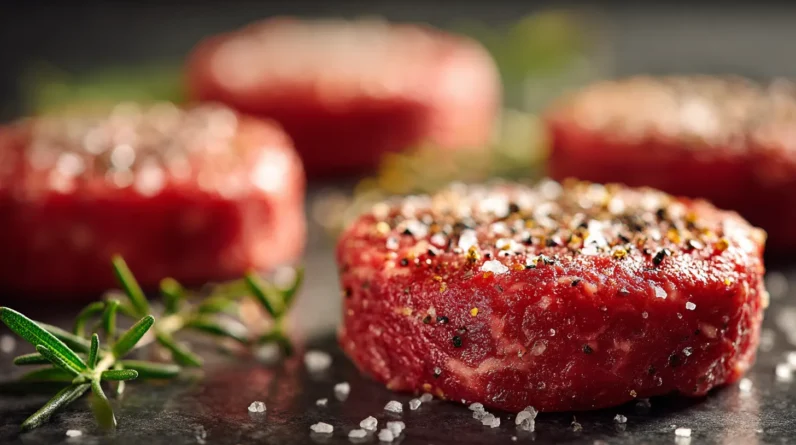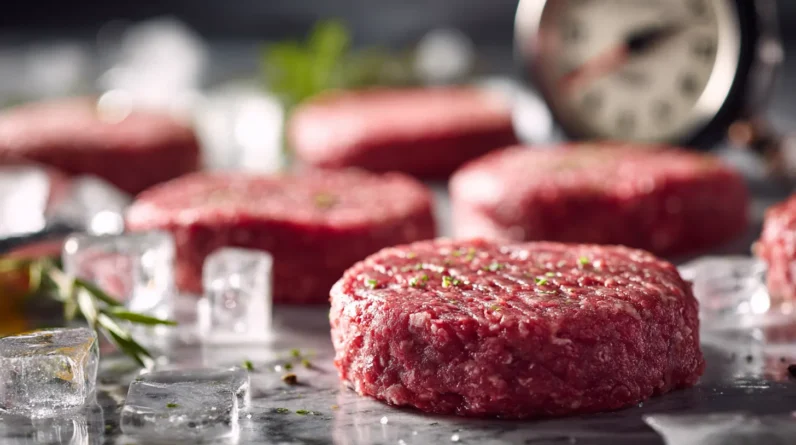



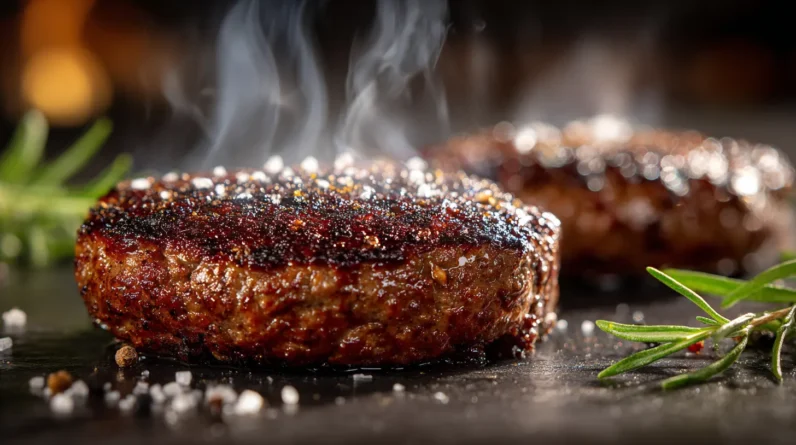
We’ll lock in flavor by mastering six critical techniques. Start with quality chuck ground beef at 80/20 ratio, kept cold throughout preparation. Season patties just before grilling—never beforehand—with kosher salt and fresh cracked pepper. Mix gently to avoid overworking the meat, which breaks down fat structure. Never press burgers while cooking; let the Maillard reaction develop naturally. Finally, rest your burgers three to five minutes so juices redistribute and flavors concentrate. Each step builds on the last, creating burgers with maximum depth.
Select the Right Cut of Ground Beef
The foundation of any great burger starts with choosing the right ground beef. We recommend selecting cuts with an 80/20 or 75/25 lean-to-fat ratio, which balances flavor and juiciness while maintaining structural integrity during cooking. Beef quality matters substantially; source your meat from reputable butchers who grind fresh daily. For superior meat selection, we prefer chuck for its rich marbling and beefy depth, often blending it with short rib for enhanced fat content and complexity.
Avoid pre-ground beef when possible, as oxidation diminishes flavor compounds. We grind our cuts immediately before forming patties to preserve moisture and taste. This intentional approach to beef selection directly impacts your burger’s succulence and satisfaction. Quality ingredients yield exceptional results.
Keep Your Ingredients Cold Before Cooking
Cold ingredients are essential to crafting superior burgers, and we can’t overstate this step’s importance. Temperature control directly impacts your final result, transforming ordinary patties into exceptional ones.
We recommend maintaining cold storage conditions throughout preparation:
- Chill your ground beef to 32-40°F for ideal binding and texture
- Keep mixing bowls and utensils refrigerated to prevent fat degradation
- Rest formed patties in cold storage for 30 minutes before grilling
- Work quickly with cold ingredients to preserve flavor compounds and juiciness
When beef warms, fat oxidizes rapidly, compromising taste and texture. Cold temperatures slow this process, locking in the rich flavors you’ve carefully selected. We’ve found that chilled ingredients yield burgers with superior crust formation and juicy interiors. Prioritizing temperature control distinguishes masterful burgers from mediocre ones.
Season Your Patties at the Perfect Time
Timing your seasoning application is critical to burger excellence, and we recommend seasoning your patties just before they hit the grill. We’ve found that premature salting draws moisture from the meat, compromising texture and juiciness. Instead, we apply salt and pepper immediately before cooking for ideal salt enhancement and maximum flavor boost.
We’re precise with our seasoning ratios: roughly one teaspoon of kosher salt per pound of ground beef. This measurement guarantees even distribution without oversalting. We grind fresh black pepper directly onto each patty for superior flavor complexity.
We avoid mixing salt into the meat during patty formation—this activates myosin proteins, creating a dense, sausage-like texture. By seasoning at the critical moment, we preserve the burger’s desirable looseness while achieving a perfectly seasoned crust. Timing separates amateur burgers from masterpieces.
Avoid Overworking the Meat
Overworking ground beef during patty formation is a silent burger killer that we see compromise countless batches. Excessive meat handling destroys the fat structure, creating dense, rubbery patties that’ve lost their juiciness and tenderness.
We recommend gentle mixing to preserve burger excellence:
- Mix only until ingredients just combine—overworked meat becomes tough and unforgiving
- Handle patties minimally; your touch directly impacts texture and moisture retention
- Avoid compacting the meat; loose formations develop superior crust and juiciness
- Stop immediately when the mixture reaches uniformity—further manipulation kills quality
Professional technique demands restraint. We gently combine seasoned beef with minimal manipulation, respecting the meat’s inherent structure. Your hands should work quickly and deliberately, never squeezing or kneading. This disciplined approach preserves fat distribution, ensuring burgers that’re simultaneously tender, flavorful, and impossibly juicy.
Never Press Down While Cooking
Pressing down on burgers while they cook is a common mistake that destroys the juiciness we’ve worked to preserve. When we compress patties during cooking, we expel valuable moisture and fat, compromising texture and flavor development.
| Action | Result | Impact |
|---|---|---|
| Pressing down | Moisture loss | Dry burger |
| Hands off | Retained juices | Optimum texture |
| Light touch | Even searing | Superior crust |
| Patience | Proper cooking speed | Perfectly cooked center |
Our searing technique demands restraint. We maintain consistent heat and allow the Maillard reaction to develop naturally without interference. Resist the spatula. Let cooking speed follow proper temperature management—350°F surface heat creates ideal crust formation in 3-4 minutes per side without manual intervention.
This discipline guarantees we deliver burgers with locked-in moisture and superior flavor complexity that justifies our meticulous preparation process.
Let Your Burgers Rest After Cooking
Just as we’ve resisted the urge to press our patties during cooking, we must now exercise patience as our burgers rest. Resting benefits extend beyond mere cooling—they’re fundamental to flavor development and texture optimization.
When we remove burgers from heat, residual cooking continues internally. Muscle fibers relax, allowing juices to redistribute throughout the patty rather than pooling at the surface. This cooking technique guarantees maximum moisture retention and flavor concentration.
Allow your burgers 3-5 minutes of resting time:
- Juices redistribute, preventing them from escaping when you bite down
- Carryover cooking perfects the internal doneness without overcooking edges
- Proteins stabilize, locking in umami compounds and beef essence
- Texture shifts from fragile to structurally sound
This discipline separates competent burgers from exceptional ones. We’ve invested in quality beef and precise technique—resting honors that commitment.
Conclusion
We’ve covered the essentials—cold ingredients, proper seasoning timing, minimal handling, and strategic resting. You might think these steps seem fussy, but they’re not optional luxuries; they’re the difference between a mediocre burger and one that locks in genuine beef flavor. We’re talking about respecting your meat’s natural qualities rather than fighting against them. Master these techniques, and you’ll create burgers worth the effort every single time.