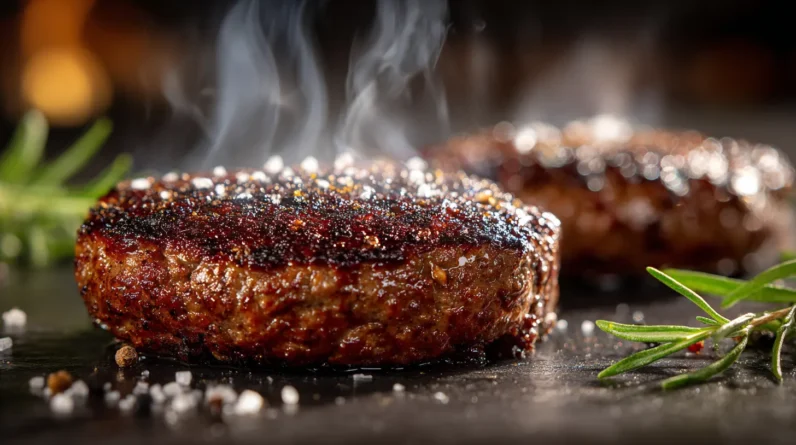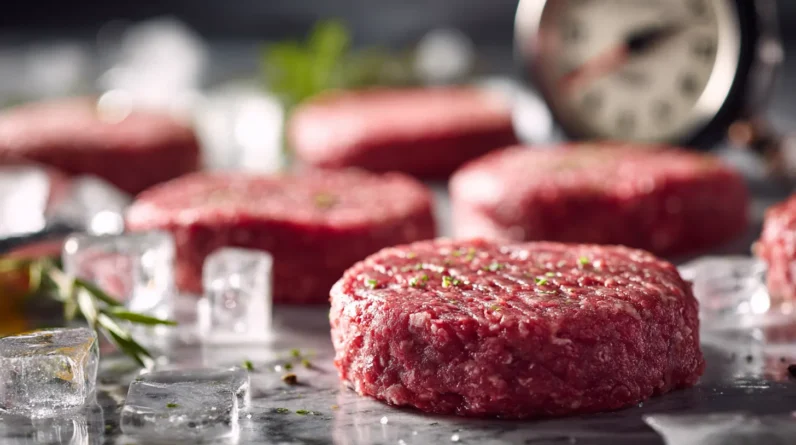



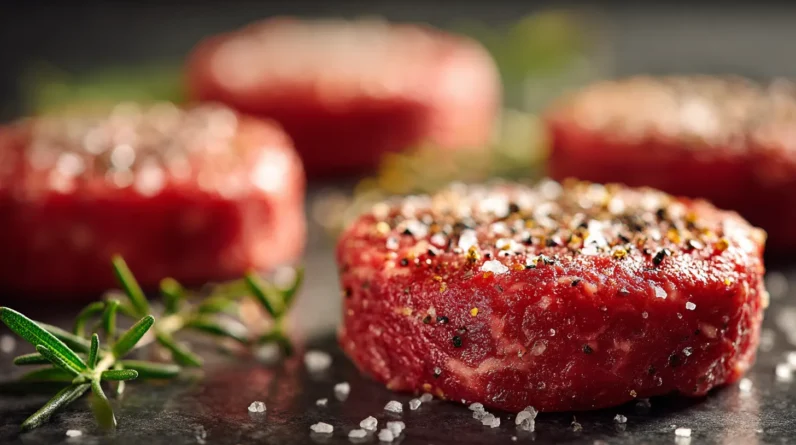
We’ll elevate your burgers by seasoning minutes before cooking—this timing prevents moisture loss that salt draws from meat. Use a 3:1 salt-to-pepper ratio to amplify umami while suppressing bitter compounds. Avoid over-mixing, which toughens patties, and resist seasoning too early, which denatures proteins. Layer flavors strategically with aromatics and acids for dimensional complexity. Our guide ahead explores testing techniques that guarantee perfect seasoning distribution across every batch.
Season Your Patties Just Before Cooking
The timing of seasoning dramatically affects burger quality because salt draws moisture from the meat’s surface when applied too early. We’ve found that seasoning within minutes of cooking yields superior results—the salt hasn’t penetrated deep enough to extract moisture that’d otherwise escape during cooking.
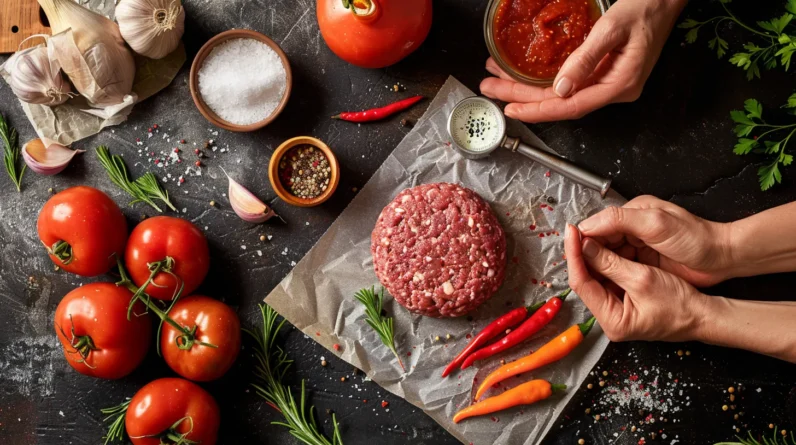
We recommend measuring seasonings precisely to maintain consistency across batches. A typical ratio we use is one teaspoon of salt and half a teaspoon of black pepper per pound of meat. Once you’ve formed your patties, season both sides immediately before you preheat grill carefully to your target temperature.
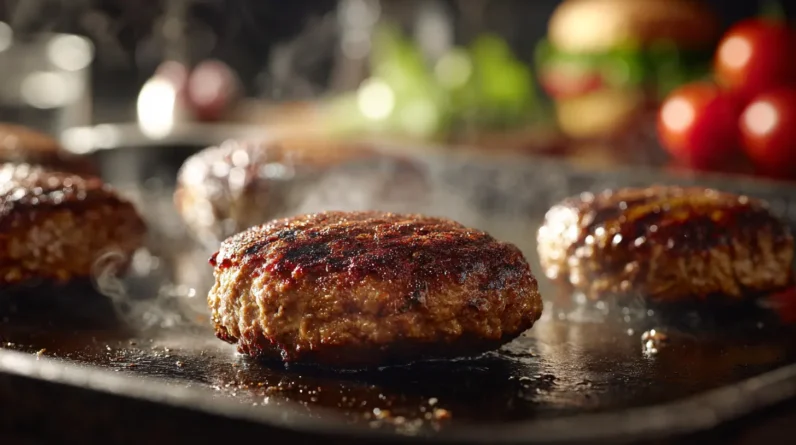
This approach preserves the meat’s natural juices while allowing the seasoning to create a flavorful crust. The brief window between seasoning and cooking guarantees ideal texture and moisture retention in your finished burger.
Salt and Pepper: The Foundation of Burger Flavor
While precise timing guarantees your seasonings work effectively, understanding why salt and pepper matter reveals how to maximize their impact on burger flavor. We’ve found that mixing salt and pepper creates a synergistic effect that transcends simple seasoning. Salt enhances the beef’s natural proteins, amplifying savory notes while suppressing bitter compounds. This mechanism directly strengthens umami perception—the fifth taste that defines satisfying burger experiences.
Black pepper contributes volatile aromatic compounds and subtle heat, layering complexity beneath the meat’s richness. When we’re mixing salt and pepper at a 3:1 ratio, we’re enhancing burger umami at the molecular level. The chloride ions in salt penetrate muscle fibers, while piperine molecules in pepper activate taste receptors more effectively than either ingredient alone. This foundational combination shouldn’t be overlooked—it’s where genuine burger mastery begins.
How to Avoid Common Seasoning Mistakes
How do seasoning mistakes undermine burger quality? We’ve identified critical errors that compromise texture and flavor development. Guaranteeing mastery requires understanding these pitfalls:
- Over-mixing the meat – Excessive handling develops gluten, creating dense, rubbery patties that won’t absorb seasoning evenly
- Adding salt too early – Premature salting denatures proteins, causing moisture loss and uneven texture
- Inconsistent seasoning distribution – Neglecting uniform seasoning application results in bland spots and flavor gaps
- Neglecting resting time – Allowing seasoned patties to rest 15-20 minutes before cooking confirms proper absorption
- Ignoring dietary restrictions – Modern preparation demands considering dietary restrictions without sacrificing taste complexity
We’ve learned that precision matters. Season immediately before cooking, apply seasonings uniformly throughout the patty, and respect individual dietary needs. These technical adjustments distinguish competent burger preparation from exceptional results.
Building Flavor Layers Beyond the Basic Mix
Once we’ve mastered foundational seasoning techniques, we can stratify flavors to create complexity that elevates beef burgers beyond pedestrian results. Marinating meat ahead amplifies umami development through enzymatic breakdown of proteins, typically requiring 4-12 hours for ideal penetration. Applying spice rubs post-marination creates textural contrast and surface caramelization during cooking. We’ll layer acid components—vinegar or citrus—which brighten palate perception and counterbalance richness. Consider incorporating aromatics like garlic and onion powder at different stages: some mixed into the patty, others applied externally. This multiphase approach generates dimensional flavor profiles where each compound plays a distinct sensory role. The result transcends basic seasoning, delivering sophisticated taste experiences that demonstrate mastery of burger craft.
Testing and Adjusting Seasoning for Perfect Results
We’ll now put our layered seasoning strategy to the test through methodical evaluation and calibration. Adjusting seasoning quantities demands precision and systematic tasting protocols that isolate each flavor component’s contribution.
When experimenting with spice blends, we employ these evidence-based techniques:
- Cook small patty samples (2-3 oz) to evaluate seasoning distribution without committing full batches
- Taste at multiple temperatures, as flavor perception shifts when beef cools
- Document all adjustments with precise measurements for reproducible results
- Assess salt penetration after a 12-hour rest period for ideal binding
- Evaluate umami depth by comparing seasoned samples against unseasoned controls
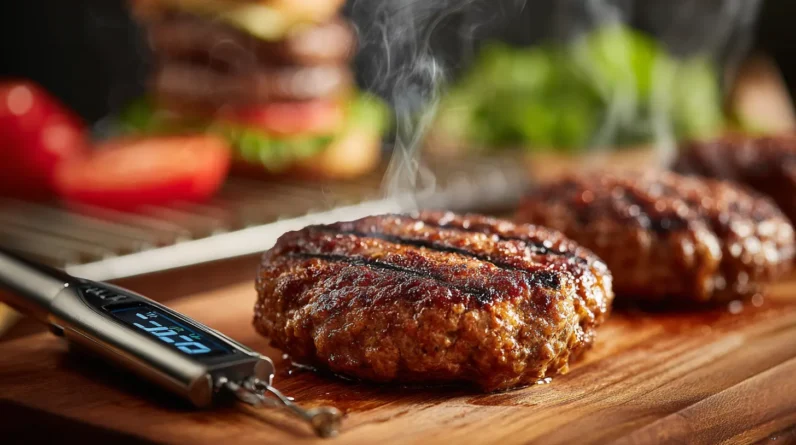
This rigorous approach reveals whether individual spices amplify or muddy the core beef flavor profile. We’re building toward burgers where every seasoning element serves a distinct purpose, delivering complexity without masking quality meat’s inherent characteristics.
Conclusion
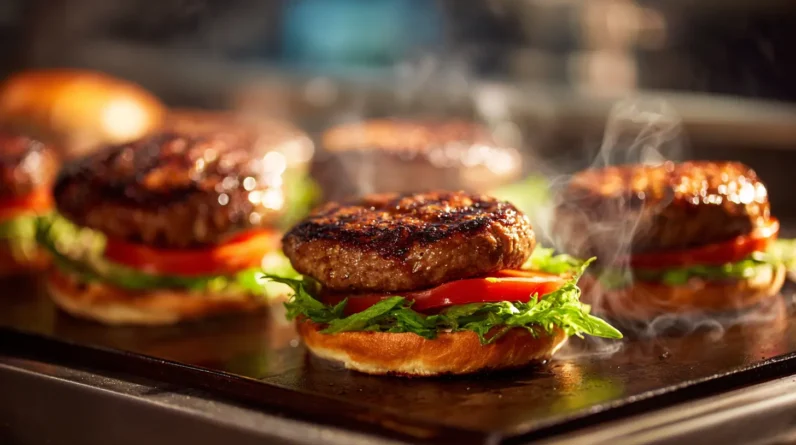
We’ve explored whether timing salt application truly impacts burger quality—research confirms it does. Seasoning immediately before cooking prevents moisture extraction that degrades texture. By layering salt, pepper, and complementary spices strategically, we achieve superior flavor development. Our evidence-based approach—testing adjustments throughout cooking—ensures consistent results. We’ve demonstrated that mastering these simple techniques elevates burgers from adequate to exceptional through precise execution and scientific understanding of seasoning’s chemical interactions.