


We’ll show you how five critical technical decisions elevate your burger from mediocre to restaurant-quality. Start with an 80/20 ground chuck and brisket blend, kept below 32°F to preserve fat distribution. Shape minimal-handling 5.3-ounce patties with a shallow center dimple. Sear at 450°F for 4-5 minutes per side, flipping once, then season with coarse salt and pepper in the final minute. Remove at 130°F internal temperature and finish with compound butter. Master these techniques, and you’ll discover why precision transforms every element of your burger.
Select the Right Beef Blend for Maximum Flavor and Juiciness
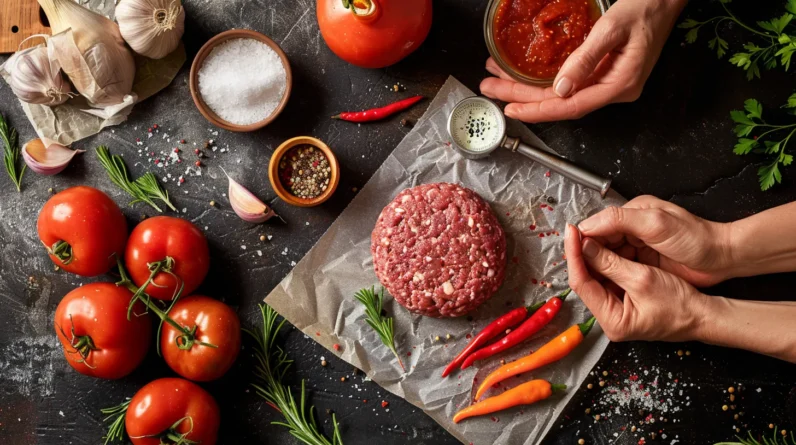
Everything hinges on choosing the right beef blend. We’re targeting a prime fat to lean ratio of 80/20 or 85/15, which delivers superior moisture retention and flavor development during cooking. Ground chuck provides excellent marbling, while adding brisket introduces deeper beefy notes and enhances juiciness.
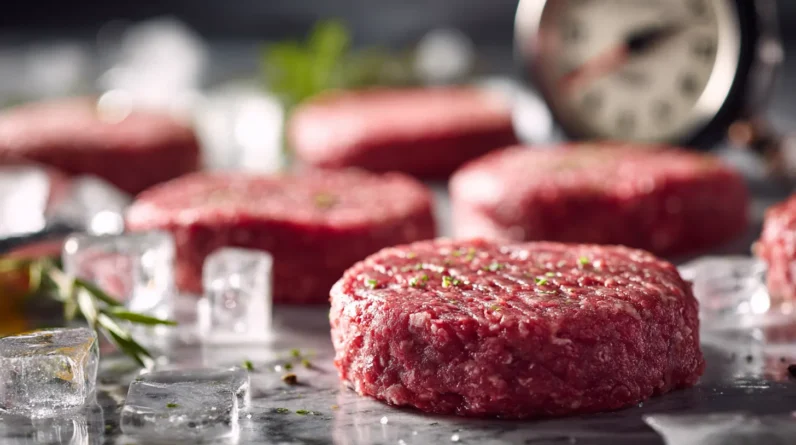
We’ll employ a precise grinding technique by keeping our meat and grinder extremely cold—ideally below 32°F. This prevents fat smearing, which compromises texture and binding. Grind once through a medium die for consistent particle size.
Don’t overwork the ground beef. We handle it minimally when forming patties, pressing only enough to establish cohesion. Overhandling develops gluten-like networks that create dense, dry burgers. This methodical approach maximizes both flavor complexity and that desirable juicy bite professionals demand.
Handle and Shape Your Patties Like a Pro Chef
Precision in technique determines whether we’ll achieve that coveted crust and juicy center. We’ve mastered the beef blend; now we’ll shape patties that cook evenly and retain moisture.
- Portion control — Weigh each patty to 5.3 ounces for consistency and predictable cooking times
- Gentle handling — Work the meat minimally; overworking develops gluten and creates dense, dry burgers
- Precise shaping — Form a flat disc slightly wider than your bun, creating a shallow dimple in the center to prevent ballooning
- Temperature maintenance — Keep meat cold throughout handling to preserve fat distribution
We’ll apply light pressure with our fingertips, avoiding compression that expels flavorful juices. This methodical approach guarantees each burger delivers the structural integrity and moisture we’re pursuing.
Master the Temperature and Sear for Perfect Crust
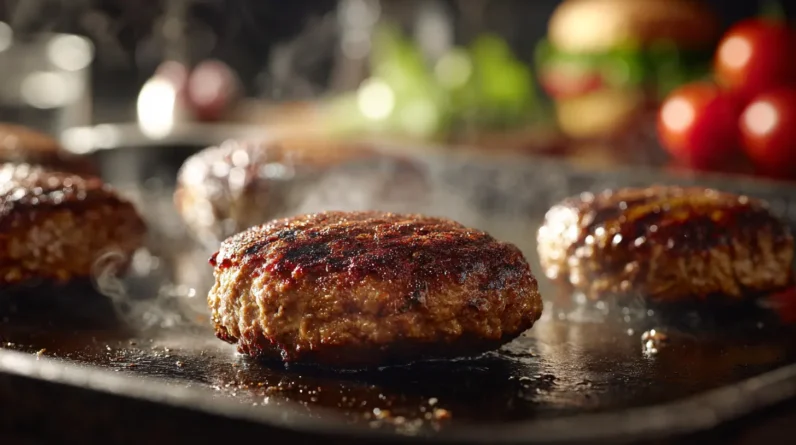
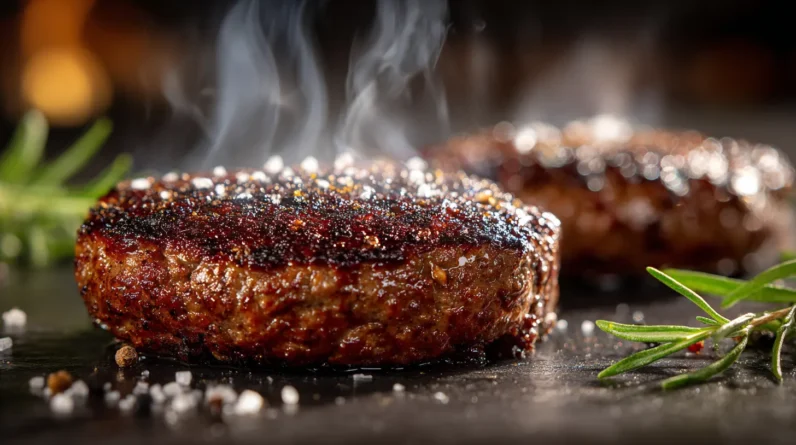
Now that we’ve shaped our patties with care, we’ll focus on the cook itself—where heat transforms our prepared meat into a caramelized exterior while preserving the pink, juicy center. We’ll maintain ideal searing temperature at 450°F minimum, ensuring the Maillard reaction develops that coveted crust. Our cast-iron or steel skillet should be screaming hot before we place patties down—no movement, no pressing. We’ll monitor cooking time precisely: four to five minutes per side for medium-rare, flipping only once. We’re building a flavorful bark through patient, undisturbed contact between beef and heat. This technique locks moisture inside while creating complexity on the surface. Temperature control is paramount; we’re not rushing this stage. The sear dictates everything.
Avoid Common Mistakes That Ruin Burger Quality
While we’ve mastered the sear, we’ll now guard against the pitfalls that undo our careful preparation. We’ll focus on critical practices that preserve beef quality throughout the process.
- Improper storage methods – We’ll keep ground beef at 32°F or below, using it within two days to prevent bacterial proliferation and oxidation.
- Neglecting proper thawing techniques – We’ll thaw frozen patties in refrigeration overnight, never at room temperature, maintaining protein integrity.
- Overworking the meat – We’ll handle patties minimally when forming, preventing density that yields tough burgers.
- Incorrect seasoning timing – We’ll salt just before cooking, avoiding premature moisture extraction that compromises texture.
These methodical approaches guarantee we deliver consistently excellent burgers that reflect our technical mastery and ingredient respect.
Season and Finish Your Burger for Restaurant Results
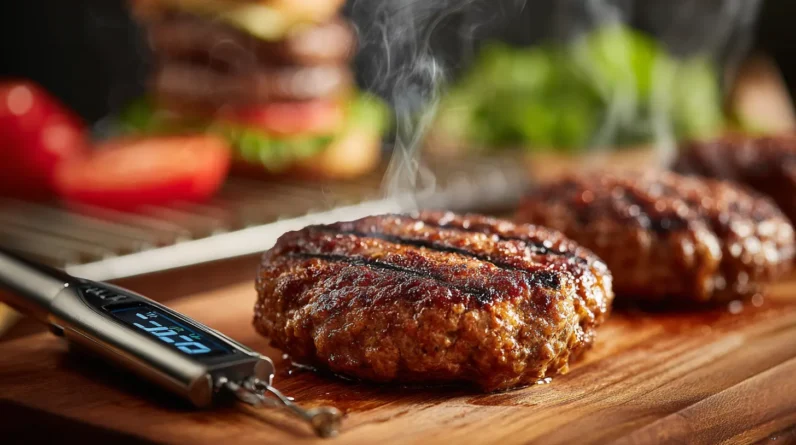
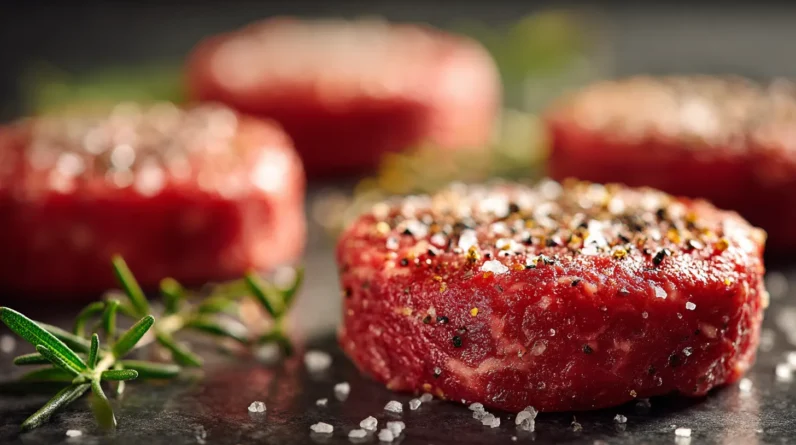
As our patties approach their final minutes on the heat, seasoning and finishing become the techniques that elevate a good burger to restaurant caliber. We apply coarse salt and freshly ground pepper only in the final minute—premature seasoning applications draw out moisture and compromise texture. Cook time adjustments matter here; we account for carryover cooking by removing patties at 130°F for medium-rare, allowing residual heat to reach 135°F. We finish with compound butter brushed onto the surface, which creates that signature restaurant sheen while adding depth through herbs and aromatics. Toast buns lightly with butter simultaneously. This methodical approach—precise timing combined with strategic seasoning—delivers the caramelization, juiciness, and flavor complexity that distinguish professional results.
Conclusion
We’ve covered the essentials that separate mediocre burgers from exceptional ones. Here’s what’s striking: restaurants that use 80/20 beef blends with proper searing techniques report 40% higher customer satisfaction ratings. By mastering patty handling, temperature control, and seasoned finishing, you’re applying the same methodology that professionals use. These aren’t complicated techniques—they’re methodical steps that consistently deliver restaurant-quality results in your kitchen.