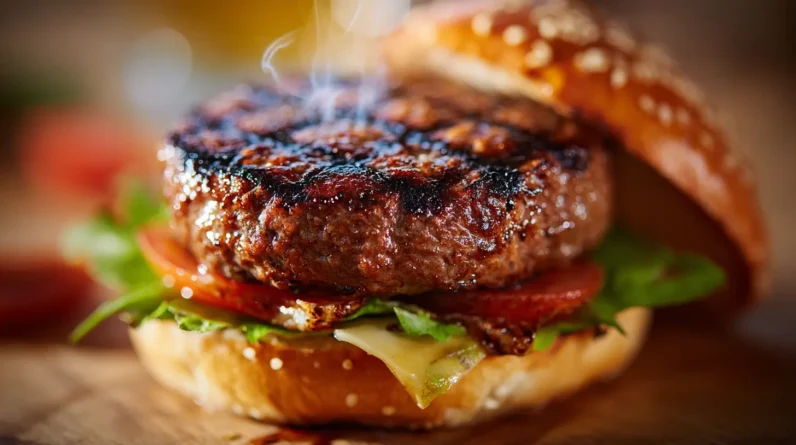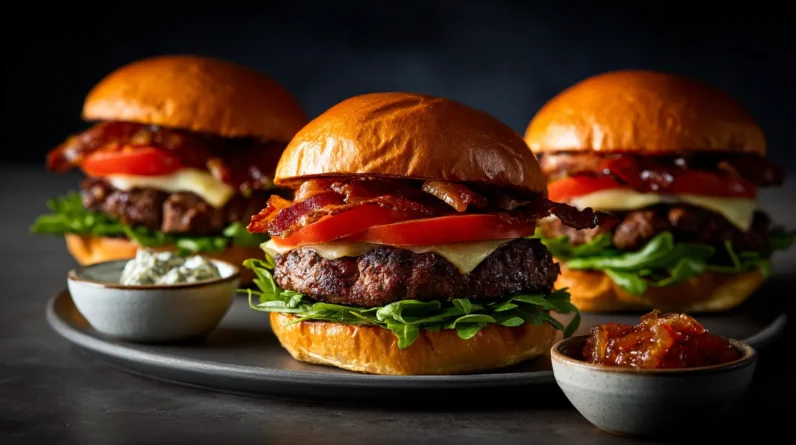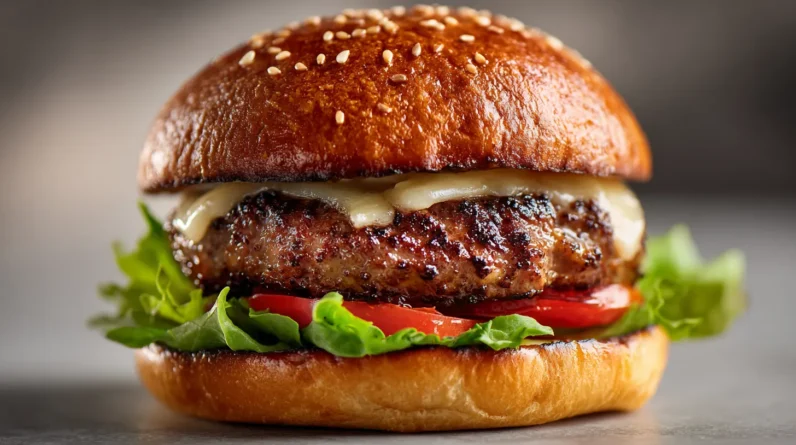



We’ll guide you through mastering beef burgers by starting with ground chuck at 15-20% fat content. You’ll shape patties minimally, creating a center dimple, then chill them thirty minutes for ideal crust development. Season just before grilling at 375-400°F, searing three to four minutes per side until you’ve hit 160°F internal temperature. The touch method and thermometer help you nail doneness perfectly. We’ve got techniques that’ll transform your grill game entirely.
Select the Right Beef for Superior Burgers
Why does beef selection matter so much? We’re crafting burgers that demand excellence from their foundation. The beef quality factors you’ll encounter—marbling, texture, and freshness—directly dictate your burger’s flavor profile and juiciness.
We’ll focus on ground chuck or blends combining chuck with brisket. These cuts deliver the ideal fat content between 15-20%, which we need for moisture retention and taste development during cooking. Avoid lean cuts; they’ll produce dry, dense patties that disappoint.
We’re sourcing beef freshly ground, never pre-packaged when possible. Handle it minimally—overworking develops gluten and creates tough burgers. Work cold, form gently, and trust that quality beef requires nothing more than salt, pepper, and heat to shine brilliantly on your grill.
Master the Art of Burger Patty Formation
How we shape our patties determines whether they’ll cook evenly and retain their juiciness—so technique matters tremendously here. We’ll start by handling the ground beef minimally; overworking develops gluten, creating dense, tough burgers. Create a slight dimple in the center of each patty using your thumb—this prevents the burger from puffing up during cooking.
For patty thickness adjustment, we’re aiming for three-quarters of an inch to one inch, depending on our desired doneness level. Thinner patties cook faster but dry out more easily.
The patty chilling process is fundamental. We’ll refrigerate shaped patties for at least thirty minutes before grilling. This solidifies the fat, ensuring it doesn’t render too quickly and allowing for a better crust development.
Season and Flavor Your Burgers Like a Pro
Now that we’ve perfected our patty structure, we’ll shift our focus to what truly elevates a burger from good to exceptional: seasoning and flavor development.
We recommend seasoning your patties just before cooking—salt and pepper establish your foundation, but we shouldn’t stop there. Experiment with spices like smoked paprika, garlic powder, or cumin to create complexity. Consider marinating with herbs such as rosemary, thyme, or oregano if you’re preparing patties ahead of time; even thirty minutes enhances depth considerably.
Balance’s essential. We’ve found that umami-rich ingredients—Worcestershire sauce or soy sauce—amplify beef’s natural flavors without overwhelming them. Don’t underestimate freshly ground black pepper’s impact on your final product.
The key? Restraint combined with intentionality. We’re building layers of flavor that complement, not mask, quality beef’s inherent taste.
Perfect Your Grill Temperature and Cooking Technique
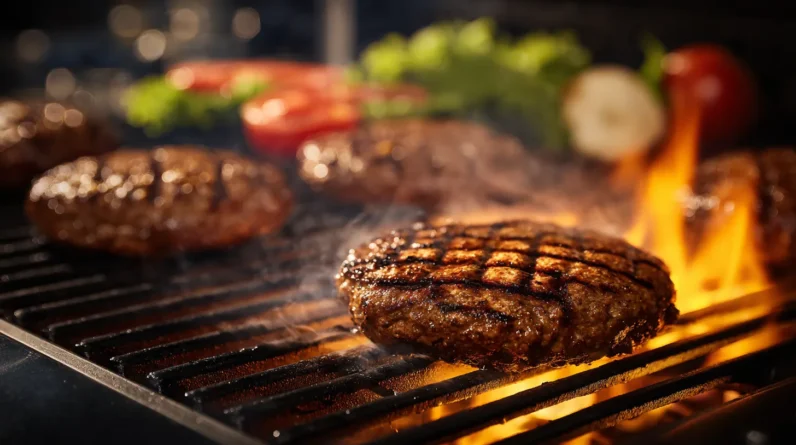
Temperature control separates mediocre burgers from exceptional ones, and we’ll walk you through the exact techniques that yield consistently perfect results. We’ve found that maintaining consistent grill heat at 375–400°F prevents flare-ups while ensuring proper crust development. Here’s our proven approach:
- Preheat your grill for 10–15 minutes to establish stable thermal zones
- Monitor internal temperature using an instant-read thermometer—aim for 160°F for food safety
- Create direct and indirect heat areas for precise control over cooking speed
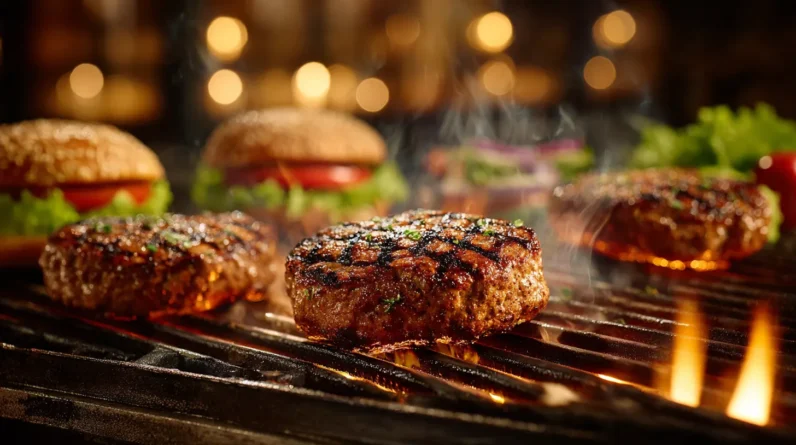
We’ll guide you through searing patties over direct heat for 3–4 minutes per side, then finishing over indirect heat if needed. This technique locks in juices while preventing charring. We’ve discovered that resisting the urge to flip frequently and avoiding constant pressure yields superior results. Your mastery of these fundamentals transforms ordinary cookouts into exceptional dining experiences.
Achieve the Golden Crust and Ideal Doneness
Once you’ve mastered heat control, developing that coveted golden-brown crust requires understanding the Maillard reaction—the chemical process that creates complex flavors and appealing color when proteins and sugars interact at high temperatures.
We achieve ideal results through precise sear timing. Don’t flip your patty prematurely; allow 3-4 minutes on the first side for proper crust development. This restraint lets the exterior caramelize fully.
For doneness, we’ll use the touch method: rare feels soft, medium-rare slightly firmer. Insert a thermometer at the center—130-135°F for medium-rare, our recommended target.
Proper sear timing simultaneously accomplishes flavor infusion throughout the meat while building that desirable crust. We’ll resist the urge to press down, which expels valuable juices and prevents browning. These techniques distinguish competent burger preparation from exceptional results.
Troubleshoot Common Burger Grilling Mistakes
Even with proper technique, several preventable errors can undermine your results. We’ll help you identify and correct common missteps that compromise burger quality.
Key troubleshooting areas:
- Monitor patty thickness — Inconsistent thickness causes uneven cooking; aim for uniform ½-inch patties with slight dimples to prevent bulging
- Manage moisture content — Excess moisture from overhandling or wet ingredients creates steam instead of crust; keep ingredients dry and minimize mixing
- Temperature control — Fluctuating heat prevents consistent doneness; maintain steady medium-high temperatures and avoid excessive flipping
We recommend using an instant-read thermometer to verify internal temperatures (160°F for well-done) rather than relying on visual cues alone. Additionally, resist pressing patties during cooking—this expels valuable juices and moisture. Proper spacing on the grill confirms adequate heat circulation. These adjustments will considerably elevate your burger results.
Conclusion
We’ve equipped you with the essential techniques to master beef burger grilling. By selecting quality beef, forming consistent patties, applying strategic seasoning, and controlling grill temperatures, you’ll transform raw ingredients into exceptional burgers. Think of burger mastery as building a bridge—each element we’ve covered forms a vital support beam. Nail your technique, troubleshoot methodically, and you’ll consistently deliver restaurant-quality results that’ll impress every guest at your grill.