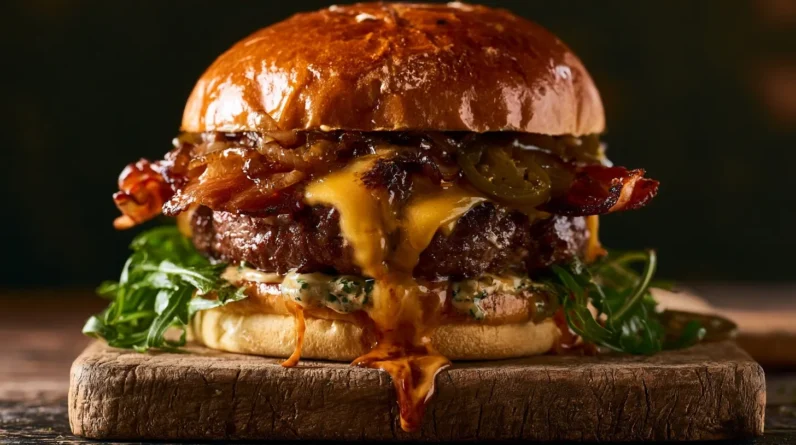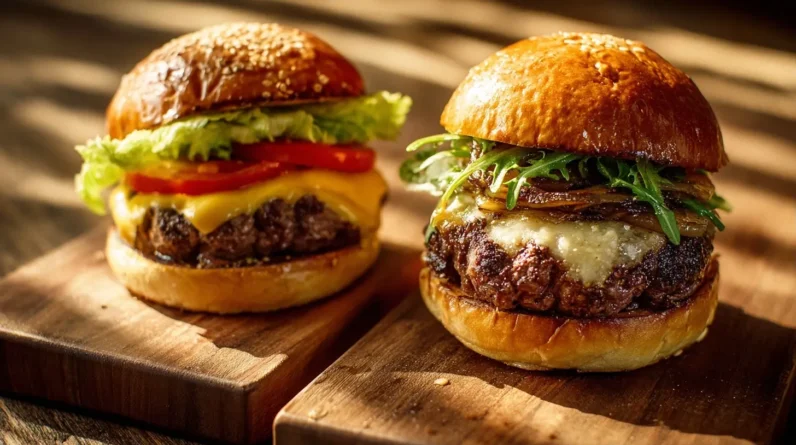



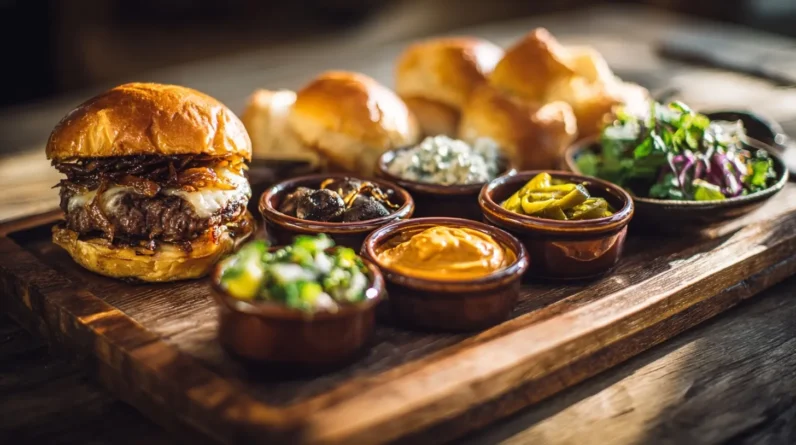
Making gourmet burger sauces and toppings at home doesn’t require a professional kitchen — it requires the right techniques, quality ingredients, and a clear understanding of how flavors and textures work together. We can build a spicy aioli from mayonnaise, roasted garlic, and sriracha, or layer umami depth with aged cheddar, caramelized onions, and sautéed mushrooms. Strategic stacking and proper cheese selection separate a good burger from a great one — and we’re just getting started.
Gourmet Burger Sauces You Can Make in Minutes
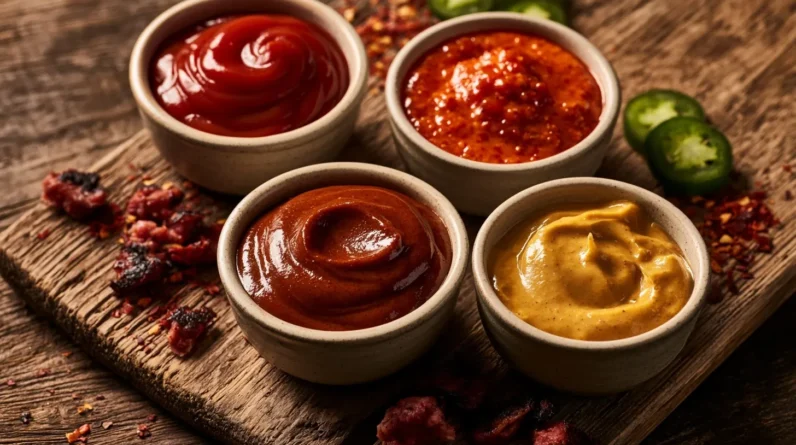
Nothing elevates a burger faster than a well-crafted sauce, and most gourmet options take under five minutes to prepare. We recommend mastering two foundational recipes first: spicy aioli and herb infused mayo. For spicy aioli, combine mayonnaise, roasted garlic, lemon juice, and sriracha — adjust heat by calibrating sriracha quantity precisely. For herb infused mayo, fold fresh chopped tarragon, chives, and flat-leaf parsley into quality mayonnaise, finishing with a measured squeeze of lemon. Both sauces benefit from resting thirty minutes before serving, allowing flavors to fully integrate. We apply these as primary condiments rather than afterthoughts, spreading them generously across both bun surfaces. These two sauces form the technical foundation from which every other gourmet burger sauce variation logically extends.
Bold Toppings That Take Your Burger to the Next Level
The right toppings transform a competent burger into something genuinely memorable, and we approach topping selection with the same precision we apply to sauces. Strategic layering creates textural contrast, depth, and complexity.
For maximum impact, we focus on three high-performance topping categories:
- Umami additions: Aged cheddar, caramelized onions, and sautéed mushrooms compound savory depth exponentially
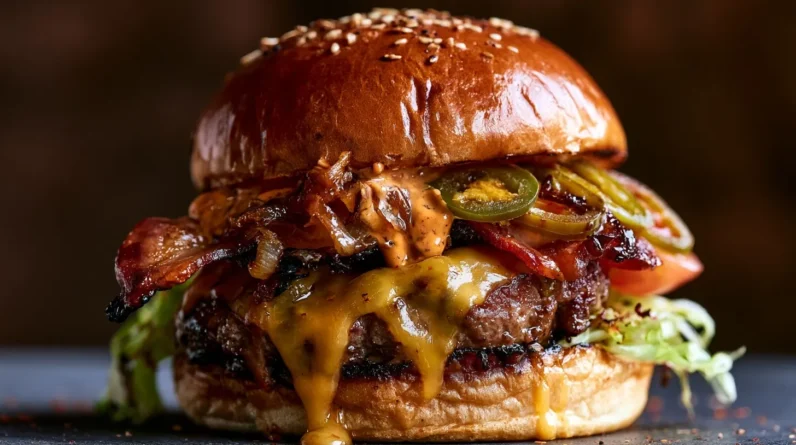
- Spicy twists: Pickled jalapeños, gochujang-glazed bacon, or crispy shallots introduce controlled heat and crunch
- Textural anchors: Butter-toasted brioche crumbs or fried shallots prevent structural collapse while adding dimension
We never stack toppings randomly. Moisture-heavy components go above proteins; crispy elements stay closest to the bun to preserve integrity. Intentional placement separates a constructed burger from a carelessly assembled one.
How to Nail Caramelized Onions and Burger Jams at Home
Mastering caramelized onions and burger jams at home requires patience and controlled heat—two variables most cooks underestimate. For onion techniques, we recommend slicing uniformly thin, using a wide heavy-bottomed pan, and maintaining medium-low heat consistently for 45 minutes minimum. Rushing this process produces bitter, unevenly cooked results.
Burger jams follow similar precision. We build flavor variations by combining caramelized onions with fig preserves, balsamic reduction, or smoked chili for depth and complexity. Each variation demands acid balance—a splash of red wine vinegar prevents sweetness from overwhelming the profile.
Store both preparations refrigerated in airtight containers for up to two weeks. Reheat gently before service. These aren’t shortcuts—they’re deliberate techniques that transform standard toppings into structured, restaurant-caliber burger components worth the investment.
Which Cheeses and Crunchy Toppings Actually Belong on a Gourmet Burger?
Once we’ve locked in our caramelized onions and jams, cheese selection becomes the next variable that separates a gourmet burger from a mediocre one. Strategic cheese pairings hinge on fat content, melt behavior, and flavor intensity.
- Gruyère or aged cheddar delivers sharp, nutty depth with controlled melt
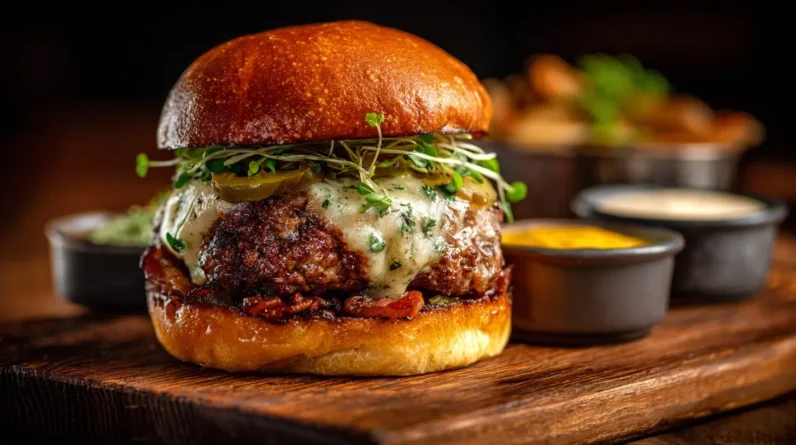
- Taleggio or brie introduces creamy, funky richness that coats every bite
- Blue cheese crumbles cut through fatty beef with assertive salinity
For crunchy additions, we’re targeting textural contrast, not filler. Shoestring fried shallots, panko-crusted pickles, or toasted sesame-studded flatbread crisps all deliver structural variance without overwhelming the protein. Each crunchy element must serve the flavor architecture deliberately—randomness here collapses the entire build.
How to Stack and Serve Your Gourmet Burger Like a Pro
Stacking a gourmet burger follows five non-negotiable sequencing rules that govern structural integrity, flavor distribution, and eating ergonomics. Mastering burger assembly techniques separates competent cooks from true craftsmen.
| Layer Position | Component |
|---|---|
| Bottom bun | Sauce barrier coat |
| First layer | Lettuce shield |
| Center | Patty + melted cheese |
| Upper layer | Toppings + condiments |
| Top bun | Secondary sauce application |
This sequence prevents sogginess, anchors components, and balances bite ratios. For plating presentation tips, we recommend offset positioning on a warmed slate board, skewer pinning at a 15-degree angle, and serving immediately post-assembly. Never plate cold. Never stack blind. Each layer serves a structural and sensory purpose — treat it accordingly.
Frequently Asked Questions
What Beef Fat Percentage Makes the Juiciest Gourmet Burger Patty?
We recommend an 80/20 lean-to-fat ratio for your juiciest patty. This fat selection guarantees ideal moisture retention during cooking, and it’s the sweet spot for achieving perfect flavor balance without excessive grease.
Should Burger Buns Be Toasted Before Adding Toppings and Sauces?
Like a castle’s drawbridge holding firm against invaders, toasted buns guard against sauce saturation. We recommend toasted vs. soft bun texture every time—toasting creates a structural barrier, locking toppings in place without sogginess compromising your masterpiece.
Can Gourmet Burger Toppings Be Prepared the Day Before Serving?
Yes, we can prepare most gourmet toppings preparation a day ahead. Store caramelized onions, sauces, and pickled vegetables using proper storage tips—airtight containers, refrigerated—ensuring peak flavor and texture when you’re ready to assemble.
What Internal Temperature Should a Gourmet Beef Burger Reach?
For ideal doneness, we recommend you cook your beef burger to 160°F internally. Use a meat thermometer inserted into the thickest part to guarantee you’ve achieved a safe, precisely measured temperature every time.
Are There Gluten-Free Bun Options That Hold Gourmet Toppings Well?
We’ve found several gluten-free options that maintain ideal bun texture under heavy toppings: cassava flour buns offer structural integrity, while almond flour varieties provide density that won’t collapse beneath our most ambitious gourmet topping combinations.
Conclusion
We’ve covered everything you need to build a burger worth bragging about, from silky sauces to precision stacking. Remember, the devil is in the details—every layer, every topping, and every sauce you choose either elevates or undermines the final result. Don’t treat these techniques as optional finishing touches. Master them individually, apply them deliberately, and you’ll consistently produce gourmet burgers that rival any restaurant version, right from your own kitchen.