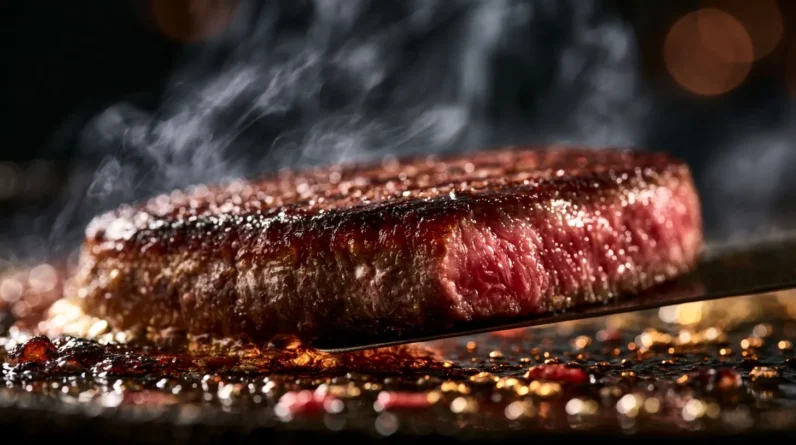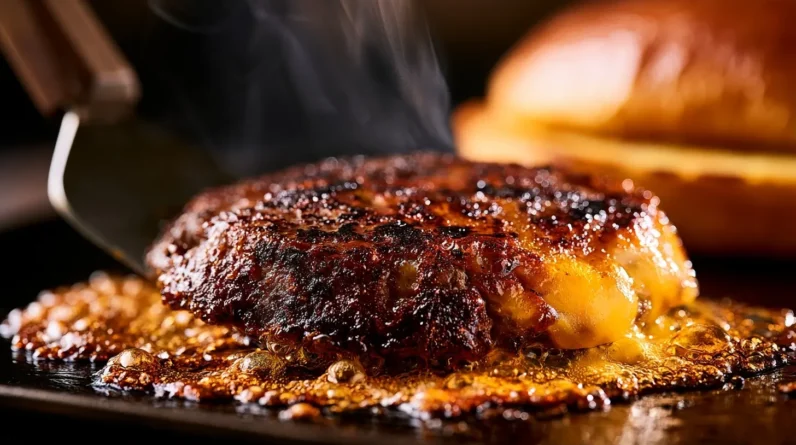



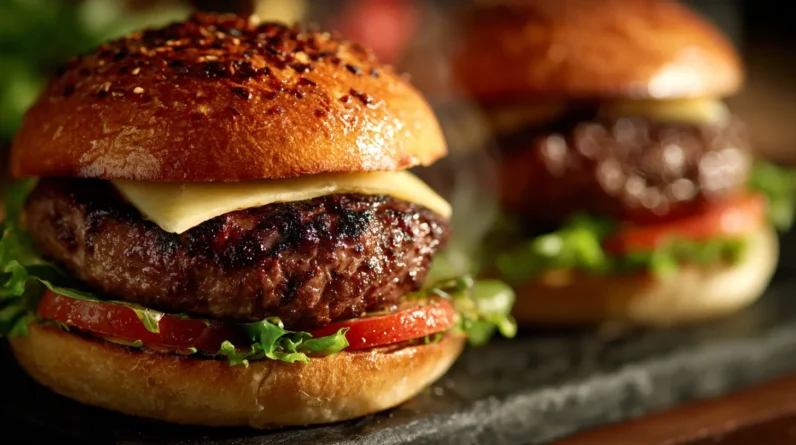
We’ll transform your burgers by mastering eight essential techniques. Start with chuck steak’s ideal 20% fat content, grind it fresh, then handle it minimally to preserve texture. Season immediately before cooking on high heat—375-400°F triggers superior browning. Let patties rest undisturbed for 3-4 minutes per side, then rest again after cooking so juices redistribute. Toast your buns with butter to prevent sogginess. Each step compounds the others, creating dramatic flavor differences that’ll reveal why most burgers fall short.
Choose the Right Beef Cut and Grind
The foundation of a great burger starts with selecting cuts that balance fat and flavor. We’re after meat quality that delivers consistent results, so let’s discuss beef selection strategically. Chuck steak offers ideal fat content—roughly 20 percent—providing moisture and taste without excessive greasiness. We can combine chuck with brisket for deeper flavor complexity, or incorporate short rib for enhanced richness.
When grinding, we’ll keep our meat cold to prevent fat from smearing, which compromises texture and binding. An 80/20 ratio works beautifully for most applications. We’re aiming for a coarse grind that maintains structural integrity during cooking. Grind immediately before forming patties to maximize freshness. This attention to beef selection and meat quality fundamentally transforms your burger’s character, creating a superior foundation that technique alone cannot achieve.
3. Don’t Overwork Your Meat
Overworking ground beef develops gluten networks that compact your patties into dense, tough burgers rather than tender, juicy ones. We’ll handle our meat minimally—mixing just until ingredients combine uniformly. Excessive handling raises meat temperature, accelerating fat oxidation and flavor loss before cooking even begins.
We’re aiming for loose, delicate patties that’ll retain their fat content’s moisture during cooking. Form patties with a gentle touch, using your fingertips rather than your palms. We shouldn’t compress or knead; instead, we’ll use a light hand to shape each burger.
This approach preserves the fat’s distribution throughout the patty, ensuring juiciness and flavor. We’ll dimple the center slightly to prevent bulging during cooking, then immediately transfer patties to the heat. Restraint here yields superior results.
4. Season at the Right Time
Timing our salt addition makes a critical difference in burger texture and flavor development. We’ll season immediately before cooking to prevent moisture extraction that degrades our patties’ structural integrity. With quality beef and meat freshness as our foundation, precise seasoning technique becomes paramount.
Salt dissolves into the meat’s surface, enhancing protein denaturation and creating superior browning during searing. We’re aiming for a Maillard reaction that develops umami complexity without sacrificing juiciness. Pepper and additional seasonings we’ll add just before cooking, ensuring volatile aromatics don’t dissipate during handling.
This timing strategy protects our beef’s inherent qualities while maximizing flavor concentration. We’ve discovered that premature seasoning compromises texture, while last-minute application optimizes both crust development and interior moistness—critical distinctions separating adequate burgers from exceptional ones.
5. Create the Perfect Patty Shape
Once we’ve mastered seasoning timing, we’ll focus on shaping our patties with equal precision. Consistent patty thickness—roughly three-quarters of an inch—ensures even cooking throughout. We’ll distribute meat uniformly, avoiding dense clusters that impede heat penetration.
Handle the ground beef minimally; excessive manipulation develops gluten networks, compacting the meat and creating dense, tough burgers. Use a light touch when forming patties, working just enough to hold them together.
We’ll create a shallow dimple in the center of each patty using our thumb. This depression prevents the burger from puffing during cooking, maintaining our desired thickness and promoting level, consistent doneness across the entire patty.
Chill formed patties for thirty minutes before cooking. This stabilizes the structure and prevents shape distortion on the griddle.
6. Use High Heat for Better Crust
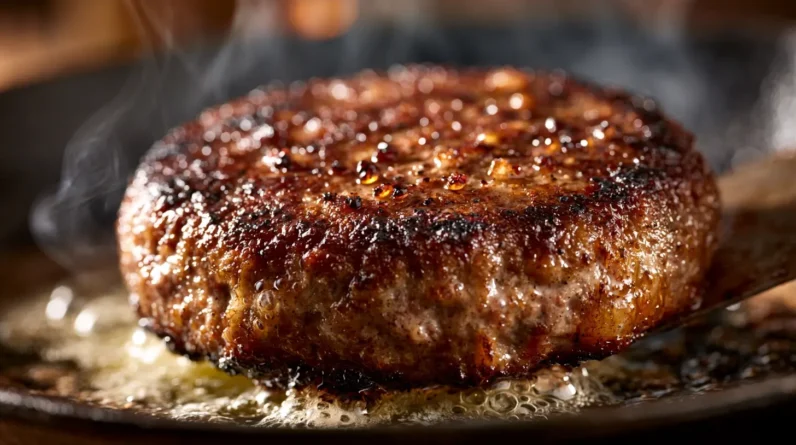
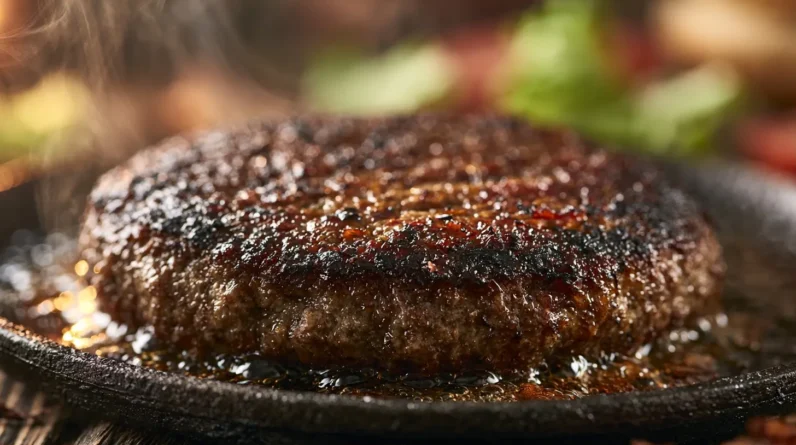
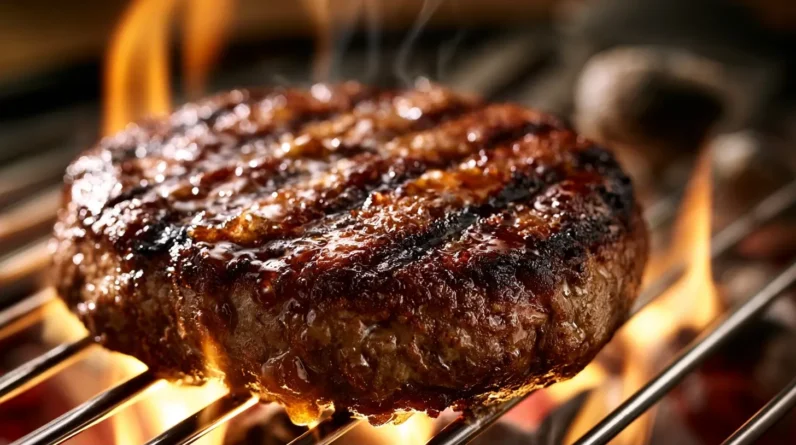
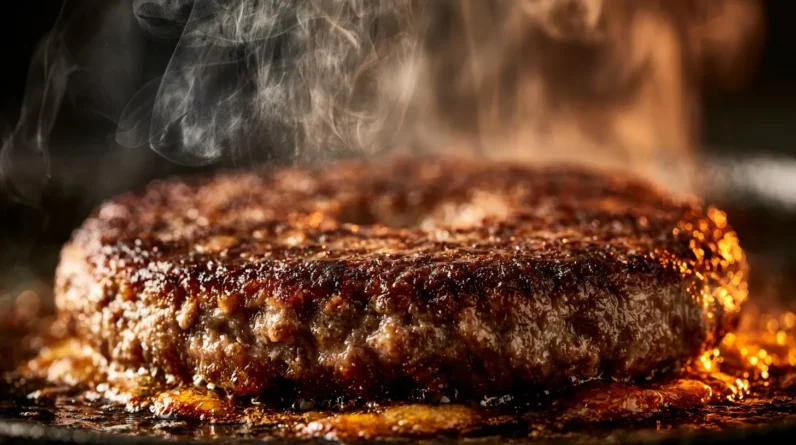
We’ll achieve a flavorful, caramelized crust by cooking our patties on a preheated surface reaching 375-400°F. This grill temperature triggers the Maillard reaction, developing complex flavors through beef searing. We shouldn’t move patties excessively; let them sit undisturbed for 3-4 minutes per side to establish ideal browning.
| Temperature Range | Crust Development | Duration |
|---|---|---|
| 375-400°F | Deep caramelization | 3-4 minutes |
| 350-375°F | Moderate browning | 4-5 minutes |
| Below 350°F | Insufficient crust | 5+ minutes |
We’ll monitor surface moisture carefully—patties must be completely dry before contact with heat. Excess moisture inhibits beef searing and compromises crust formation. High heat virtually seals the exterior while preserving interior juiciness. We’re basically leveraging thermal energy to transform surface proteins and fats into flavor-packed, textured layers.
7. Let Your Burgers Rest Before Serving
After removing patties from heat, let them rest for 3-5 minutes before serving—this crucial step allows carryover cooking to finish the interior while muscle fibers relax and reabsorb expelled juices.
We’ve mastered the sear; now we master resting time. This resting technique isn’t optional—it’s fundamental to burger excellence. Here’s why we prioritize it:
- Interior temperature stabilizes, ensuring even doneness throughout the meat
- Retained juices prevent the disappointing dry bite that ruins otherwise perfect burgers
- Residual heat completes the Maillard reaction for deeper flavor development
- Muscle fibers set properly, delivering superior texture and bite structure
We don’t rush this phase. By respecting resting time, we’ve transformed high-heat searing into complete mastery. The difference between good and exceptional burgers lies in this disciplined pause.
8. Master the Art of Toasting Your Buns
Toasting buns isn’t merely a finishing touch—it’s a critical textural component that prevents soggy bread and creates structural integrity for your burger. We’ll guide you through essential bun toasting techniques that elevate your final product.
Begin with quality buns featuring substantial crumb structure. Slice them horizontally and brush the cut sides lightly with melted butter or neutral oil. Heat your flat griddle or skillet to medium-high temperature—approximately 375°F—ensuring even heat distribution.
Place buns cut-side down for 90-120 seconds until golden brown. This creates a moisture barrier that protects bread from juices while adding nutty flavor complexity. We recommend toasting techniques that achieve light caramelization without charring, preserving delicate crumb texture while developing desirable crispness at contact points.
Conclusion
We’ve journeyed through beef burgers like master craftspeople shaping clay—each step builds on the last. From selecting prime cuts to that final golden-brown bun, we’re not just cooking; we’re creating edible monuments to precision. These techniques aren’t merely instructions; they’re the foundation transforming ordinary ground beef into extraordinary flavor. You’ve now got the blueprint. Let’s make every burger count.