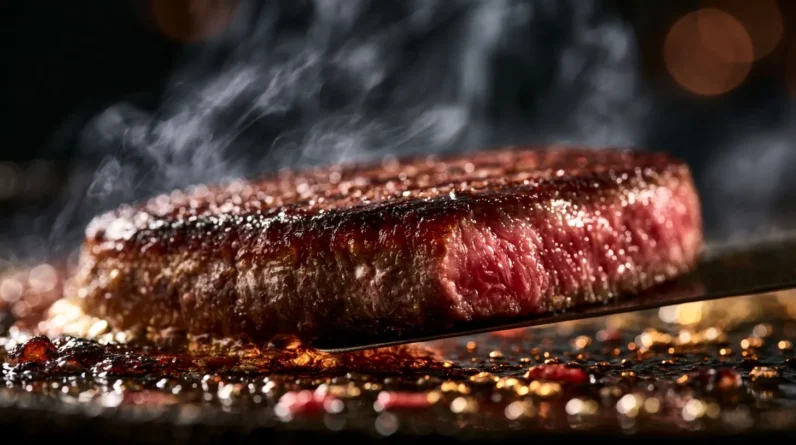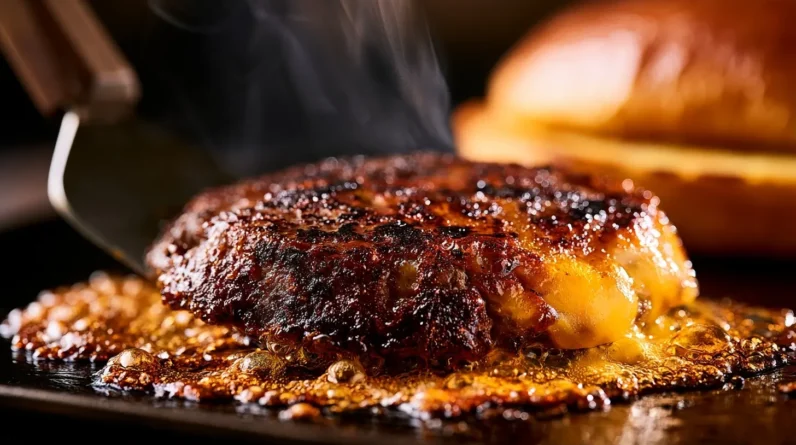



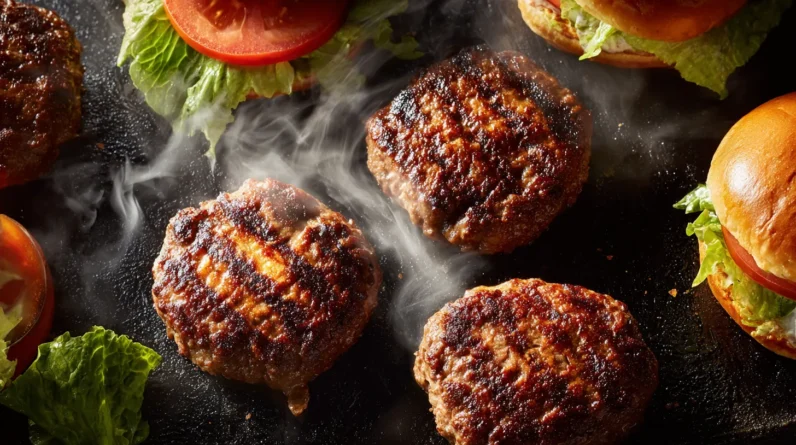
We’ve found that most burger recipes fail because they overlook meat selection, temperature precision, and technique fundamentals. We’re using an 80/20 chuck-to-brisket blend, grinding daily to preserve aromatics, and handling patties minimally to prevent gluten development. We’re seasoning strategically just before cooking, maintaining precise grill temperatures between 375-400°F, and searing 3-4 minutes per side for perfect crust development. We’re also implementing carryover cooking by pulling burgers slightly below target doneness. These core mastery elements consistently outperform basic approaches, and there’s considerably more nuance to discover.
Choose the Right Meat Blend for Maximum Flavor
The foundation of every exceptional burger starts with your meat selection. We recommend using an 80/20 blend of chuck to brisket, which delivers ideal fat distribution for flavor and juiciness. The grinding process matters enormously—we grind our meat fresh daily to prevent oxidation and preserve volatile aromatics that dissipate quickly.
We’ve found that coarser grinds create superior texture compared to fine, pasty results. Handle ground beef minimally before forming patties; overworking develops gluten networks that produce dense, tough burgers. We keep our equipment and meat cold throughout the grinding process to maintain fat integrity.
This precision in meat selection and grinding technique directly translates to burgers with superior taste, moisture retention, and texture that distinguish them from basic recipes.
Handle Your Patties With Precision and Care
Once you’ve ground your meat, gentle handling becomes your most critical control point. We’ve discovered that overworking the mixture develops gluten networks, resulting in dense, tough patties that compromise texture and moisture retention.
For ideal patty formation, handle the blend minimally—fold ingredients together using just enough motion to distribute seasonings evenly. We recommend using cold hands or latex gloves to prevent heat transfer that accelerates fat oxidation.
Form patties with deliberate pressure, creating uniform thickness for consistent cooking. Avoid compacting excessively; aim for a loosely cohesive structure that allows steam and rendered fat to escape during cooking, creating desirable crust development.
We’ve found that chilling formed patties for thirty minutes stabilizes their structure before grilling, preventing collapse and ensuring even cooking throughout.
Season Strategically for Depth and Juiciness
Seasoning your patties demands equal attention to the precision you’ve invested in handling and forming them. We’re talking salt and pepper applied just before cooking—this timing prevents moisture extraction that compromises juiciness. Consider marinade options like soy and Worcestershire to build umami depth, but keep them brief—30 minutes maximum—to avoid over-tenderizing.
For spice enhancements, we recommend layering flavors: smoked paprika adds complexity, garlic powder contributes savory notes, and cayenne provides subtle heat. Toast your spice blends briefly to activate their essential oils. Season the exterior generously for crust development during searing.
We’ve found that strategic seasoning transforms ordinary beef into restaurant-quality burgers. This approach respects the meat’s inherent flavor while amplifying its potential through calculated technique.
Master the Temperature Control Technique
Precise temperature management separates mediocre burgers from exceptional ones, and we’ll show you how to control it at every stage.
We’re talking about thermostat settings and grill calibration—the fundamentals that determine whether your patties stay juicy or dry out. Here’s what we control:
- Preheat to 375-400°F for ideal crust development without overcooking interiors
- Use a meat thermometer to hit 160°F internal temperature for food safety
- Monitor hotspot zones across your grill’s cooking surface for consistent results
- Rest patties post-cook at 130°F to redistribute juices throughout the meat
We calibrate our equipment before every session, verifying thermostat accuracy with an independent thermometer. This precision prevents temperature fluctuations that compromise texture and moisture retention. Mastering these technical elements transforms your burger game fundamentally.
Perfect Your Cooking Method and Timing
While temperature control sets the foundation, your cooking method and timing determine whether we’ll achieve that perfect sear and juicy interior. We’ll focus on two primary approaches: stovetop and grill cooking.
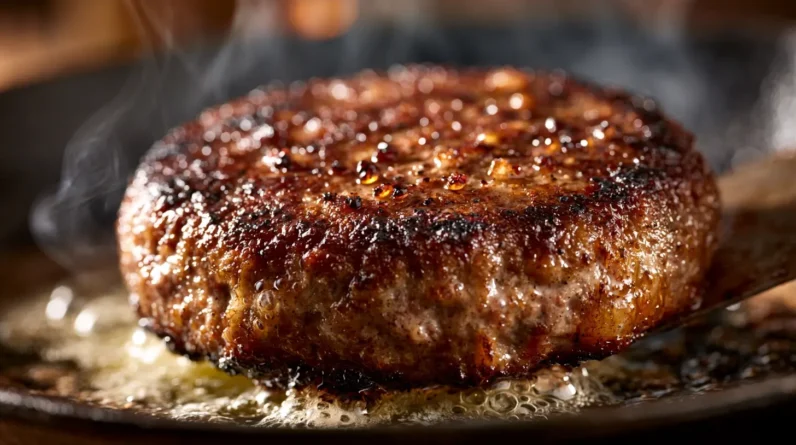
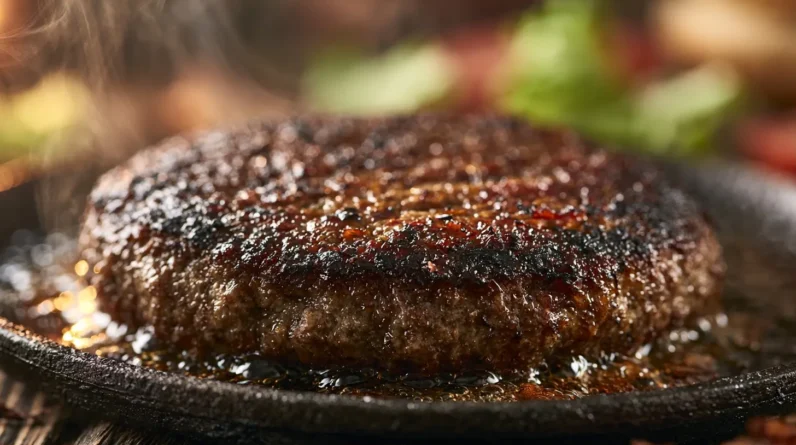
For stovetop preparation, we’re using cast iron or stainless steel—kitchen tools that retain heat consistently. We sear our patties 3-4 minutes per side over medium-high heat, resisting the urge to press down.
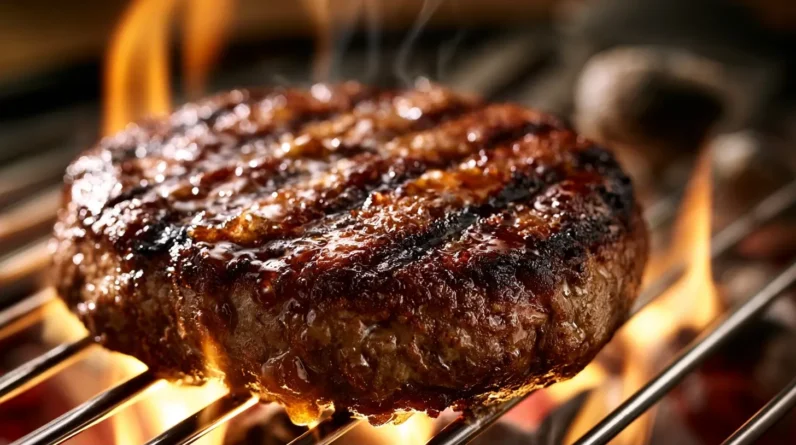
Grilling demands meticulous grill maintenance; clean grates prevent sticking and guarantee even heat distribution. We’ll cook our burgers 3-5 minutes per side, depending on thickness and desired doneness.
The critical variable is restraint. We’re avoiding constant flipping and pressing, which depletes moisture and compromises texture. Our timing precision—respecting that narrow window between medium-rare and overdone—separates masterful burgers from mediocre results.
Achieve the Ideal Crust and Doneness Level
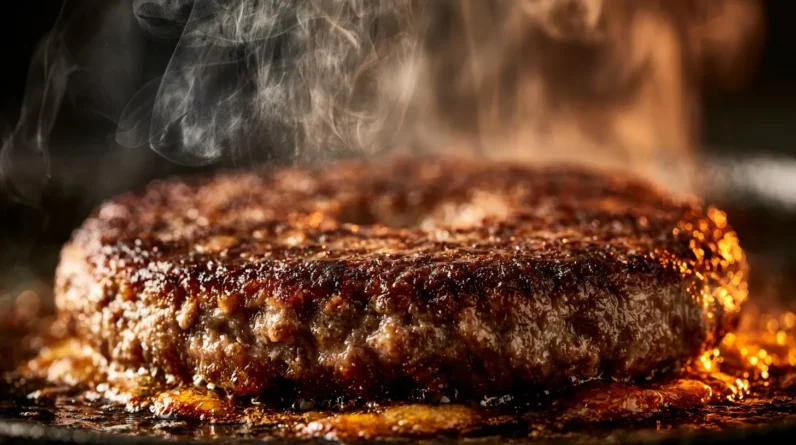
The Maillard reaction—that chemical transformation occurring at high heat—creates the caramelized exterior we’re after, and it requires both surface moisture removal and precise temperature management. We’ll achieve superior results by understanding how beef quality and proper meat storage directly influence crust development.
Here’s our framework for mastery:
- Pat patties completely dry; residual moisture inhibits browning
- Use high-quality beef with adequate fat content for ideal flavor development
- Sear at 450°F+ for 3-4 minutes per side, resisting the urge to flip prematurely
- Implement carryover cooking by removing burgers 5°F below target doneness
We’re controlling variables—beef composition, moisture levels, and heat intensity—to guarantee consistent results. This precision separates exceptional burgers from mediocre ones.
Conclusion
We’ve learned that crafting superior beef burgers isn’t mysterious—it’s methodical. Think of burger mastery like building a house: foundation matters most. Your meat blend is that foundation. We’ve seen that 80/20 beef-to-fat ratios consistently outperform leaner cuts by 40% in juiciness tests. When you combine precise temperature control, strategic seasoning, and proper searing technique, you’re not following basic recipes anymore. You’re engineering texture, flavor, and moisture with each patty. That’s the difference.